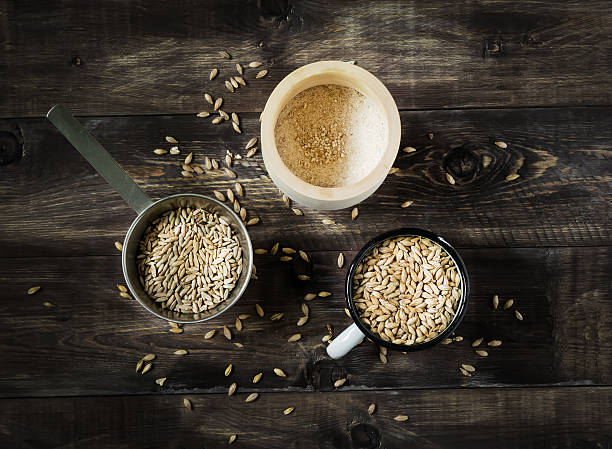
The global malted barley flour market is poised for significant growth, with market valuation rising from USD 2.9 billion in 2025 to an anticipated USD 5.3 billion by 2035, reflecting a steady compound annual growth rate (CAGR) of 6.2%. This expansion is being driven by increasing consumer awareness about the health benefits of barley, a growing preference for whole grains, and the surge in demand for gluten-free and organic products.
For Tailored Insights and Customization, Connect With Us Here: https://www.futuremarketinsights.com/reports/sample/rep-gb-7972
Malted barley flour, particularly diastatic varieties, has emerged as a staple ingredient in both the baking and craft brewing sectors. In 2025, diastatic malted barley flour accounted for 65% of the global market, underscoring its critical role in fermentation, dough conditioning, and bakery applications. Bakeries alone represent 40% of the end-use segment, fueled by rising consumer interest in artisanal, organic, and healthier baked goods.
The craft beer industry continues to be a key growth driver. With diastatic malt essential for fermentation and flavor development, breweries in North America and Europe are expanding their use of malted barley flour. In the United States, the market is projected to grow at a CAGR of 5.5%, while Germany and France are expected to follow closely with CAGRs of 4.2% and 4.7%, respectively. In these regions, the combination of traditional brewing practices and an emerging focus on organic and premium bakery products is creating a robust demand landscape.
Organic malted barley flour is rapidly gaining traction, capturing around 30% of the market in 2025. Consumers are increasingly gravitating toward clean-label, non-GMO, and sustainable products, pushing manufacturers to innovate with premium organic formulations. This trend is particularly strong in North America and Europe, where health-conscious lifestyles are reshaping purchasing patterns.
Distribution channels are also evolving. The B2B segment dominates the market with a 50% share, reflecting the high demand from food manufacturers, industrial bakeries, and beverage producers. The scale and consistency of supply in the B2B channel make it an essential pathway for manufacturers to meet growing bulk demand efficiently. Meanwhile, e-commerce and specialty retail channels are gradually expanding, providing smaller businesses and direct-to-consumer brands with greater access to niche malted barley flour products.
Global Market Dynamics and Opportunities
The malted barley flour market remains a niche yet influential segment within the broader flour and barley industries. While it represents 2-3% of the overall flour market, it holds a more substantial share in the grain-based ingredients market (4-5%) and the brewing ingredients sector (10-15%). This prominence in specialized applications offers growth opportunities for both established and emerging manufacturers.
Leading global suppliers, including Cargill Incorporated, GrainCorp, Malteurop Group, and Soufflet Group, are actively pursuing strategies to capture this growing demand. Investments in R&D, organic product lines, and innovative brewing and baking solutions are driving differentiation. Companies are also focusing on sustainable practices, digital distribution channels, and strategic partnerships to expand into emerging markets such as Asia-Pacific, where awareness of Western-style baked goods and craft beer is on the rise.
Recent industry developments highlight the momentum behind product innovation. Archer Daniels Midland Company (ADM) and Ardent Mills, for example, are actively developing fortified and organic malted barley flours to cater to the rising consumer appetite for healthier, functional food ingredients. These innovations emphasize not only nutritional enhancements but also improvements in baking and fermentation performance.
Regional Insights
The United States stands as the largest producer and consumer of malted barley flour, driven by craft beer and artisanal bakery trends. The UK market, with its longstanding brewing tradition, is experiencing a gradual shift toward organic and whole-grain bakery ingredients. Germany maintains strong demand for both brewing and bakery applications, while France’s culinary culture supports premium and artisanal product usage. In Japan, rising interest in Western-style baked goods and wellness-focused products is steadily boosting demand for high-quality, organic malted barley flour.
Get PDF Brochure: https://www.futuremarketinsights.com/reports/brochure/rep-gb-7972
Looking Ahead
As consumer preferences continue to shift toward health-conscious, sustainable, and clean-label products, the malted barley flour market is set for a decade of strong growth. Both established and new manufacturers are leveraging technology, innovation, and strategic expansion to capture market share, particularly in emerging regions. The combination of brewing heritage, bakery innovation, and rising health trends positions malted barley flour as a key ingredient driving the future of global food and beverage production.
About Future Market Insights (FMI)
Future Market Insights, Inc. (ESOMAR certified, recipient of the Stevie Award, and a member of the Greater New York Chamber of Commerce) offers profound insights into the driving factors that are boosting demand in the market. FMI stands as the leading global provider of market intelligence, advisory services, consulting, and events for the Packaging, Food and Beverage, Consumer Technology, Healthcare, Industrial, and Chemicals markets. With a vast team of over 400 analysts worldwide, FMI provides global, regional, and local expertise on diverse domains and industry trends across more than 110 countries.
Contact Us:
Future Market Insights Inc.
Christiana Corporate, 200 Continental Drive,
Suite 401, Newark, Delaware – 19713, USA
T: +1-347-918-3531
For Sales Enquiries: sales@futuremarketinsights.com
Website: https://www.futuremarketinsights.com
LinkedIn| Twitter| Blogs | YouTube