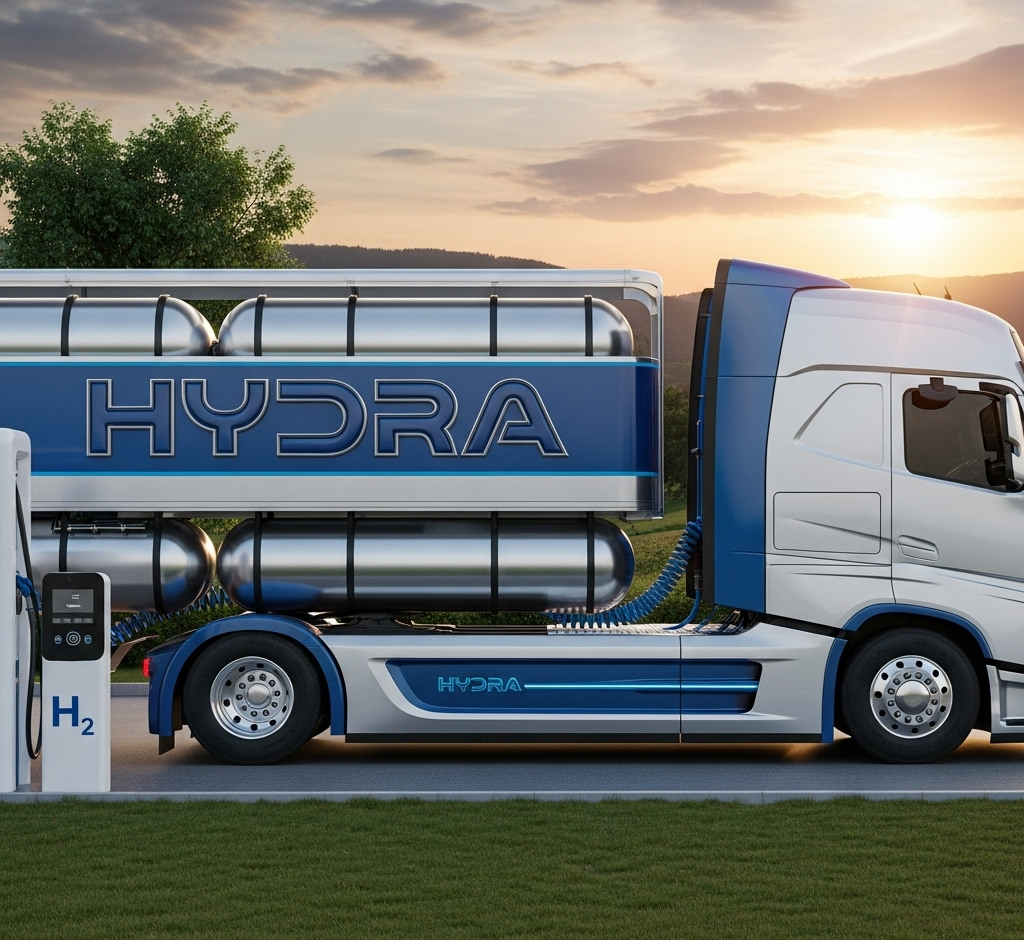
The global hydrogen truck market is poised for rapid growth, with its valuation expected to reach USD 5,429.7 million in 2024 and soar to USD 171,050 million by 2034, reflecting a robust CAGR of 41.2%. With governments, manufacturers, and logistics providers increasingly prioritizing sustainability, hydrogen trucks are gaining traction as a clean, efficient, and scalable alternative to diesel-powered fleets.
Their long-range capabilities, low maintenance costs, and zero-emission operation make them especially well-suited for long-haul transportation and logistics. Hydrogen trucks stand at the intersection of climate action, energy security, and freight efficiency, offering a compelling alternative to fossil-fuel-powered fleets. Global initiatives to expand hydrogen refueling infrastructure are fast-tracking adoption across key markets.
Full Market Report available for delivery. For purchase or customization, please request here: https://www.futuremarketinsights.com/reports/sample/rep-gb-15986
Key Industry Highlights
- The hydrogen truck market will expand more than 30 times its current size over the next decade, fueled by rising demand for eco-friendly transport solutions.
- Heavy-duty trucks are expected to dominate with a 50.3% value share in 2024, while the logistics sector will lead by application, holding a 60.8% share.
- Governments worldwide are offering subsidies, grants, and tax credits to reduce upfront costs and accelerate adoption.
- Technological advances and fuel cell innovations are expected to lower the overall cost of ownership and improve efficiency.
- Countries such as India (41.5% CAGR), France (41.1%), and Spain (40.9%) are set to lead growth, while Germany focuses on hydrogen refueling infrastructure to bolster adoption.
Collaboration between Small Market Players to Strengthen Product Portfolio
The hydrogen truck ecosystem is thriving on collaboration. While global leaders such as Hyundai, Toyota, Volvo, Daimler Trucks, and Nikola Corporation dominate Tier 1, smaller and mid-sized players are actively partnering to strengthen their product offerings.
Start-ups and regional enterprises, including Cellcentric GmbH, H2X Global, and Grove Hydrogen Automotive, are aligning with established OEMs to co-develop hydrogen fuel cell systems and launch pilot projects. These collaborations are not only accelerating innovation but also supporting fleet trials in logistics, urban transport, and long-haul freight, paving the way for faster commercialization.
Recent initiatives—such as DHL’s deployment of Paul Hydrogen Power Truck and Walmart Canada’s adoption of Nikola trucks—demonstrate how partnerships are transforming trial projects into scalable market-ready solutions.
Market Concentration
The hydrogen truck industry remains highly concentrated among a mix of Tier 1 automotive giants and specialized Tier 2 & Tier 3 companies.
- Tier 1 players such as Hyundai, Toyota, Daimler, Volvo, and Stellantis leverage global manufacturing networks, established distribution channels, and R&D leadership.
- Tier 2 firms like Hyzon Motors, Ballard Power Systems, and Plug Power play a pivotal role in technology integration and regional market penetration.
- Tier 3 players, including regional start-ups and mid-sized enterprises, contribute agility, localized solutions, and niche technologies, often through joint ventures and pilot programs.
The industry’s structure ensures a dynamic balance—where large firms push global adoption, and smaller companies contribute specialized innovations.
Country-wise Insights
- India (41.5% CAGR): Backed by the National Green Hydrogen Mission, India is targeting global leadership in green hydrogen production and utilization. Reliance Industries’ plan to transform 5,000 trucks into hydrogen-powered fleets marks a significant milestone.
- Germany (40.3% CAGR): With heavy investments in hydrogen refueling infrastructure and iconic tests like Mercedes-Benz GenH2 truck’s 1,047 km Hydrogen Record Run, Germany is positioning itself as a pioneer in Europe.
- United States: Federal and state incentives, including California’s Zero-emission Mandate for heavy-duty trucks by 2040, are driving demand. Logistics leaders are increasingly embracing hydrogen to achieve sustainability goals.
- France, Spain, and Italy: With CAGRs above 40%, these countries are accelerating hydrogen adoption in freight transport, supported by EU climate policies and infrastructure development.
- Canada: Building on clean energy commitments, Canada is expanding its hydrogen truck ecosystem through projects like Walmart’s fleet electrification initiative.
Competition Outlook
The hydrogen truck market is witnessing intensifying competition as both legacy automakers and new entrants race to capture market share.
Leading players: Hyundai Motor Company, Nikola Corporation, Toyota, Volvo, Daimler Trucks, Volkswagen/Scania, and Stellantis.
Key innovators: Hyzon Motors, Ballard Power Systems, ITM Power, Linde plc, Plug Power Inc., Renault Trucks, Paccar, and H2X Global.
Emerging challengers: Cellcentric GmbH, Grove Hydrogen Automotive, Beiqi Foton, US Hybrid Inc., and XCMG Group.
Strategic collaborations are shaping the industry. For example, Hyundai’s NorCAL ZERO Project in California, Volvo’s hydrogen truck launch plans for 2026, and Bosch’s hydrogen engine rollout in India showcase how global and regional leaders are aligning with governments and logistics firms to accelerate adoption.
The competition is expected to heat up as cost reductions in fuel cell systems and the expansion of refueling infrastructure make hydrogen trucks more accessible. Companies that successfully integrate technology efficiency, affordability, and global supply chains will gain a lasting advantage.
Hydrogen Truck Market Industry Analyzed by Key Investment Segments
By Vehicle:
In terms of vehicles, the industry is segregated into heavy-duty trucks, medium-duty trucks, and small-duty trucks.
By Range:
Above 400 Km and below 400 Km are the two ranges available worldwide.
By Hydrogen Tank Type:
Type III and Type IV are the two Types available worldwide.
By Application:
Logistics and municipal are the two key applications.
By Region:
The market is spread across North America, Latin America, Western Europe, Eastern Europe, East Asia, South Asia and Pacific, the Middle East and Africa, and Oceania.
Stay Ahead – Grab the Report: https://www.futuremarketinsights.com/reports/brochure/rep-gb-15986
About Future Market Insights (FMI)
Future Market Insights, Inc. (ESOMAR certified, recipient of the Stevie Award, and a member of the Greater New York Chamber of Commerce) offers profound insights into the driving factors that are boosting demand in the market. FMI stands as the leading global provider of market intelligence, advisory services, consulting, and events for the Packaging, Food and Beverage, Consumer Technology, Healthcare, Industrial, and Chemicals markets. With a vast team of over 400 analysts worldwide, FMI provides global, regional, and local expertise on diverse domains and industry trends across more than 110 countries.
Contact Us:
Future Market Insights Inc.
Christiana Corporate, 200 Continental Drive,
Suite 401, Newark, Delaware – 19713, USA
T: +1-347-918-3531
For Sales Enquiries: sales@futuremarketinsights.com
Website: https://www.futuremarketinsights.com
LinkedIn| Twitter| Blogs | YouTube