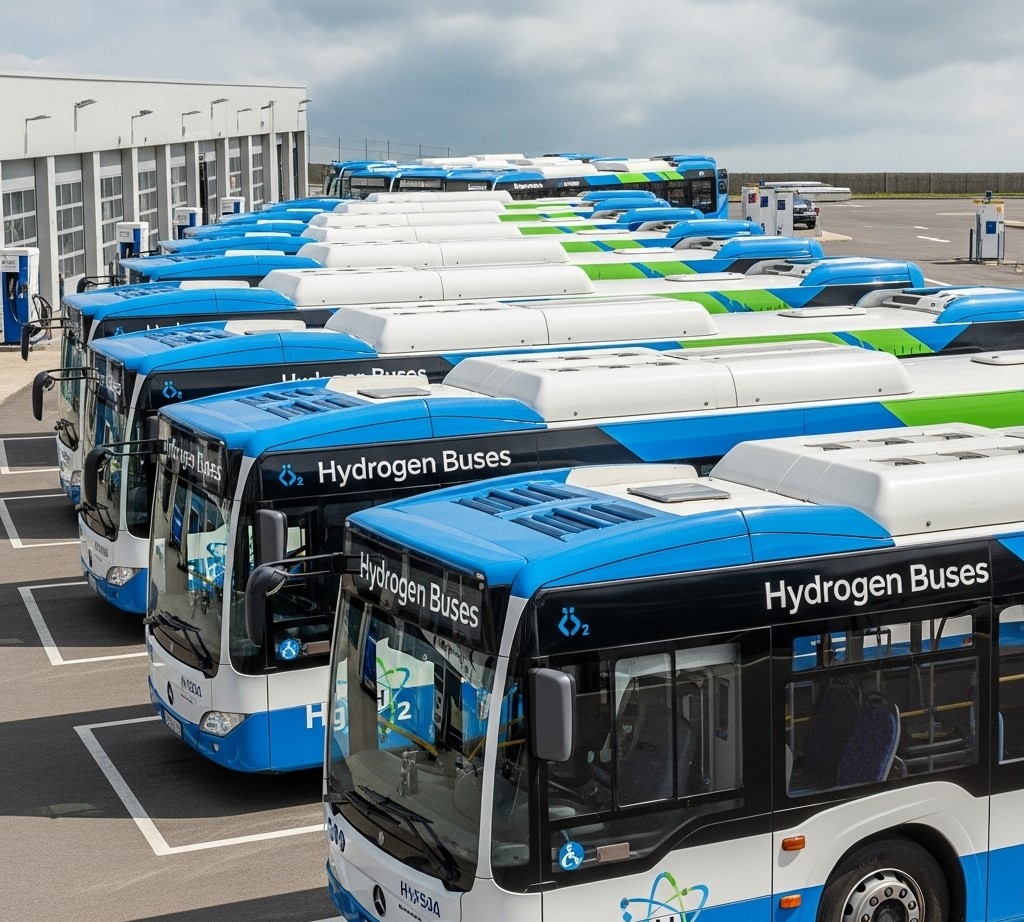
The global hydrogen buses market is on the verge of a transformational decade. Valued at USD 1,037.1 million in 2024, the industry is set to grow to USD 1,301.8 million in 2025, and by 2035 it is projected to surge to USD 17,658.9 million, expanding at a compound annual growth rate (CAGR) of 29.8%. This growth is being fueled by strict emission regulations, large-scale infrastructure investment, and continuous advancements in hydrogen fuel cell technology.
Hydrogen buses, powered by fuel cells, are redefining the future of public transport. With zero emissions, long driving ranges, and rapid refueling capabilities, they are increasingly recognized as a sustainable alternative to diesel fleets in cities worldwide. As governments work toward net-zero targets, hydrogen buses are emerging as a centerpiece of cleaner, smarter mobility.
Uncover Essential Data – Get A Sample Copy https://www.futuremarketinsights.com/reports/sample/rep-gb-15953
Industry Transformation in Motion
The shift toward hydrogen buses is not merely about replacing diesel fleets—it represents a broader transformation in how public transport systems are designed and operated. These buses are ideal for dense urban centers and long-distance routes, offering operational advantages where battery-electric buses may face limitations such as lengthy charging times.
The European Union’s “Fit for 55” package, which mandates all new city buses to be zero-emission by 2030, is setting the pace. Meanwhile, China has committed to deploying 50,000 hydrogen buses by 2035, signaling strong demand in Asia. In the United States, funding programs like the Federal Transit Administration’s Low or No Emission Vehicle Program and California’s Hydrogen Fuel Initiative are actively supporting the adoption of fuel-cell buses across major transit systems.
Key Growth Drivers
- Hydrogen Refueling Infrastructure Expansion
Countries including Germany, Japan, South Korea, and the United States are rapidly building hydrogen fueling stations. Germany’s H2 Mobility initiative targets 400 refueling stations by 2025, while Japan is pursuing 1,000 stations by 2030. This infrastructure is making hydrogen-powered transit more practical for operators. - Government Regulations and Incentives
Stricter emission norms are compelling cities to phase out diesel buses. London’s Ultra-Low Emission Zone (ULEZ) and South Korea’s Green New Deal are examples of localized policies accelerating hydrogen adoption. Governments are also offering direct financial support, such as China’s USD 65,000 subsidy per bus and Germany’s coverage of up to 80% of incremental costs for hydrogen fleets. - Technological Advancements
Innovations in proton exchange membrane (PEM) fuel cells are making buses more efficient and cost-competitive. Companies like Toyota, Ballard Power Systems, and Hyundai are introducing second-generation systems with improved durability and reduced operating costs. Advances in green hydrogen production are also cutting fuel expenses, further boosting adoption. - Public-Private Collaborations
Partnerships are crucial to market acceleration. Daimler and Volvo have formed joint ventures to develop commercial fuel cell systems, while New Flyer and Ballard Power Systems are collaborating in North America. These alliances are bridging the gap between technology and large-scale deployment.
Competitive Landscape
The hydrogen bus market features a diverse mix of established players and new entrants:
- Tier 1 Leaders (50–55% share): Tata Motors Limited, Hyundai Motor Group, Thor Industries, Ballard Power Systems, NovaBus Corporation. These companies dominate global operations with large-scale production capacity and advanced R&D.
- Tier 2 Regional Specialists (20–25% share): New Flyer Industries Ltd, EvoBus, and others. These players focus on localized markets, delivering tailored solutions and flexible fleets.
- Tier 3 Niche Operators (15–20% share): Hino Motors Ltd., SunLine Transit Agency, and smaller regional companies. These firms serve local needs while injecting innovation into niche applications.
This tiered landscape ensures both scalability and competition, allowing innovative start-ups to emerge alongside global giants.
Regional Outlook
- China: Poised to dominate with a CAGR of 37.1%, China’s push for 50,000 hydrogen buses by 2035 underscores its leadership in manufacturing and infrastructure rollout. Major cities such as Beijing and Shanghai are already scaling hydrogen bus fleets.
- India: Expected to grow at 36.6% CAGR, supported by the National Hydrogen Mission. India’s first indigenously produced hydrogen bus debuted in 2022, signaling government-backed innovation and expanding pilot projects.
- Germany: With a CAGR of 35.7%, Germany leads Europe in hydrogen refueling infrastructure, supported by its National Hydrogen Strategy and significant investment in sustainable mobility.
- United States: Forecasted CAGR of 29.9%, driven by California’s ambitious policies and federal-level funding through the Inflation Reduction Act. The U.S. is expected to reach a valuation of USD 3,531.8 million by 2035.
Market Segmentation
- By Technology: Proton Exchange Membrane Fuel Cells (PEMFCs) dominate with 41.7% share, favored for their efficiency, rapid start-up, and compact design.
- By Application: Municipal transit systems lead adoption, holding 37.2% share, as cities prioritize zero-emission solutions to replace diesel buses.
Leading Companies in the Hydrogen Buses Market
- Tata Motors Limited
- Thor Industries
- Hyundai
- Ballard Power Systems
- NovaBus Corporation
- New Flyer Industries Ltd
- EvoBus
- New Flyer
- Hino Motors Ltd.
- SunLine Transit Agency
Stay Ahead – Grab the Report https://www.futuremarketinsights.com/reports/brochure/rep-gb-15953
About Future Market Insights (FMI)
Future Market Insights, Inc. (ESOMAR certified, recipient of the Stevie Award, and a member of the Greater New York Chamber of Commerce) offers profound insights into the driving factors that are boosting demand in the market. FMI stands as the leading global provider of market intelligence, advisory services, consulting, and events for the Packaging, Food and Beverage, Consumer Technology, Healthcare, Industrial, and Chemicals markets. With a vast team of over 400 analysts worldwide, FMI provides global, regional, and local expertise on diverse domains and industry trends across more than 110 countries.
Contact Us:
Future Market Insights Inc.
Christiana Corporate, 200 Continental Drive,
Suite 401, Newark, Delaware – 19713, USA
T: +1-347-918-3531
For Sales Enquiries: sales@futuremarketinsights.com
Website: https://www.futuremarketinsights.com
LinkedIn| Twitter| Blogs | YouTube