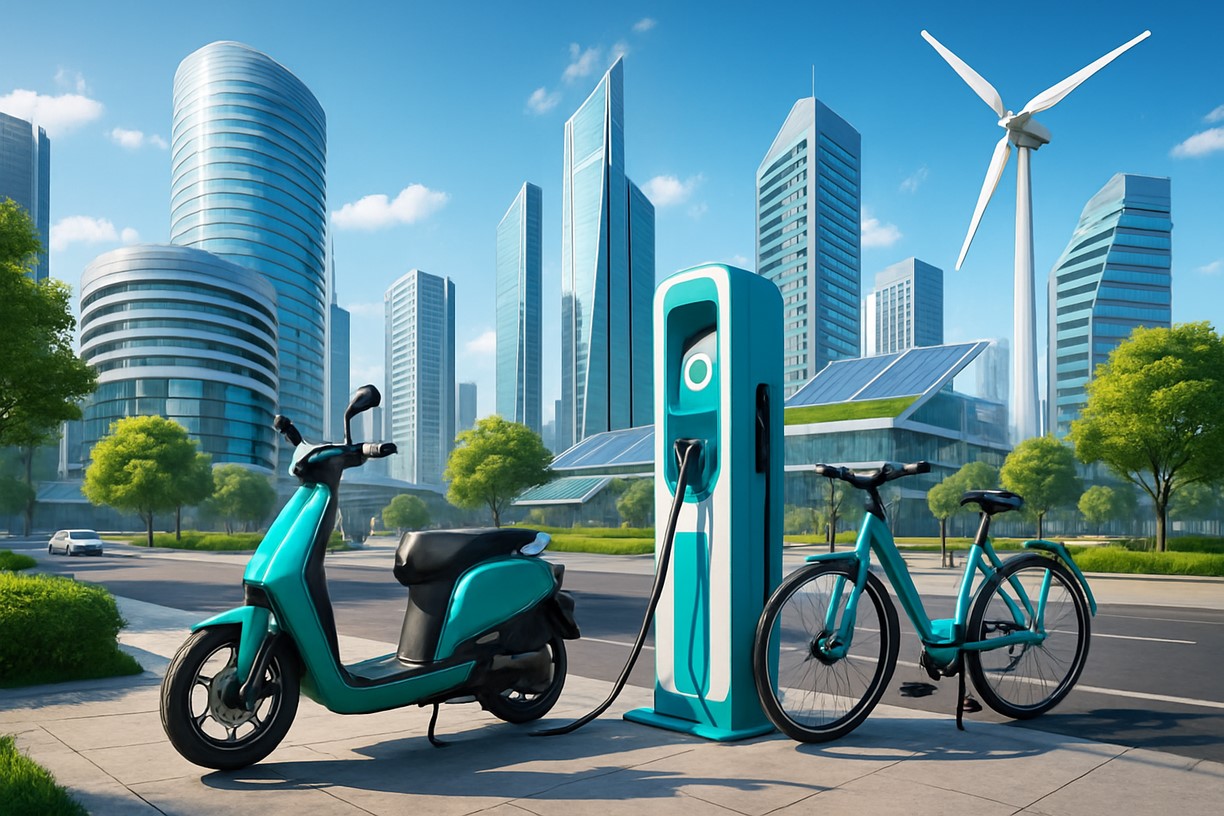
The global micro-mobility charging infrastructure market is preparing for unprecedented expansion, with revenues forecasted to climb from USD 9,108.3 million in 2025 to USD 62,028.8 million by 2035, growing at an impressive 22.5% CAGR over the decade.
As cities worldwide continue to grapple with congestion, air pollution, and climate challenges, micro-mobility is emerging as a central pillar of sustainable urban transport. Electric scooters, e-bikes, and other light EVs are transforming daily commutes, food delivery, and last-mile logistics. Yet, a persistent shortage of reliable charging stations remains the key bottleneck holding back mass adoption.
Uncover Essential Data – Get A Sample Copy https://www.futuremarketinsights.com/reports/sample/rep-gb-15658
Regional Growth Highlights
North America
Cities like New York, Austin, and Los Angeles are spearheading adoption, bolstered by federal clean mobility investments under the Bipartisan Infrastructure Law. Shared mobility operators are embedding charging pods into lampposts, transit hubs, and delivery fleet depots.
Europe
Europe leads in per-capita adoption of e-scooters and e-bikes. With the EU Green Deal pushing urban emission reduction, Paris, Berlin, and Amsterdam are building dense charging grids that are interoperable across brands. Solar-assisted chargers and fleet-focused depots are becoming widespread.
Asia Pacific
APAC is the fastest-growing region, with China deploying integrated charging-swapping stations and India building cost-efficient points at metro stations and housing complexes. Japan and South Korea are advancing wireless charging pads and AI-powered management systems within smart city projects.
Challenges and Opportunities
The road ahead isn’t without hurdles. Lack of standardized charging protocols and fragmented infrastructure make interoperability a challenge. Urban real estate constraints and fluctuating energy demand also complicate deployment.
Still, opportunities far outweigh risks. Policy incentives, subsidies, and carbon credits are spurring innovation. Wireless charging, renewable-powered hubs, and multi-modal transit integration promise to transform how micro-mobility blends with public transportation. With e-commerce and instant delivery fleets on the rise, demand for scalable and fleet-oriented infrastructure is set to surge.
From 2020 to 2024: Lessons Learned
Between 2020 and 2024, e-scooter and e-bike adoption surged, but charging infrastructure lagged behind. Early investments were mostly in fixed docks, which limited scalability. The pandemic further underscored gaps in urban mobility systems, though it also highlighted the need for sustainable, independent commuting options.
Looking forward, 2025 to 2035 will mark a transition to smart, connected, and flexible systems—with wireless charging, modular hubs, and app-integrated services woven into everyday urban fixtures.
Country-Level Outlook
- United States: CAGR 21.8% – Expansion of modular and solar-powered stations in high-traffic urban centers.
- United Kingdom: CAGR 21.5% – Local councils backing pilot programs and incentivizing businesses to install charge points.
- European Union: CAGR 22.0% – Heavy investment in interoperable standards and curbside modular charging networks.
- Japan: CAGR 22.1% – Growth in IoT lockers, wireless charging, and integration with metro stations.
- South Korea: CAGR 22.3% – Leading in AI-driven fleet monitoring and inductive charging integrated into street infrastructure.
Market Segmentation
- By Vehicle Type:
- E-scooters: Dominating with 52.8% share in 2025, driven by widespread deployment in urban shared mobility programs.
- E-bikes: Rapidly expanding in delivery and commuting applications.
- By Charger Type:
- Wired Charging: Retains 61.3% market share in 2025 due to affordability and compatibility.
- Wireless Charging: Growing in premium hubs and R&D pilots, expected to gain traction post-2030.
Competitive Landscape
The market is a dynamic blend of established energy giants, technology providers, and new-age start-ups.
- ChargePoint Holdings (16–19%): Expanding hybrid nodes that serve scooters, bikes, and compact EVs across U.S. and European cities.
- Swiftmile Inc. (14–17%): Leading solar-powered charging hubs with real-time monitoring and advertising integration.
- Bikeep Inc. (11–14%): Specializing in secure e-bike racks with solar hybrid charging and facial recognition features.
- GetCharged Inc. (8–11%): Known as “Charg,” offering compact lockers and app-integrated curbside solutions tailored for shared mobility start-ups.
- Others (38–45%): Including Helbiz, VeoRide, Beam Global, Lime, and OKAI, all investing in innovative solutions from swappable batteries to solar charging stations.
Stay Ahead – Grab the Report : https://www.futuremarketinsights.com/reports/brochure/rep-gb-15658
About Future Market Insights (FMI)
Future Market Insights, Inc. (ESOMAR certified, recipient of the Stevie Award, and a member of the Greater New York Chamber of Commerce) offers profound insights into the driving factors that are boosting demand in the market. FMI stands as the leading global provider of market intelligence, advisory services, consulting, and events for the Packaging, Food and Beverage, Consumer Technology, Healthcare, Industrial, and Chemicals markets. With a vast team of over 400 analysts worldwide, FMI provides global, regional, and local expertise on diverse domains and industry trends across more than 110 countries.
Contact Us:
Future Market Insights Inc.
Christiana Corporate, 200 Continental Drive,
Suite 401, Newark, Delaware – 19713, USA
T: +1-347-918-3531
For Sales Enquiries: sales@futuremarketinsights.com
Website: https://www.futuremarketinsights.com
LinkedIn| Twitter| Blogs | YouTube