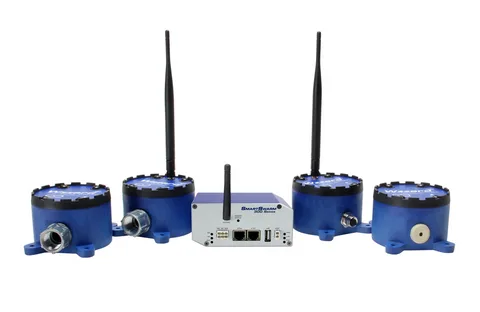
The Wireless Sensors Market is estimated to be valued at USD 9.1 billion in 2025 and is projected to reach USD 38.3 billion by 2035, registering a compound annual growth rate (CAGR) of 15.5% over the forecast period.
The wireless sensors market is gaining momentum as industries and consumers increasingly rely on connected technologies for real-time monitoring and automation. Known for their flexibility, scalability, and cost-effectiveness, wireless sensors are becoming integral to diverse applications, ranging from industrial automation and smart cities to healthcare, environmental monitoring, and automotive systems. By delivering accurate data without the limitations of wired infrastructure, wireless sensors are reshaping the future of intelligent systems and digital transformation.
Market Overview
Wireless sensors are devices that detect physical, chemical, or environmental conditions and transmit the data wirelessly to centralized systems or cloud platforms. Their ability to operate without complex wiring reduces installation costs and enhances system scalability. Supported by technologies such as Bluetooth, Wi-Fi, Zigbee, and LoRa, wireless sensors enable seamless integration into modern IoT ecosystems. From monitoring patient vitals in healthcare facilities to optimizing energy usage in smart buildings, wireless sensors continue to expand their role across industries. Their adaptability and efficiency underscore their growing importance in connected environments.
Get Ahead with Our Report: Request Your Sample Now!
Key Market Drivers
The rapid expansion of IoT ecosystems is a primary driver of the wireless sensors market. Demand for smart devices, connected homes, and intelligent infrastructure is fueling adoption. In industrial settings, wireless sensors are enabling predictive maintenance, improving asset management, and ensuring operational safety. The healthcare sector benefits from wearable devices and remote patient monitoring powered by wireless sensors, while automotive systems leverage them for advanced safety and performance features. The growing emphasis on energy efficiency, sustainability, and automation further accelerates the need for wireless sensing solutions.
Emerging Trends
The integration of wireless sensors with AI and machine learning is transforming their capabilities by enabling advanced analytics and predictive insights. Development of ultra-low-power sensors with extended battery life is addressing energy concerns in remote applications. Miniaturization and advancements in MEMS (micro-electromechanical systems) technology are expanding their use in compact and portable devices. Smart city initiatives are driving adoption of wireless environmental sensors for air quality monitoring, traffic management, and water systems. Additionally, the rise of 5G networks is enhancing sensor connectivity, paving the way for faster, more reliable data exchange across large-scale deployments.
Regional Insights
North America leads the market, supported by strong adoption of IoT technologies, industrial automation, and smart healthcare solutions. Europe is witnessing steady growth, driven by sustainability initiatives, smart city projects, and advancements in automotive engineering. The Asia-Pacific region is emerging as a dominant hub due to large-scale manufacturing, expanding consumer electronics demand, and investments in digital infrastructure. Latin America and the Middle East are increasingly adopting wireless sensors for energy management, agriculture, and industrial modernization as digital transformation accelerates in these regions.
Competitive Landscape
The wireless sensors market features a diverse competitive landscape that includes sensor manufacturers, IoT solution providers, and technology integrators. Companies are investing in R&D to develop advanced sensors with enhanced sensitivity, durability, and low-power operation. Strategic collaborations with industries such as healthcare, automotive, and utilities are broadening application scope. Vendors are differentiating through innovations in wireless protocols, interoperability, and seamless integration with cloud and edge platforms. Focus is being placed on delivering reliable, secure, and scalable solutions tailored to meet the demands of emerging smart environments.
Catapult Your Strategy: Secure Key Insights with Our Report Checkout!
Future Outlook
The future of the wireless sensors market will be defined by advancements in IoT, AI, and connectivity. As industries increasingly prioritize automation, efficiency, and sustainability, wireless sensors will remain central to enabling intelligent decision-making and real-time monitoring. Ongoing innovations in low-power design, miniaturization, and advanced connectivity will further strengthen their adoption. With their ability to support diverse applications across consumer, industrial, and environmental domains, wireless sensors will continue to drive the evolution of smart technologies and connected ecosystems.
About Future Market Insights (FMI)
Future Market Insights, Inc. (ESOMAR certified, recipient of the Stevie Award, and a member of the Greater New York Chamber of Commerce) offers profound insights into the driving factors that are boosting demand in the market. FMI stands as the leading global provider of market intelligence, advisory services, consulting, and events for the Packaging, Food and Beverage, Consumer Technology, Healthcare, Industrial, and Chemicals markets. With a vast team of 400 analysts worldwide, FMI provides global, regional, and local expertise on diverse domains and industry trends across more than 110 countries.
Contact Us:
Future Market Insights Inc.
Christiana Corporate, 200 Continental Drive,
Suite 401, Newark, Delaware – 19713, USA
T: +1-845-579-5705
For Sales Enquiries: sales@futuremarketinsights.com
Website: https://www.futuremarketinsights.com
LinkedIn| Twitter| Blogs | YouTube