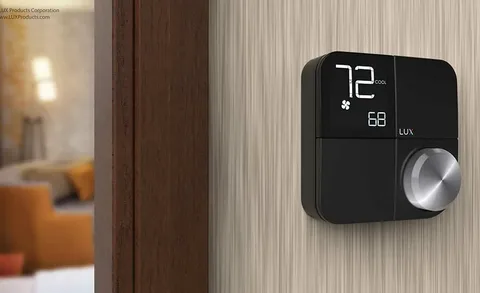
The Wi-Fi Smart Thermostat Market is estimated to be valued at USD 4.5 billion in 2025 and is projected to reach USD 30.5 billion by 2035, registering a compound annual growth rate (CAGR) of 21.0% over the forecast period.
The Wi-Fi smart thermostat market is gaining momentum as the shift toward energy-efficient and connected home solutions accelerates. These advanced devices allow users to monitor, control, and optimize indoor climate remotely, improving convenience and reducing energy consumption. By integrating wireless connectivity, machine learning, and compatibility with smart ecosystems, Wi-Fi smart thermostats are transforming traditional heating, ventilation, and air conditioning (HVAC) systems into intelligent solutions that adapt to user needs and environmental conditions.
Market Overview
Wi-Fi smart thermostats are modern climate control devices designed to provide automated and remote management of residential and commercial HVAC systems. They connect to home or office networks, enabling users to adjust settings via smartphones, voice assistants, or connected platforms. Beyond basic temperature regulation, these thermostats utilize advanced features such as geofencing, occupancy sensing, and adaptive learning to optimize comfort and efficiency. Their role in enabling smart homes and sustainable energy use makes them an integral part of the connected living ecosystem. From households and small businesses to large commercial facilities, Wi-Fi smart thermostats are reshaping energy management practices.
Get Ahead with Our Report: Request Your Sample Now!
Key Market Drivers
The rising adoption of smart home technologies and connected devices is a key driver for the Wi-Fi smart thermostat market. Growing awareness about energy conservation and the need to reduce utility costs is encouraging consumers to switch from traditional thermostats to smart alternatives. Integration with voice assistants and home automation platforms further enhances convenience and appeal. In commercial settings, the demand for efficient climate control solutions that balance comfort with energy savings is fueling adoption. In addition, government initiatives and incentives promoting sustainable building technologies are boosting the use of Wi-Fi smart thermostats across residential and industrial sectors.
Emerging Trends
Advances in artificial intelligence and machine learning are enabling thermostats to predict user behavior and optimize performance automatically. Integration with renewable energy systems and smart grids is enhancing their role in sustainable energy management. Growing adoption of voice control, app-based scheduling, and multi-zone temperature regulation highlights the evolution of user-centric features. Wi-Fi smart thermostats are increasingly being designed with sleek, intuitive interfaces to complement modern interiors. Expansion into industrial and commercial HVAC management, as well as the rise of interoperable devices within broader IoT ecosystems, underscores their growing versatility.
Regional Insights
North America leads in adoption, driven by widespread penetration of smart homes, strong awareness of energy efficiency, and established HVAC infrastructure. Europe is witnessing steady growth, supported by environmental regulations, rising energy costs, and increasing demand for home automation. The Asia-Pacific region is emerging as a dynamic market, fueled by urbanization, rapid adoption of connected devices, and expanding middle-class households. Latin America and the Middle East are also embracing Wi-Fi smart thermostats as awareness of sustainable technologies grows and investments in smart infrastructure accelerate.
Competitive Landscape
The competitive landscape of the Wi-Fi smart thermostat market includes smart home device manufacturers, HVAC solution providers, and technology innovators. Companies are focusing on expanding compatibility with major home automation platforms and enhancing AI-driven functionalities. Partnerships with utility providers and smart grid operators are helping vendors position their products as energy-saving solutions. Differentiation is being achieved through design innovation, ease of installation, and advanced analytics. Continuous investment in expanding product portfolios and global distribution networks is further shaping the competition.
Catapult Your Strategy: Secure Key Insights with Our Report Checkout!
Future Outlook
The future of the Wi-Fi smart thermostat market will be shaped by innovations in connectivity, automation, and energy efficiency. As households and businesses increasingly adopt smart living solutions, these devices will remain central to intelligent climate control. Integration with renewable energy systems, IoT ecosystems, and AI-driven platforms will further enhance their capabilities. With rising emphasis on sustainability, convenience, and cost reduction, Wi-Fi smart thermostats are set to play a pivotal role in shaping the future of smart and energy-efficient living.
About Future Market Insights (FMI)
Future Market Insights, Inc. (ESOMAR certified, recipient of the Stevie Award, and a member of the Greater New York Chamber of Commerce) offers profound insights into the driving factors that are boosting demand in the market. FMI stands as the leading global provider of market intelligence, advisory services, consulting, and events for the Packaging, Food and Beverage, Consumer Technology, Healthcare, Industrial, and Chemicals markets. With a vast team of 400 analysts worldwide, FMI provides global, regional, and local expertise on diverse domains and industry trends across more than 110 countries.
Contact Us:
Future Market Insights Inc.
Christiana Corporate, 200 Continental Drive,
Suite 401, Newark, Delaware – 19713, USA
T: +1-845-579-5705
For Sales Enquiries: sales@futuremarketinsights.com
Website: https://www.futuremarketinsights.com
LinkedIn| Twitter| Blogs | YouTube