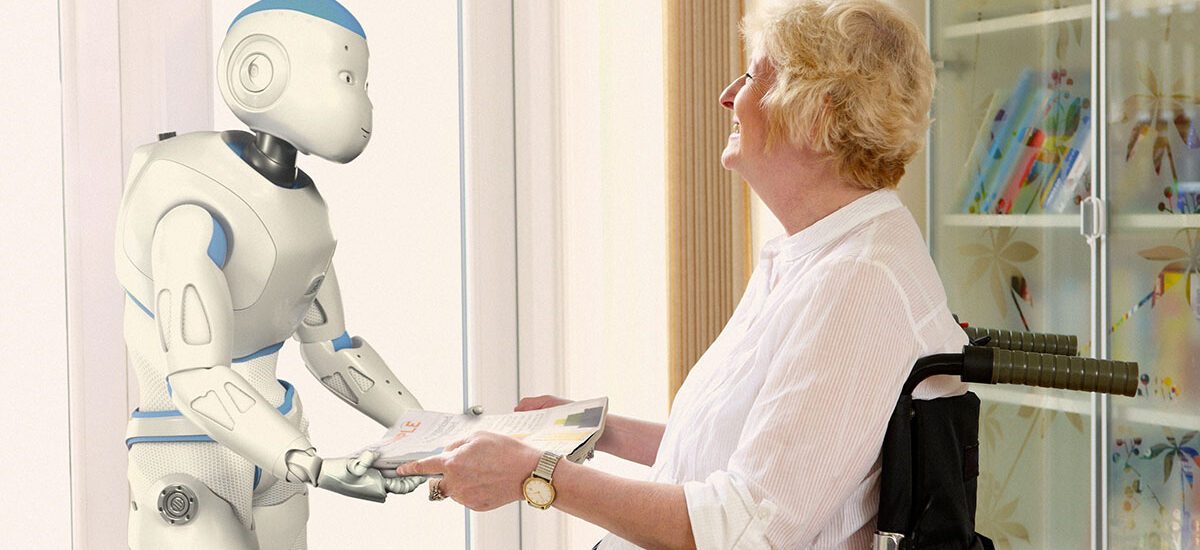
The global Healthcare Companion Robots Market is poised for significant expansion, with its value projected to rise from USD 3.1 billion in 2025 to USD 16.3 billion by 2035, reflecting an impressive CAGR of 18.0%, according to the latest industry research. Growing demand for emotional support solutions in healthcare, coupled with technological advancements in artificial intelligence (AI), robotics, and machine learning, is driving this momentum.
A Growing Need for Human-like Companionship in Healthcare
Healthcare systems worldwide are undergoing rapid transformation, shifting toward patient-centered and holistic care models. Companion robots are emerging as vital tools in this landscape, offering personalized emotional support, reducing loneliness, and assisting with cognitive and physical needs. Their role has become particularly relevant in pediatric and geriatric care, where emotional engagement and social interaction are critical to recovery and well-being.
The COVID-19 pandemic further accelerated adoption, as social isolation among elderly and vulnerable populations highlighted the need for non-invasive, interactive, and supportive technologies. Robots capable of monitoring health remotely, aiding in therapy, and alleviating anxiety have transitioned from experimental tools to mainstream healthcare solutions.
Click Here for More Information:- https://www.futuremarketinsights.com/reports/healthcare-companion-robots-market
Key Market Trends and Competitive Landscape
- Animal-like robots dominate the market: By 2025, animal-like companion robots are expected to account for 53.2% of total revenues. Their familiar and comforting design has proven especially effective in dementia care and pediatric therapy.
- Children remain the largest user group: The children’s segment will contribute 47.5% of revenues in 2025, driven by increasing deployment in pediatric hospitals, therapy centers, and home care. Robots such as Buddy (Blue Frog Robotics) and Moxie (Embodied Inc.) are gaining traction in supporting communication and emotional development in children.
- Regional growth hotspots:
- Asia-Pacific is projected to lead with a 50% market share by 2025, fueled by government-backed initiatives in Japan and South Korea to support the elderly with robotic care solutions.
- North America is set to witness the fastest growth, expected to capture 41% of the global market by 2025, supported by a robust healthcare infrastructure and strong presence of leading robotics innovators.
The competitive landscape is equally dynamic, with established players such as Blue Frog Robotics, Intuition Robotics, PARO Robots USA, Hanson Robotics, Honda Robotics, and Ubtech competing alongside startups like Cutii, Service Robotics, and Expper Technologies. Strategic partnerships, such as Intuition Robotics’ collaboration with New York State to provide robots for seniors, underline the sector’s commitment to scaling adoption.
Industry Benchmarks and Innovations
The market’s rapid ascent aligns with broader healthcare robotics trends. According to the International Robotics Federation, more than 34,000 assistance robots were deployed globally between 2020 and 2024. This mirrors the ongoing rise in AI-powered health technologies that integrate with smart home devices, wearables, and telehealth platforms.
Innovative product launches are reinforcing market growth:
- Hanson Robotics’ Grace, designed for elderly patients and isolated COVID-19 individuals, highlights how humanoid robots can combine healthcare functions with companionship.
- Kaspar, a humanoid robot developed by the University of Hertfordshire, is being used to help children with autism improve communication and social interaction skills.
These advances underscore the shift from robots as mechanical tools to empathetic, responsive partners in healthcare delivery.
Growth Drivers and Success Factors
Several macro trends are fueling market expansion:
- Rising geriatric population: By 2030, 1 in 6 people worldwide will be over 60, according to the World Health Organization (WHO). Companion robots provide critical support in aging-in-place models, reducing caregiver burden.
- Disability support: With 1 in 7 people experiencing some form of disability globally, robots offer tailored assistance to promote independence and improve quality of life.
- AI breakthroughs: Advanced speech recognition, interactive sensory features, and behavioral AI make robots more relatable, elevating their therapeutic and emotional value.
Challenges Ahead
Despite strong growth prospects, barriers remain. High costs of acquisition and maintenance restrict adoption, particularly in low-income regions. Usability challenges also persist, as older adults may struggle to adapt to robotic technologies. Furthermore, limited functionality in some models prevents widespread acceptance.
Get Sample Report: – https://www.futuremarketinsights.com/reports/sample/rep-gb-15933
Outlook for 2025–2035
With the market forecasted to expand more than fivefold by 2035, the next decade will mark a transformative era in healthcare robotics. As governments, hospitals, and technology firms align efforts, companion robots are expected to play an integral role in enhancing mental wellness, supporting chronic care management, and redefining patient engagement strategies.
“Companion robots are no longer futuristic concepts—they are becoming indispensable partners in healthcare,” said an industry spokesperson. “Their potential to bridge emotional gaps, reduce hospitalizations, and empower patients underscores their value not just as devices, but as companions in care.”
About Future Market Insights (FMI)
Future Market Insights, Inc. (ESOMAR certified, recipient of the Stevie Award, and a member of the Greater New York Chamber of Commerce) offers profound insights into the driving factors that are boosting demand in the market. FMI stands as the leading global provider of market intelligence, advisory services, consulting, and events for the Packaging, Food and Beverage, Consumer Technology, Healthcare, Industrial, and Chemicals markets. With a vast team of over 400 analysts worldwide, FMI provides global, regional, and local expertise on diverse domains and industry trends across more than 110 countries.
Contact Us:
Future Market Insights Inc.
Christiana Corporate, 200 Continental Drive,
Suite 401, Newark, Delaware – 19713, USA
T: +1-347-918-3531
For Sales Enquiries: sales@futuremarketinsights.com
Website: https://www.futuremarketinsights.com
LinkedIn| Twitter| Blogs | YouTube