The Passive Optical Network Market is estimated to be valued at USD 31.2 billion in 2025 and is projected to reach USD 118.6 billion by 2035, registering a compound annual growth rate (CAGR) of 14.3% over the forecast period.
The passive optical network (PON) market is gaining momentum as the demand for high-speed, reliable, and cost-efficient communication infrastructure continues to accelerate. Known for its ability to deliver robust broadband services with minimal power consumption, PON has become a preferred choice for telecommunication networks, enterprise solutions, and smart city applications. By offering scalable bandwidth and supporting multiple services on a single network, passive optical networks are shaping the future of digital connectivity.
Market Overview
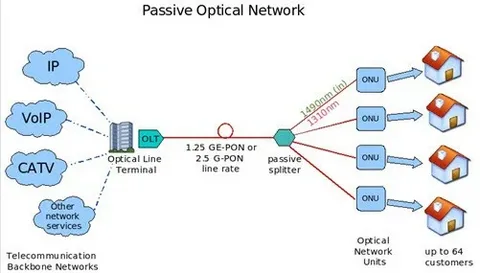
A passive optical network is a fiber-optic communication system that uses passive splitters to deliver broadband from a central office to multiple end-users without active electronic components between them. This architecture reduces both operational and maintenance costs while ensuring high efficiency and reliability. From delivering fiber-to-the-home (FTTH) and fiber-to-the-business (FTTB) solutions to powering backhaul for mobile networks, PON technology is playing a critical role in modern communication infrastructure. Its ability to support seamless integration of voice, video, and data services underscores its importance in advancing next-generation connectivity.
Get Ahead with Our Report: Request Your Sample Now!
Key Market Drivers
The rapid adoption of high-speed internet and the growing demand for bandwidth-intensive applications are key drivers for the PON market. Rising deployment of smart homes, cloud services, and streaming platforms requires efficient network solutions, making PON an attractive choice for service providers. Expansion of mobile networks, particularly with the evolution of 5G, is boosting demand for fiber-based backhaul supported by passive optical networks. Additionally, governments and enterprises are investing in digital infrastructure to enhance rural and urban connectivity, further accelerating PON adoption.
Emerging Trends
The integration of PON with next-generation technologies such as 5G and IoT is expanding its applications. Advancements in gigabit-capable PON variants are enabling faster speeds and greater capacity to support high-density user environments. Vendors are developing energy-efficient and modular PON solutions to address sustainability goals and reduce operational costs. Cloud-based network management platforms are being paired with PON deployments to enhance monitoring and service delivery. Furthermore, the convergence of fixed and mobile networks is highlighting PON’s role in creating unified communication infrastructures.
Regional Insights
North America remains a leading region in the PON market, supported by significant investments in broadband expansion and advanced telecom infrastructure. Europe is experiencing steady growth, driven by regulatory initiatives promoting fiber adoption and rising demand for high-speed connectivity in enterprises and households. The Asia-Pacific region is emerging as a dominant hub, fueled by large-scale fiber deployments, growing smartphone penetration, and rapid urbanization. Latin America and the Middle East are also increasingly adopting PON solutions as digital transformation accelerates and affordable, reliable connectivity becomes a priority.
Competitive Landscape
The competitive landscape of the passive optical network market includes telecommunication equipment providers, fiber-optic solution vendors, and network service companies. Firms are investing in developing advanced PON technologies with higher speeds and greater capacity to meet growing user demands. Strategic partnerships with telecom operators and governments are expanding deployment across urban and rural areas. Vendors are focusing on delivering scalable, low-power, and cost-effective solutions tailored to diverse applications. Differentiation is achieved through innovations in speed, energy efficiency, and integration with next-generation communication systems.
Catapult Your Strategy: Secure Key Insights with Our Report Checkout!
Future Outlook
The future of the passive optical network market will be shaped by continued advancements in broadband, mobile communication, and digital ecosystems. As the number of connected devices grows and demand for ultra-fast connectivity intensifies, PON will remain central to delivering efficient and scalable network solutions. Integration with 5G, cloud computing, and IoT ecosystems will further expand its relevance in enabling seamless communication. With rising global demand for cost-effective, energy-efficient, and high-capacity network architectures, passive optical networks will continue to drive the evolution of smart, connected, and digital societies.
About Future Market Insights (FMI)
Future Market Insights, Inc. (ESOMAR certified, recipient of the Stevie Award, and a member of the Greater New York Chamber of Commerce) offers profound insights into the driving factors that are boosting demand in the market. FMI stands as the leading global provider of market intelligence, advisory services, consulting, and events for the Packaging, Food and Beverage, Consumer Technology, Healthcare, Industrial, and Chemicals markets. With a vast team of 400 analysts worldwide, FMI provides global, regional, and local expertise on diverse domains and industry trends across more than 110 countries.
Contact Us:
Future Market Insights Inc.
Christiana Corporate, 200 Continental Drive,
Suite 401, Newark, Delaware – 19713, USA
T: +1-845-579-5705
For Sales Enquiries: sales@futuremarketinsights.com
Website: https://www.futuremarketinsights.com
LinkedIn| Twitter| Blogs | YouTube