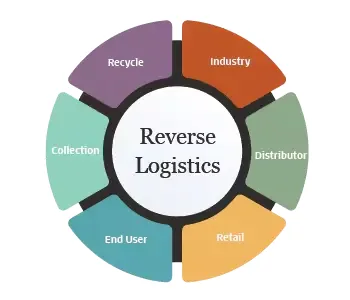
The Reverse Logistics Market is estimated to be valued at USD 1322.9 billion in 2025 and is projected to reach USD 4108.6 billion by 2035, registering a compound annual growth rate (CAGR) of 12.0% over the forecast period.
The reverse logistics market is gaining momentum as businesses increasingly recognize the importance of managing product returns, recycling, and reuse within modern supply chains. Known for its role in ensuring sustainability and customer satisfaction, reverse logistics enables the efficient handling of returned goods, excess inventory, and end-of-life products. By facilitating repair, refurbishment, recycling, and disposal, reverse logistics has become a key component across industries such as retail, e-commerce, automotive, electronics, and healthcare.
Market Overview
Reverse logistics refers to the process of moving goods from the end consumer back to the manufacturer or service provider for purposes such as returns management, repairs, recycling, or disposal. Unlike traditional logistics, which focuses on forward distribution, reverse logistics emphasizes value recovery and resource efficiency. It reduces waste, enhances brand loyalty, and supports compliance with environmental regulations. From online retail returns and automotive part refurbishments to electronics recycling programs, reverse logistics is driving efficiency and sustainability across diverse sectors.
Get Ahead with Our Report: Request Your Sample Now!
Key Market Drivers
The rapid growth of e-commerce and rising consumer expectations for convenient return policies are major drivers of the reverse logistics market. Increasing emphasis on sustainability and circular economy practices is encouraging businesses to adopt structured reverse logistics operations. In industries like electronics and automotive, the need to recycle and reuse components is further accelerating demand. Additionally, regulatory frameworks promoting responsible waste management and the recovery of valuable materials are propelling market adoption. The drive to reduce operational costs, improve customer satisfaction, and optimize supply chains is further strengthening the role of reverse logistics.
Emerging Trends
The integration of digital technologies such as artificial intelligence, blockchain, and data analytics is transforming reverse logistics operations. Smart tracking systems are enhancing visibility and efficiency in managing returns. Companies are adopting sustainable packaging and eco-friendly transportation models to reduce environmental impact. The rise of product-as-a-service models and circular economy strategies is reshaping how organizations handle returns and refurbishments. Partnerships between logistics providers, retailers, and recyclers are expanding service ecosystems, while the growing role of automation and robotics in warehouses is streamlining the returns process.
Regional Insights
North America remains a leading region in the reverse logistics market, supported by mature e-commerce platforms, strong consumer demand for flexible return policies, and robust sustainability initiatives. Europe is experiencing steady growth driven by strict environmental regulations, advancements in recycling infrastructure, and adoption of green supply chain strategies. The Asia-Pacific region is rapidly emerging as a key hub, fueled by large-scale e-commerce adoption, manufacturing activities, and growing focus on resource recovery. Latin America and the Middle East are also embracing reverse logistics practices as digital transformation accelerates and businesses prioritize cost efficiency and environmental responsibility.
Competitive Landscape
The competitive landscape of the reverse logistics market includes logistics service providers, retailers, manufacturers, and technology solution vendors. Companies are investing in advanced digital platforms to improve visibility, traceability, and efficiency in returns management. Strategic partnerships between logistics firms and retailers are enhancing customer-centric return experiences. Providers are focusing on developing sustainable solutions such as closed-loop supply chains and recycling initiatives. Differentiation is being achieved through innovations in technology integration, service flexibility, and environmentally conscious practices.
Exhaustive Market Report: A Complete Study
Future Outlook
The future of the reverse logistics market will be shaped by the growing importance of sustainability, customer experience, and resource optimization. As industries increasingly shift toward circular economy models, reverse logistics will remain a cornerstone for value recovery and environmental stewardship. Advancements in digitalization, automation, and data-driven insights will further enhance efficiency and scalability. With increasing demand for sustainable, cost-effective, and customer-friendly solutions, reverse logistics will continue to play a vital role in reshaping global supply chains and enabling responsible business practices.
About Future Market Insights (FMI)
Future Market Insights, Inc. (ESOMAR certified, recipient of the Stevie Award, and a member of the Greater New York Chamber of Commerce) offers profound insights into the driving factors that are boosting demand in the market. FMI stands as the leading global provider of market intelligence, advisory services, consulting, and events for the Packaging, Food and Beverage, Consumer Technology, Healthcare, Industrial, and Chemicals markets. With a vast team of 400 analysts worldwide, FMI provides global, regional, and local expertise on diverse domains and industry trends across more than 110 countries.
Contact Us:
Future Market Insights Inc.
Christiana Corporate, 200 Continental Drive,
Suite 401, Newark, Delaware – 19713, USA
T: +1-845-579-5705
For Sales Enquiries: sales@futuremarketinsights.com
Website: https://www.futuremarketinsights.com
LinkedIn| Twitter| Blogs | YouTube