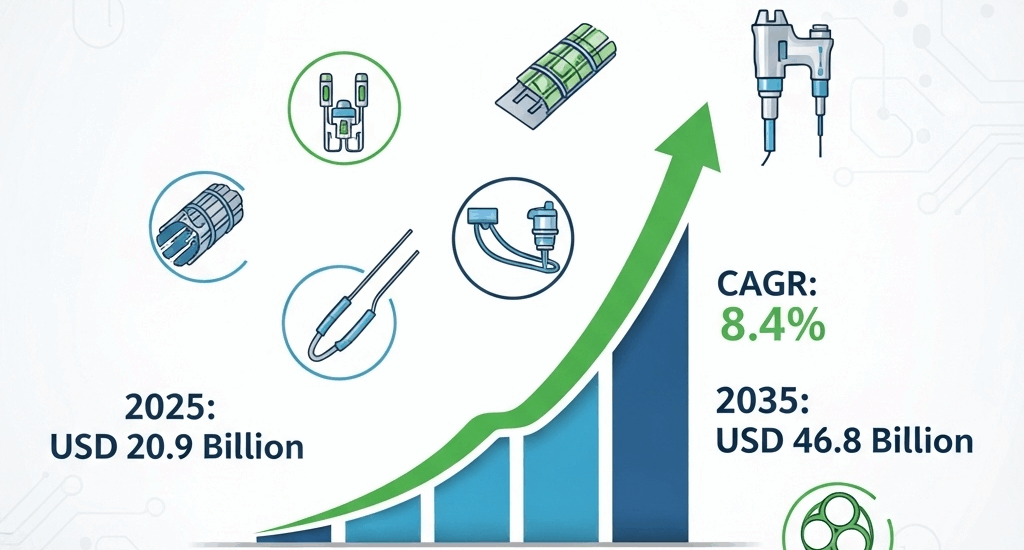
The global Interventional Cardiology Devices Market is projected to grow from USD 20.9 billion in 2025 to USD 46.8 billion by 2035, achieving a robust compound annual growth rate (CAGR) of 8.4%, according to the latest market forecast. The strong growth trajectory underscores the rising prevalence of cardiovascular diseases, technological advancements in device design, and the rapid adoption of minimally invasive procedures across global healthcare systems.
Key Market Highlights
- Market Value (2025): USD 20.9 billion
- Forecast Value (2035): USD 46.8 billion
- CAGR (2025–2035): 8.4%
- Leading Product Segment (2025): Angioplasty Balloons (28.0% revenue share)
- Top Growth Regions: North America, Asia-Pacific, Europe
- Key Players: Medtronic, Boston Scientific Corporation, Abbott, Edwards Lifesciences, Cardinal Health, Terumo Corporation, B. Braun Melsungen, Biosensors International Group, iVascular, BIOTRONIK
Driving Forces Behind Market Expansion
Click Here for More Information:- https://www.futuremarketinsights.com/reports/interventional-cardiology-devices-market
The surge in demand for interventional cardiology devices is driven by three major factors:
- Rising Prevalence of Cardiovascular Diseases: Cardiovascular disease remains the leading cause of death worldwide. By 2035, an estimated 45% of the U.S. population is projected to suffer from heart disease, further fueling device adoption.
- Technological Innovation: Enhanced angioplasty balloons, drug-eluting stents, and next-generation catheter systems are improving clinical outcomes, reducing restenosis, and expanding treatment options.
- Patient Preference for Minimally Invasive Procedures: Patients increasingly favor treatments that reduce recovery time, pain, and hospital stays—positioning interventional cardiology devices as a preferred option over open-heart surgeries.
Angioplasty Balloons Lead Product Growth
Angioplasty balloons will dominate with a 28.0% revenue share in 2025. Advances in material design, flexibility, and precision inflation have strengthened their role in percutaneous coronary interventions (PCI). Furthermore, drug-coated balloons, which reduce restenosis without permanent implants, are gaining acceptance across diverse patient groups, reinforcing this segment’s leadership.
Regional Outlook: North America and Asia-Pacific at the Forefront
North America is expected to remain the largest market, supported by high healthcare expenditure, sophisticated infrastructure, and regulatory approvals driving innovation. Recent FDA approvals include:
- Abbott’s XIENCE stents with one-month dual-antiplatelet therapy (DAPT) labeling for high-bleeding-risk patients.
- A breakthrough non-surgical heart valve to treat pediatric and adult patients with congenital heart disease.
Meanwhile, Asia-Pacific is emerging as a high-growth region, with China (CAGR 11.3%) and India (CAGR 10.5%) outpacing developed markets. Rising healthcare investments, increasing cardiovascular disease burden, and government-backed product development initiatives are fueling adoption.
Competitive Landscape: Innovation and Collaborations
The interventional cardiology devices market is moderately competitive, with leading companies investing heavily in R&D, partnerships, and global expansion. Recent industry developments include:
- Medtronic gaining FDA approval for its Evolut PRO+ TAVR System.
- Edward Lifesciences’ SAPIEN 3 Transcatheter Heart Valve receiving regulatory approval in China.
- Biosensors International launching its BioFreedom Ultra drug-coated stent with CE Mark approval.
- iVascular expanding its Angiolite drug-eluting stent portfolio to treat long lesions in coronary arteries.
These advancements not only intensify competition but also set new benchmarks in safety, efficiency, and patient outcomes, pushing smaller and regional players to innovate or partner with global leaders.
Industry Trends and Future Outlook
Get Sample Report: – https://www.futuremarketinsights.com/reports/sample/rep-gb-14684
Several key trends are expected to shape the market’s next decade:
- Rise in Diabetes and Hypertension Cases: Both are major cardiovascular risk factors, particularly in aging populations. In the U.S., one in four elderly individuals suffers from diabetes, contributing to higher demand for interventional treatments.
- Regulatory Focus on Safety and Efficacy: Streamlined approval pathways are enabling faster commercialization of breakthrough devices.
- Growing Adoption in Emerging Markets: Expanding healthcare infrastructure in countries such as China, India, and Brazil is opening untapped growth opportunities.
- Shift Toward Personalized Medicine: Devices tailored to patient-specific needs, such as shorter DAPT-indicated stents, are gaining prominence.
Opportunities for Market Players
Manufacturers are pursuing mergers, acquisitions, and collaborations to expand product portfolios and global reach. Strategic investments in digital health integration, real-time monitoring, and AI-driven diagnostics present untapped avenues for competitive differentiation.
About Future Market Insights (FMI)
Future Market Insights, Inc. (ESOMAR certified, recipient of the Stevie Award, and a member of the Greater New York Chamber of Commerce) offers profound insights into the driving factors that are boosting demand in the market. FMI stands as the leading global provider of market intelligence, advisory services, consulting, and events for the Packaging, Food and Beverage, Consumer Technology, Healthcare, Industrial, and Chemicals markets. With a vast team of over 400 analysts worldwide, FMI provides global, regional, and local expertise on diverse domains and industry trends across more than 110 countries.
Contact Us:
Future Market Insights Inc.
Christiana Corporate, 200 Continental Drive,
Suite 401, Newark, Delaware – 19713, USA
T: +1-347-918-3531
For Sales Enquiries: sales@futuremarketinsights.com
Website: https://www.futuremarketinsights.com
LinkedIn| Twitter| Blogs | YouTube