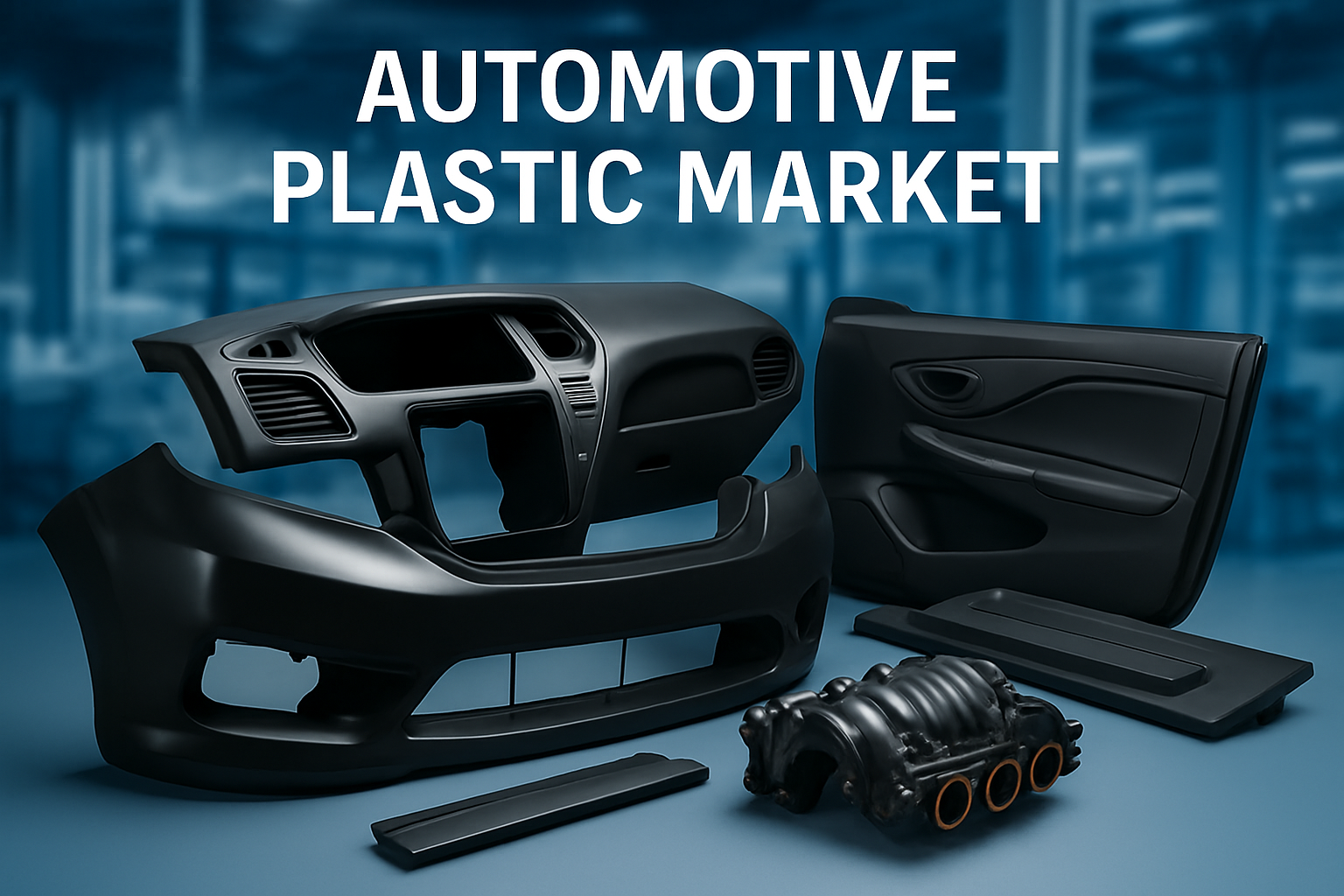
The global automotive plastic market is projected to grow significantly, reaching USD 75,188.3 million in 2024 and expanding at a CAGR of 6.8% through 2034. By the end of the forecast period, the industry is expected to achieve a market size of USD 145,333 million, supported by surging demand for lightweight, cost-effective, and sustainable materials. Year-on-year growth in 2024 is anticipated at 6.4%, marking a robust start to the decade-long expansion.
Automotive plastics are increasingly used in conventional and electric vehicles due to their lightweight, durable, and versatile properties. Rising demand for fuel efficiency, safety, and sustainability is driving manufacturers to replace metal with advanced polymers and composites.
Unlock Growth Potential – Request Your Sample Now and Explore Market Opportunities https://www.futuremarketinsights.com/reports/sample/rep-gb-19782
Key Industry Highlights
- Sustainability at the Forefront: Automakers are increasingly incorporating bio-based and recycled materials to cut carbon emissions. For example, Ford Motor Company has introduced soy-based foams in seat cushions and is exploring further bio-based alternatives.
- Polymer Composites Surge: Advanced composites are widely used to improve vehicle strength, reduce noise, and enhance fuel efficiency. Manufacturers such as BMW integrate these composites into electric and hybrid models to optimize performance.
- EV Adoption Boosts Plastics Demand: Electric vehicle manufacturers, including Tesla, are leveraging plastics for lightweighting and thermal insulation, ensuring safety and efficiency in next-generation EVs.
- Cost Advantages: Compared to metals, plastics reduce manufacturing costs, offer design flexibility, and enhance corrosion resistance—ultimately lowering lifecycle costs for automakers.
Collaboration Between Small Market Players to Strengthen Product Portfolio
While Tier 1 giants like BASF SE, SABIC, and Dow Chemical dominate with 45–50% global share, small and mid-sized players are intensifying collaborations to expand their presence. Partnerships in raw material development, recycling technologies, and thermoforming solutions are enabling Tier 2 and Tier 3 companies to compete effectively. These collaborations allow smaller firms to diversify their product portfolio and cater to niche segments such as EV battery housing, advanced interior panels, and lightweight chassis components.
Market Concentration
The automotive plastic market is moderately consolidated, led by global leaders with extensive R&D capabilities and advanced production facilities. Tier 1 companies focus on large-scale supply chains and integrated operations, while Tier 2 players like Evonik Industries, Covestro AG, and Eastman Chemical Company strengthen regional presence. Localized Tier 3 firms serve specific domestic markets, emphasizing affordability and specialized solutions. This three-tiered competitive landscape ensures a balance of global expertise and localized innovation.
Country-wise Insights
- China (CAGR: 8%)
China remains the world’s largest producer and consumer of automobiles, with strong government policies favoring electric and hybrid vehicle adoption. Supported by low-cost labor and advanced manufacturing infrastructure, China’s automotive plastic market is expected to reach USD 44.2 billion by 2034. - Germany (CAGR: 7.3%)
As a hub of automotive engineering excellence, Germany’s growth is driven by strict EU emission norms and cutting-edge R&D in lightweight materials. Advanced composites and plastics are increasingly integrated into German vehicle production lines, with the country expected to achieve USD 4.8 billion by 2034. - United States (CAGR: 6.6%)
The U.S. market is bolstered by leading manufacturers like General Motors, Ford, and Tesla, with rising EV adoption pushing demand for advanced plastic solutions. In 2023, EV sales crossed 1.4 million units, reinforcing plastics’ role in optimizing safety and efficiency. - Japan (CAGR: 6.3%)
Japan’s automotive sector is steadily incorporating plastics for fuel-efficient and hybrid models. Its well-established manufacturing ecosystem supports the use of advanced materials in both conventional and next-generation vehicles. - India (CAGR: 6.1%)
India’s expanding automotive production base and growing middle-class demand for affordable vehicles are driving significant uptake of cost-effective polypropylene and other plastics.
Leading companies shaping the global automotive plastic market include:
- BASF SE
- DuPont de Nemours, Inc.
- Covestro AG
- SABIC
- LyondellBasell Industries
- Solvay S.A.
- Mitsubishi Chemical Holdings Corporation
- LG Chem
- Dow Inc.
- Teijin Limited
- Sumitomo Chemical Co., Ltd.
- Asahi Kasei Corporation
- Evonik Industries AG
- Lanxess AG
- Toray Industries, Inc.
Automotive Plastic Industry Analyzed by Key Investment Segments
By Material Type:
Based on material type, the industry is divided into polypropylene (PP), polyurethane (PUR), acrylonitrile butadiene styrene (ABS), polyvinyl chloride (PVC), polyethylene (PE), polystyrene (PS), polycarbonate, polyamide (PA), acrylic (PMMA), plastic composites, and others.
By Application:
By application, the industry is divided into interior and exterior components and frames.
By End-use:
The product has applications in conventional vehicles and electric vehicles. The conventional vehicles segment is further divided into passenger cars, light commercial vehicles, and heavy commercial vehicles. The electric vehicles segment is segregated into fully-electric and hybrid vehicles.
By Region:
The industry is spread across North America, Latin America, Europe, South Asia, East Asia, and the Middle East and Africa.
Stay Ahead – Grab the Report: https://www.futuremarketinsights.com/checkout/19782
About Future Market Insights (FMI)
Future Market Insights, Inc. (ESOMAR certified, recipient of the Stevie Award, and a member of the Greater New York Chamber of Commerce) offers profound insights into the driving factors that are boosting demand in the market. FMI stands as the leading global provider of market intelligence, advisory services, consulting, and events for the Packaging, Food and Beverage, Consumer Technology, Healthcare, Industrial, and Chemicals markets. With a vast team of over 400 analysts worldwide, FMI provides global, regional, and local expertise on diverse domains and industry trends across more than 110 countries.
Contact Us:
Future Market Insights Inc.
Christiana Corporate, 200 Continental Drive,
Suite 401, Newark, Delaware – 19713, USA
T: +1-347-918-3531
For Sales Enquiries: sales@futuremarketinsights.com
Website: https://www.futuremarketinsights.com
LinkedIn| Twitter| Blogs | YouTube