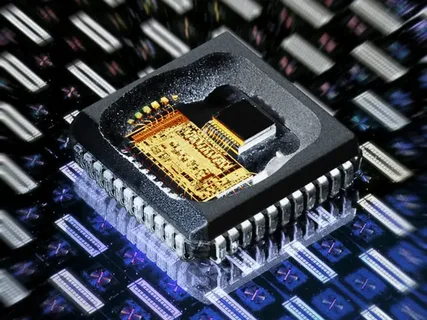
The MEMS Microdisplay Market is estimated to be valued at USD 4.8 billion in 2025 and is projected to reach USD 28.4 billion by 2035, registering a compound annual growth rate (CAGR) of 19.4% over the forecast period.
The MEMS microdisplay market is gaining traction as the demand for lightweight, energy-efficient, and high-performance display solutions continues to accelerate. Based on micro-electro-mechanical systems (MEMS) technology, these microdisplays are increasingly used in applications that require compact designs and superior image quality. From augmented reality (AR) and virtual reality (VR) devices to automotive head-up displays and wearable electronics, MEMS microdisplays are emerging as a cornerstone of next-generation visual technologies.
Market Overview
MEMS microdisplays utilize tiny micromechanical components to modulate light and project high-resolution images in compact form factors. Their ability to deliver sharp visuals with low power consumption makes them particularly suitable for portable and wearable devices. MEMS-based solutions address the challenges of traditional display technologies by offering scalability, durability, and cost-efficiency. The growing adoption of AR glasses, compact projectors, and advanced automotive systems underscores the increasing role of MEMS microdisplays in enabling immersive and efficient visual experiences.
Get Ahead with Our Report: Request Your Sample Now!
Key Market Drivers
The rising demand for AR and VR technologies is a major driver for the MEMS microdisplay market. Lightweight and power-efficient display solutions are essential for consumer and enterprise-grade wearable devices, where MEMS displays are proving ideal. The integration of advanced head-up displays in automobiles, coupled with the growing popularity of portable projectors, is further boosting demand. Additionally, industrial and defense applications are relying on MEMS microdisplays for training, visualization, and simulation, highlighting their versatility. The push toward compact, high-resolution, and low-power solutions is accelerating adoption across diverse sectors.
Emerging Trends
The development of high-brightness MEMS microdisplays is enhancing outdoor visibility, making them suitable for navigation, automotive, and military applications. Integration with AR smart glasses and mixed reality headsets is a key trend as consumer electronics and enterprise tools evolve toward immersive solutions. Manufacturers are innovating to improve resolution, brightness, and energy efficiency, enabling broader applications. The convergence of MEMS microdisplays with AI-driven image processing and IoT ecosystems is expanding their role in connected devices. Furthermore, the adoption of MEMS projectors in education, healthcare, and entertainment highlights their adaptability.
Regional Insights
North America is a significant market for MEMS microdisplays, supported by strong demand for AR/VR technologies, defense applications, and advanced automotive solutions. Europe is witnessing growth due to innovations in industrial automation, healthcare visualization, and immersive training systems. The Asia-Pacific region is emerging as a key hub, fueled by rapid growth in consumer electronics, large-scale manufacturing, and the adoption of AR/VR in entertainment and gaming. Latin America and the Middle East are also embracing MEMS microdisplay solutions as industries expand their use of compact and efficient display technologies.
Competitive Landscape
The competitive landscape of the MEMS microdisplay market includes display manufacturers, semiconductor companies, and technology solution providers. Vendors are focusing on developing higher-resolution MEMS displays, integrating them into smart glasses, portable projectors, and automotive systems. Strategic collaborations with consumer electronics brands, automotive OEMs, and defense organizations are helping expand adoption. Differentiation is being achieved through advancements in brightness, reliability, energy efficiency, and miniaturization. Companies are also investing in expanding MEMS technology applications to meet the needs of emerging industries.
Catapult Your Strategy: Secure Key Insights with Our Report Checkout!
Future Outlook
The future of the MEMS microdisplay market will be shaped by growing demand for immersive experiences, portable technologies, and energy-efficient visual solutions. As AR, VR, and mixed reality applications expand, MEMS displays will play a central role in enabling compact and high-performance devices. Continued innovation in resolution, brightness, and durability will further broaden their adoption across consumer, industrial, and defense sectors. With the push toward miniaturization and smart connectivity, MEMS microdisplays are poised to become a key enabler of next-generation display ecosystems.
About Future Market Insights (FMI)
Future Market Insights, Inc. (ESOMAR certified, recipient of the Stevie Award, and a member of the Greater New York Chamber of Commerce) offers profound insights into the driving factors that are boosting demand in the market. FMI stands as the leading global provider of market intelligence, advisory services, consulting, and events for the Packaging, Food and Beverage, Consumer Technology, Healthcare, Industrial, and Chemicals markets. With a vast team of 400 analysts worldwide, FMI provides global, regional, and local expertise on diverse domains and industry trends across more than 110 countries.
Contact Us:
Future Market Insights Inc.
Christiana Corporate, 200 Continental Drive,
Suite 401, Newark, Delaware – 19713, USA
T: +1-845-579-5705
For Sales Enquiries: sales@futuremarketinsights.com
Website: https://www.futuremarketinsights.com
LinkedIn| Twitter| Blogs | YouTube