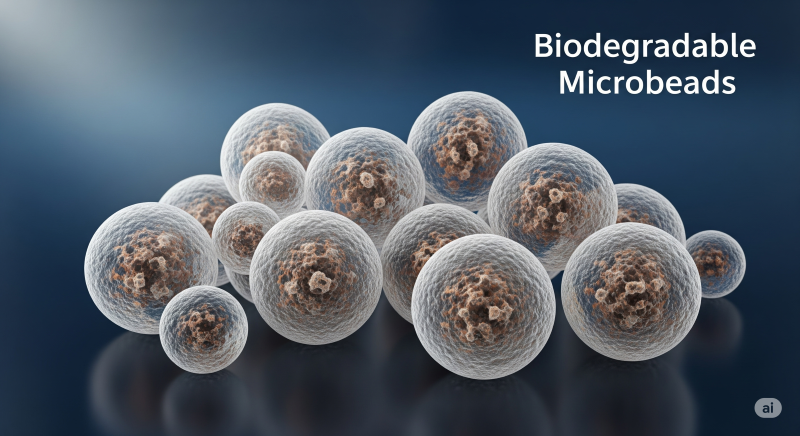
As the global call for sustainability grows louder, industries are increasingly exploring innovative solutions to minimize environmental harm. One such breakthrough is the emergence of biodegradable microbeads—tiny, eco-friendly alternatives to conventional plastic microbeads that are typically used in cosmetics, personal care, and cleaning products. According to recent industry forecasts, the Biodegradable Microbeads Market is set to experience significant growth, with its value projected to reach USD 11.33 billion by 2035, growing at a compound annual growth rate (CAGR) of 8.1%.
Discover key market opportunities – Request your sample report now! https://www.futuremarketinsights.com/reports/sample/rep-gb-15533
A Sustainable Alternative to Plastic
Biodegradable microbeads are gaining traction as the world seeks to eliminate microplastic pollution from oceans, rivers, and soil. Traditional plastic microbeads, commonly found in exfoliating facial scrubs, toothpaste, and household cleaning products, have long been a contributor to environmental degradation. These small particles are non-biodegradable, causing them to persist in ecosystems for years and harming marine life and wildlife.
In stark contrast, biodegradable microbeads break down naturally over time, reducing their long-term environmental impact. Derived from renewable sources such as plant-based materials, these new-generation microbeads offer an environmentally friendly solution without compromising on product performance. Their ability to degrade naturally without leaving harmful residues behind has made them a compelling choice for both consumers and manufacturers.
Market Drivers: Consumer Demand and Regulatory Pressure
The surge in the biodegradable microbeads market can largely be attributed to growing consumer demand for eco-conscious products. As environmental awareness rises, consumers are increasingly favoring products that are sustainable, cruelty-free, and free of harmful chemicals. In fact, a 2023 survey revealed that more than 70% of consumers were willing to pay a premium for products with biodegradable or recyclable packaging.
Furthermore, the global regulatory landscape has placed a spotlight on the reduction of microplastic pollution. Governments worldwide are introducing stringent regulations and bans on plastic microbeads in personal care and household products. For instance, in 2015, the United States passed the Microbead-Free Waters Act, which banned the sale of products containing plastic microbeads. The European Union and several other countries have since followed suit, creating an urgent need for biodegradable alternatives.
Regional Outlook:
North America dominates the biodegradable microbeads market, driven by stringent regulations and high sustainability awareness, especially in the U.S., which has led the shift from plastic to biodegradable alternatives. Canada is also seeing rising demand as eco-friendly solutions gain traction. Europe follows closely, propelled by the EU’s regulatory framework and increasing consumer demand for sustainable personal care products, particularly in the UK, France, and Germany. In the Asia-Pacific region, China and India show promising growth due to a rising middle class and growing disposable income, though balancing affordability with sustainability remains a challenge in these cost-sensitive markets.
Challenges and Opportunities
Despite its promising outlook, the biodegradable microbeads market faces several challenges. One of the primary obstacles is the higher production cost compared to traditional plastic microbeads. Manufacturers are working on reducing costs by improving production efficiency and leveraging economies of scale, but price remains a significant concern, especially in price-sensitive markets.
Additionally, the lack of standardized definitions and regulations regarding “biodegradability” across different regions has created uncertainty in the market. Consumers are often unclear about which products are truly biodegradable and which are merely marketed as such. This has led to calls for stricter guidelines and third-party certification to ensure transparency and build consumer trust.
On the flip side, the growing demand for natural, eco-friendly ingredients presents a significant opportunity for innovation. Biodegradable microbeads made from plant-based sources such as cornstarch, rice bran, and algae are gaining attention, and ongoing R&D could lead to even more cost-effective, efficient alternatives in the coming years.
Key Segmentation
By Microbeads Type:
- Dispersible
- Soft Beads
- Exfoliator Scrub
By Application Outlook:
- Composites
- Paint and Coatings
- Cosmetics and Personal Care
- Others
By Material Type:
- Cellulose
- Aliphatic Polyesters
- Starch
By Compounding:
- Powder-based
- Granule-based
By Region:
- North America
- Latin America
- Europe
- East Asia
- South Asia
- Oceania
- The Middle East & Africa (MEA)
Access the complete industry report—buy now! https://www.futuremarketinsights.com/checkout/15533
About Future Market Insights (FMI)
Future Market Insights, Inc. (ESOMAR certified, recipient of the Stevie Award, and a member of the Greater New York Chamber of Commerce) offers profound insights into the driving factors that are boosting demand in the market. FMI stands as the leading global provider of market intelligence, advisory services, consulting, and events for the Packaging, Food and Beverage, Consumer Technology, Healthcare, Industrial, and Chemicals markets. With a vast team of over 400 analysts worldwide, FMI provides global, regional, and local expertise on diverse domains and industry trends across more than 110 countries.
Contact Us:
Future Market Insights Inc.
Christiana Corporate, 200 Continental Drive,
Suite 401, Newark, Delaware – 19713, USA
T: +1-347-918-3531
For Sales Enquiries: sales@futuremarketinsights.com
Website: https://www.futuremarketinsights.com
LinkedIn| Twitter| Blogs | YouTube