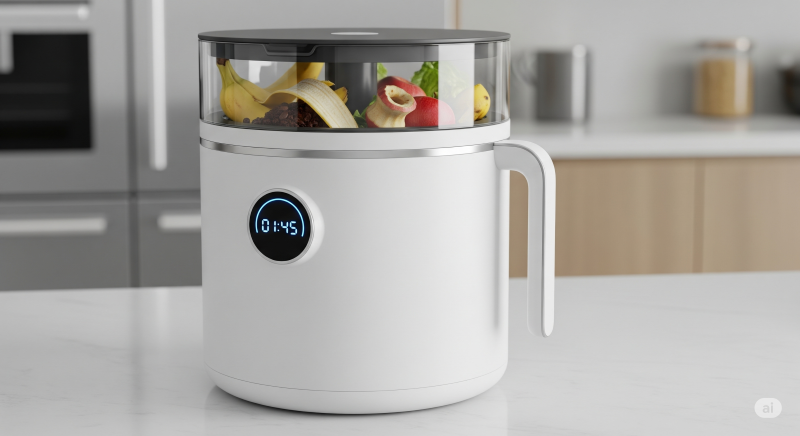
In a world where sustainability has moved to the forefront of global concerns, industries are constantly innovating to address the growing pressures of waste management and environmental conservation. One such industry that has emerged as a vital player in the sustainability movement is the food recycling sector. As the global food waste crisis continues to escalate, food recyclers have found innovative ways to turn wasted food into valuable resources, from compost and energy production to animal feed and bio-based products.
The food recycler market is projected to reach an estimated value of USD 46.6 billion by 2025, with an impressive forecasted growth to USD 80.4 billion by 2035. The compound annual growth rate (CAGR) over the next decade is anticipated to be 5.6%, highlighting the expanding opportunities and the significant role this market will play in the future of waste management and resource recovery.
Unlock exclusive insights – Request your sample report! https://www.futuremarketinsights.com/reports/sample/rep-gb-10168
The Scope and Dynamics of the Food Recycler Market
The food recycler market spans a variety of industries, ranging from commercial waste management companies to specialized recycling technologies. It is primarily driven by three main factors:
- Increasing Food Waste: As global food production and consumption increase, so does food waste. According to the Food and Agriculture Organization (FAO), nearly one-third of all food produced is wasted, amounting to around 1.3 billion tons annually. This immense volume of food waste contributes to environmental degradation and wasted resources, making food recycling a crucial aspect of waste management systems worldwide.
- Technological Innovation: Advanced recycling technologies such as aerobic and anaerobic digestion, composting, and food-to-energy systems have made it easier to convert food waste into useful products. These technologies play an essential role in reducing greenhouse gas emissions from landfills, contributing to cleaner and more sustainable waste management processes.
- Government Regulations and Policies: Countries around the world are adopting stricter regulations aimed at reducing food waste and increasing sustainability. For example, in the European Union, the Circular Economy Action Plan encourages the recycling of organic waste and the development of systems to manage food waste better. Such policies are influencing the food recycling sector and incentivizing companies to innovate and invest in more sustainable solutions.
Regional Insights
- North America: The U.S. and Canada lead in food recycling, with robust waste diversion programs and policies like the Waste Not, Want Not Act promoting recycling and energy conversion.
- Europe: Europe is a hub for food recycling innovation, driven by the EU’s sustainability policies. Countries like Germany and Sweden are leaders, using technologies like anaerobic digestion to convert food waste into biogas.
- Asia Pacific: Japan, China, and India are progressing in food waste management. Japan has established recycling systems, while China and India focus on addressing food waste through government initiatives, despite infrastructure challenges.
- Latin America & Middle East: These regions are developing their food recycling markets, with urbanization and population growth driving the need for efficient waste management solutions and stricter regulations.
The Role of Technology in Food Recycling
Technology plays an increasingly important role in the food recycler market. Key innovations include:
- Smart Waste Management Systems: These systems use sensors, AI, and IoT (Internet of Things) to monitor and optimize food waste processing. They can track waste streams, predict future waste volumes, and ensure that the recycling process is efficient and effective.
- Aerobic and Anaerobic Digestion: These biological processes break down organic matter in the absence or presence of oxygen, respectively, to convert food waste into useful products like compost or biogas. Anaerobic digestion, in particular, has gained popularity as a means of producing renewable energy from food waste.
- Waste-to-Energy (WTE) Technologies: These technologies convert food waste into energy through processes like incineration or gasification. The energy produced can be used to power homes, businesses, or even the waste processing facility itself.
- Advanced Sorting and Separation Technologies: Technologies that can automatically separate food waste from non-recyclable materials are increasingly being developed. These innovations make it easier to ensure that food waste is processed correctly and efficiently.
Challenges and Opportunities
Despite the promising growth prospects, the food recycler market faces several challenges:
- Infrastructural Limitations: In many regions, especially in developing countries, the lack of proper waste management infrastructure can hinder the adoption of food recycling technologies. Investments in infrastructure are necessary to make food recycling more widespread.
- Consumer Awareness and Behavioral Change: A significant amount of food waste originates from households, and changing consumer behavior is crucial in reducing waste at the source. Educational campaigns and incentives to encourage better food management are key to curbing food waste.
- Regulatory Hurdles: Although there are supportive policies in many regions, inconsistent regulations and enforcement can pose challenges to the growth of the food recycling market. Governments must collaborate to create global standards that can drive market development.
Key Companies Profiled
- Whirlpool’s
- Food Cycle Science
- Wastefox
- Joseph Joseph
- Nine Stars Group (USA) Inc.
- Simplehuman
- Smart Cara
- Food Cycler
- Mares Group
Key Segments
By Component:
- Product
- Services
By Price Range:
- Economic
- Premium
By Distribution Channel:
- OEM
- Distributors
- Retailers
- E-commerce
By Material Type:
- Steel
- Stainless Steel
- Carbon Steel
- Plastic
- Fibre
- Others
By End Use:
- Residential
- Commercial
By Region:
- North America
- Latin America
- Europe
- Asia Pacific
- MEA
Access the complete industry report—buy now! https://www.futuremarketinsights.com/checkout/10168
About Future Market Insights (FMI)
Future Market Insights, Inc. (ESOMAR certified, recipient of the Stevie Award, and a member of the Greater New York Chamber of Commerce) offers profound insights into the driving factors that are boosting demand in the market. FMI stands as the leading global provider of market intelligence, advisory services, consulting, and events for the Packaging, Food and Beverage, Consumer Technology, Healthcare, Industrial, and Chemicals markets. With a vast team of over 400 analysts worldwide, FMI provides global, regional, and local expertise on diverse domains and industry trends across more than 110 countries.
Contact FMI:
Future Market Insights Inc.
Christiana Corporate, 200 Continental Drive,
Suite 401, Newark, Delaware – 19713, USA
T: +1-347-918-3531
For Sales Enquiries: sales@futuremarketinsights.com
Website: https://www.futuremarketinsights.com
LinkedIn| Twitter| Blogs | YouTube