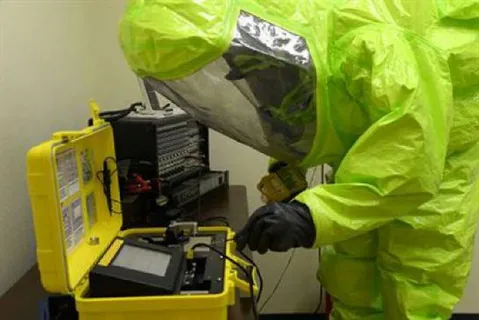
The Non-ionizing Radiation EMF Detection, Measurement, and Safety Market is estimated to be valued at USD 74.8 billion in 2025 and is projected to reach USD 111.8 billion by 2035, registering a compound annual growth rate (CAGR) of 4.1% over the forecast period.
The non-ionizing radiation EMF detection, measurement, and safety market is expanding as awareness grows regarding the potential health impacts of electromagnetic fields (EMFs) generated by electrical equipment, communication systems, and industrial processes. These solutions are critical for assessing EMF exposure levels, ensuring compliance with safety standards, and implementing protective measures in environments where people are regularly exposed to non-ionizing radiation. Industries, regulatory bodies, and research institutions are increasingly relying on accurate measurement tools and monitoring systems to safeguard both workers and the public.
Market Overview
Non-ionizing radiation EMF detection and measurement solutions are designed to identify, quantify, and monitor exposure to electromagnetic fields across a range of frequencies, including extremely low frequency (ELF), radiofrequency (RF), and microwave radiation. These devices are used in workplaces such as manufacturing plants, power generation facilities, telecommunications networks, and laboratories to ensure that EMF levels remain within safe thresholds. By providing accurate data, these tools enable organizations to take preventive measures, design safer environments, and adhere to international exposure guidelines.
Get Ahead with Our Report: Request Your Sample Now!
Key Market Drivers
The expansion of wireless communication infrastructure, including 5G networks, has increased public and occupational exposure to EMFs, driving the demand for detection and safety solutions. Regulatory bodies and occupational health agencies are enforcing stricter guidelines for EMF exposure, prompting industries to adopt monitoring systems for compliance. Growing research into the potential biological effects of long-term EMF exposure is also encouraging organizations to invest in proactive safety measures. Furthermore, the proliferation of electrical and electronic devices in daily life is boosting awareness of EMF-related safety practices.
Emerging Trends
The market is witnessing the adoption of portable, user-friendly EMF meters for field measurements, enabling real-time monitoring in diverse environments. Advanced sensors integrated with data logging, wireless connectivity, and cloud-based analysis are enhancing reporting accuracy and accessibility. AI-driven analytics are emerging to detect anomalies and predict potential risks based on usage patterns. Additionally, wearable EMF monitoring devices are gaining traction for continuous personal exposure tracking, particularly in high-risk occupational settings.
Regional Insights
North America holds a significant share of the market, supported by strict workplace safety regulations, robust telecommunications infrastructure, and active research initiatives. Europe is experiencing steady growth, driven by stringent compliance standards and public health awareness campaigns. The Asia-Pacific region is rapidly expanding due to the large-scale deployment of wireless communication systems, increased industrialization, and growing investment in workplace safety programs.
Competitive Landscape
The market comprises specialized EMF detection equipment manufacturers, safety solution providers, and research-focused technology firms. Companies are focusing on developing high-precision instruments with multi-frequency detection capabilities, advanced analytics, and user-friendly interfaces. Strategic collaborations between equipment manufacturers, regulatory authorities, and research institutions are fostering innovation and accelerating the adoption of advanced EMF safety solutions across various industries.
Future Outlook
The future of the non-ionizing radiation EMF detection, measurement, and safety market will be shaped by technological advancements in sensor accuracy, the integration of AI for predictive risk assessment, and the expansion of wireless networks worldwide. As EMF exposure becomes an increasingly important workplace and public health consideration, these solutions will be essential in safeguarding people, ensuring regulatory compliance, and supporting informed decision-making in both industrial and consumer environments. Their role in enabling safe and sustainable technological progress will make them a vital component of modern safety infrastructure.
Catapult Your Strategy: Secure Key Insights with Our Report Checkout!
About Future Market Insights (FMI)
Future Market Insights, Inc. (ESOMAR certified, recipient of the Stevie Award, and a member of the Greater New York Chamber of Commerce) offers profound insights into the driving factors that are boosting demand in the market. FMI stands as the leading global provider of market intelligence, advisory services, consulting, and events for the Packaging, Food and Beverage, Consumer Technology, Healthcare, Industrial, and Chemicals markets. With a vast team of 400 analysts worldwide, FMI provides global, regional, and local expertise on diverse domains and industry trends across more than 110 countries.
Contact Us:
Future Market Insights Inc.
Christiana Corporate, 200 Continental Drive,
Suite 401, Newark, Delaware – 19713, USA
T: +1-845-579-5705
For Sales Enquiries: sales@futuremarketinsights.com
Website: https://www.futuremarketinsights.com
LinkedIn| Twitter| Blogs | YouTube