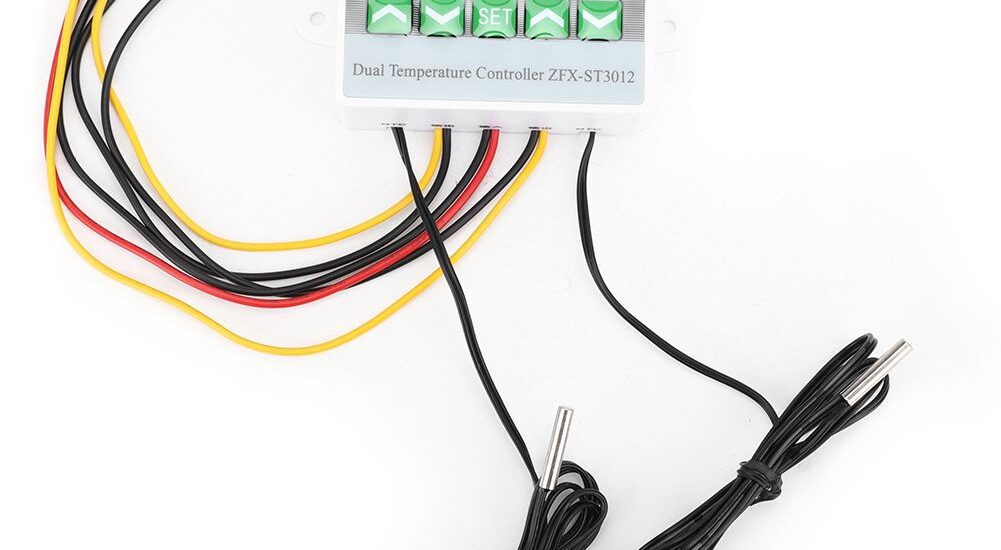
The global industrial temperature controller market is witnessing significant growth, driven by rising demand for precision, energy efficiency, and smart manufacturing solutions. From chemical processing to pharmaceutical production, modern industries are increasingly deploying advanced temperature control systems to maintain safety, improve yields, and ensure regulatory compliance.
As businesses shift toward Industry 4.0, integration of programmable logic, PID (proportional-integral-derivative) algorithms, and IoT-based systems is revolutionizing the way temperature controllers are used across industrial applications. These next-generation devices offer enhanced capabilities such as remote monitoring, automated adjustments, real-time feedback, and multi-zone control—delivering seamless control over complex processes.
Pharmaceutical and chemical industries remain among the top consumers, relying on accurate thermal control during critical operations like reaction, distillation, and material storage. These sectors require controllers that ensure strict compliance with validation protocols and operational safety—making precise and responsive systems a non-negotiable necessity.
With the global market projected to grow from USD 2.4 billion in 2025 to USD 3.7 billion by 2035, at a CAGR of 4.6%, the future of temperature control is smart, digital, and highly adaptive.
Gain Valuable Insights from Industry Experts to Shape Your Growth Strategies. Access our Sample Report Now
Report Coverage & Deliverables
The latest market research report offers in-depth insights on industrial temperature controllers, including:
- Market size and forecasts (2025–2035)
- Competitive landscape with profiles of top players
- Technological innovations and future trends
- Application-specific insights and use case analysis
- Regional performance metrics
- Impact of industrial IoT, AI, and cloud integration
Key Factors Shaping Market Dynamics
Key growth drivers include rising automation, increasing demand for precision control, energy efficiency regulations, and the proliferation of connected manufacturing environments.
Industrial Temperature Controller Market Heats Up with Automation-Driven Demand Surge
The shift toward automated industrial ecosystems is accelerating the adoption of advanced temperature controllers. These systems are vital in maintaining process consistency, especially in industries where minute deviations in temperature can lead to costly outcomes.
Modern temperature controllers now integrate smart features like predictive diagnostics and self-tuning PID, minimizing human intervention while ensuring optimal performance in dynamic production environments.
Rising Industrial Precision Needs Propel Temperature Controller Market Growth
The need for precise temperature regulation has never been more critical, especially in industries such as semiconductors, food processing, and biotechnology. These sectors demand high-performance controllers capable of handling minute thermal fluctuations to meet quality and safety standards.
Additionally, the emphasis on data logging and digital traceability has elevated the importance of controllers with built-in digital interfaces, enabling seamless integration with SCADA and ERP systems.
Smart Manufacturing Trends Fuel Expansion of Industrial Temperature Controller Market
With the rise of smart factories, manufacturers are investing in systems that offer not just control, but insights. AI-powered forecasting, real-time temperature mapping, and adaptive response mechanisms are becoming standard in modern temperature controllers.
Cloud-based monitoring tools are also gaining traction, allowing operators to analyze performance, detect anomalies, and troubleshoot issues remotely—ensuring uptime and reducing costly downtimes.
“Industrial temperature controllers are no longer passive devices; they’re becoming intelligent assets that enhance operational efficiency. As manufacturing shifts toward connected, predictive ecosystems, demand for smart and energy-efficient control systems is expected to surge.” opines Nikhil Kaitwade, Associate Vice President at Future Market Insights (FMI).
Key Takeaways
- Market size to grow from USD 2.4 billion (2025) to USD 3.7 billion (2035)
- CAGR of 4.6% over the forecast period
- Pharmaceutical and chemical industries remain dominant end users
- Smart features such as AI forecasting and cloud diagnostics driving innovation
- North America and East Asia lead global market share
- IoT and digital integration redefining controller functionality
Energy Efficiency Push Drives Innovation in Industrial Temperature Controllers
Energy-efficient manufacturing is at the forefront of industrial transformation. Companies are under pressure to reduce energy consumption while maintaining precise control across operations. Advanced temperature controllers equipped with energy optimization features are helping manufacturers strike this balance.
From adaptive heating strategies to load balancing capabilities, these innovations contribute to cost savings and environmental sustainability—making them a key consideration in capital investments.
Digital Integration Sparks New Opportunities in Temperature Controller Market
Integration with PLCs, HMIs, and cloud platforms has unlocked new levels of functionality in temperature control systems. The rise of edge computing further empowers these devices to make localized decisions, reducing latency and enhancing responsiveness.
This evolution is opening doors for newer use cases in additive manufacturing, flexible electronics, and next-gen material science—fueling the need for versatile, digitally-connected controllers.
Industrial Temperature Controller Market – Key Players
- Fuji Electric – Known for compact, PID-based controllers with robust industrial integration.
- Panasonic – Offers energy-efficient and digitally adaptive temperature control solutions.
- Omron Industrial – Leader in smart control solutions with integrated IoT capabilities.
- Analog Devices – Supplies high-precision temperature sensing and control components.
- Omega Engineering – Offers scalable temperature control systems for lab-to-industrial scale.
- Watlow – Pioneers in thermal system integration and multi-loop temperature control.
- Siemens – Delivers smart factory-ready solutions with advanced diagnostics.
- Autonics – Popular for user-friendly and programmable controllers across Asia-Pacific.
- Dwyer – Specializes in HVAC and process industry-specific temperature control devices.
- Schneider Electric – Offers industrial automation systems with integrated thermal control.
Industrial IoT Adoption Boosts Demand for Advanced Temperature Controllers
As IIoT becomes central to operational strategies, temperature controllers are evolving into data-rich, connected devices. Sensors, actuators, and controllers now communicate across industrial networks, providing actionable insights and predictive alerts.
This connectivity enhances not only process control but also preventive maintenance—drastically reducing unplanned outages and enabling manufacturers to stay ahead of potential failures.
Regional Analysis
- North America: Strong growth driven by automation in pharmaceuticals and food industries.
- Latin America: Gradual adoption supported by rising industrial infrastructure.
- Western Europe: High emphasis on energy-efficient systems and smart manufacturing.
- Eastern Europe: Emerging market with growing demand from automotive and machinery sectors.
- East Asia: Dominant market led by China, Japan, and South Korea’s smart factory boom.
- South Asia & Pacific: Rapid industrialization in India, Indonesia, and Vietnam fueling growth.
- Middle East & Africa: Growth tied to petrochemical and energy sector developments.
Latest Operational Equipment Reports:
Segmentation
By Product Type:
By product type, the industry is segmented into on/off controllers, proportional controllers, and PID controllers.
By Category:
By category, the industry is categorized into analog and digital.
By End Use:
By end use, the industry is segmented into metals, mining & metallurgy; chemicals; oil & gas; food & beverages; energy & power; general manufacturing; research laboratories; and others.
By Region:
By region, the industry is segmented into North America, Latin America, Europe, Asia Pacific, and Middle East & Africa (MEA).
Explore FMI’s Extensive Coverage on Industrial Automation Domain:
The global Large Synchronous Motors Market growth trajectory, projected to grow from USD 7.46 billion in 2025 to USD 12.7 billion by 2035
The global industrial robotic motors market growth, with a revenue size of USD 1.56 billion in 2025, which is likely to reach around USD 5.98 billion by 2035
About Future Market Insights (FMI)
Future Market Insights (FMI) is a leading provider of market intelligence and consulting services, serving clients in over 150 countries. FMI is headquartered in Dubai and has delivery centers in the United Kingdom, the United States, and India. FMI’s latest market research reports and industry analysis helps businesses navigate challenges and make critical decisions with confidence and clarity amidst breakneck competition. Our customized and syndicated market research reports deliver actionable insights that drive sustainable growth. A team of expert-led analysts at FMI continuously tracks emerging trends and events in a broad range of industries to ensure that our clients prepare for the evolving needs of their consumers.
Join us as we commemorate 10 years of delivering trusted market insights. Reflecting on a decade of achievements, we continue to lead with integrity, innovation, and expertise.
Contact Us:
Future Market Insights Inc.
Christiana Corporate, 200 Continental Drive,
Suite 401, Newark, Delaware – 19713, USA
T: +1-347-918-3531
For Sales Enquiries: sales@futuremarketinsights.com
Website: https://www.futuremarketinsights.com
LinkedIn| Twitter| Blogs | YouTube