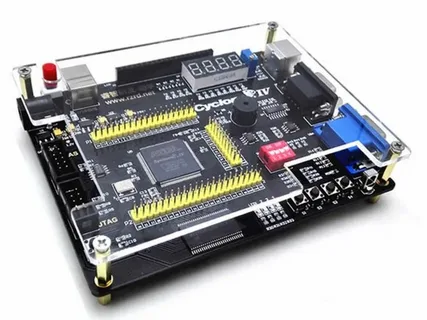
The FPGA (field-programmable gate array) market is projected to expand from USD 8.37 billion in 2025 to USD 17.53 billion by 2035, growing at a CAGR of 7.6% during the forecast period. This growth is being driven by the increasing adoption of programmable and reconfigurable integrated circuits across industries such as data centers, telecommunications, automotive, aerospace, and defense.
The FPGA (Field Programmable Gate Array) market is experiencing rapid growth as demand rises for reconfigurable, high-performance hardware solutions across various industries. FPGAs offer the unique advantage of hardware-level programmability, allowing designers to tailor logic functions, optimize performance, and adapt to evolving system requirements. As applications in AI, 5G, automotive, aerospace, and industrial automation become more complex, FPGAs are emerging as essential components in enabling real-time computing and system flexibility.
Empowering Flexible and Adaptive Hardware Architectures
Unlike fixed-function chips, FPGAs can be reprogrammed after manufacturing to perform different tasks, making them ideal for prototyping, iterative design, and long-life-cycle products. This flexibility allows system designers to respond quickly to changing standards, update features in the field, and extend product relevance in dynamic markets.
Get Ahead with Our Report: Request Your Sample Now!
Accelerating High-Speed Data Processing
FPGAs excel in parallel processing and real-time data handling, making them ideal for applications that demand low latency and high throughput. In sectors like telecommunications and finance, FPGAs enable rapid data analysis, signal processing, and complex algorithm execution at hardware speeds, enhancing system responsiveness and efficiency.
Driving AI and Edge Computing Innovation
In the realm of artificial intelligence and edge computing, FPGAs offer a compelling alternative to GPUs and ASICs. They can be configured to accelerate deep learning models, image recognition, and sensor fusion tasks while maintaining energy efficiency and low thermal output. This makes them valuable in edge AI applications, where compute resources are constrained.
Supporting 5G Infrastructure and Network Virtualization
FPGAs play a crucial role in 5G networks, enabling dynamic processing of radio signals, traffic routing, and protocol management. Their adaptability supports evolving telecom standards and virtualization needs, allowing operators to optimize bandwidth usage and reduce latency in software-defined networks.
Advancing Automotive Electronics and ADAS Systems
Automotive systems are increasingly integrating FPGAs to manage real-time data from sensors, cameras, and control units. In advanced driver-assistance systems (ADAS), FPGAs support fast decision-making, sensor fusion, and functional safety compliance. Their reprogrammable nature also enables over-the-air updates as vehicle software evolves.
Enhancing Aerospace and Defense Capabilities
The aerospace and defense sector values FPGAs for their rugged reliability, radiation tolerance, and secure processing features. Used in radar systems, avionics, and secure communications, FPGAs allow engineers to develop mission-critical systems that can be reconfigured post-deployment to meet evolving tactical needs.
Streamlining Industrial Automation and Robotics
In industrial settings, FPGAs are powering programmable logic controllers, machine vision systems, and robotic control platforms. Their ability to process signals in real time ensures precision, responsiveness, and safety in automated manufacturing and process control environments.
Enabling Hardware-Accelerated Cloud Services
Cloud providers are increasingly deploying FPGAs to accelerate workloads such as encryption, search algorithms, and network functions. By offloading compute-intensive tasks to programmable logic, cloud data centers can improve performance per watt while delivering scalable services to end users.
Catapult Your Strategy: Secure Key Insights with Our Report Checkout!
Fostering Innovation in Embedded System Design
FPGAs are widely used in embedded systems to integrate multiple functionalities onto a single chip, reducing component count and board space. Their role in enabling custom hardware design fosters innovation across medical devices, consumer electronics, and instrumentation.
Future Outlook
The FPGA market is positioned for sustained growth as demand intensifies for adaptable, energy-efficient, and high-performance computing platforms. With continued advancements in chip architecture, development tools, and hardware-software integration, FPGAs will remain central to innovation across technology landscapes. As systems become more intelligent and connected, FPGAs will power a future of flexible, responsive, and resilient digital infrastructure.
About Future Market Insights (FMI)
Future Market Insights, Inc. (ESOMAR certified, recipient of the Stevie Award, and a member of the Greater New York Chamber of Commerce) offers profound insights into the driving factors that are boosting demand in the market. FMI stands as the leading global provider of market intelligence, advisory services, consulting, and events for the Packaging, Food and Beverage, Consumer Technology, Healthcare, Industrial, and Chemicals markets. With a vast team of 400 analysts worldwide, FMI provides global, regional, and local expertise on diverse domains and industry trends across more than 110 countries.
Contact Us:
Future Market Insights Inc.
Christiana Corporate, 200 Continental Drive,
Suite 401, Newark, Delaware – 19713, USA
T: +1-845-579-5705
For Sales Enquiries: sales@futuremarketinsights.com
Website: https://www.futuremarketinsights.com
LinkedIn| Twitter| Blogs | YouTube