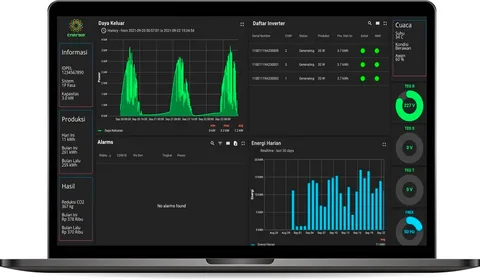
The real-time store monitoring platform market is fast-growing, with projections indicating it will reach USD 2.03 billion in 2025 and grow to USD 9.83 billion by 2035, representing a robust CAGR of 17.1%. The increasing demand for advanced solutions that allow retailers to monitor store operations in real-time is driving this growth.
The real-time store monitoring platform market is gaining strong momentum as retailers seek advanced tools to optimize store operations, improve customer experiences, and make informed business decisions. These platforms combine IoT sensors, AI-powered analytics, and cloud-based dashboards to deliver actionable insights from physical retail environments. As competition intensifies and consumer expectations evolve, real-time monitoring is becoming a vital asset in modern retail management strategies.
Enabling Visibility Into In-Store Operations
Real-time store monitoring platforms provide continuous visibility into various aspects of store performance, including foot traffic, inventory movement, checkout efficiency, staff deployment, and energy usage. With instant alerts and live dashboards, store managers can quickly identify operational issues, adjust workflows, and ensure consistent service delivery across locations.
Get Ahead with Our Report: Request Your Sample Now!
Supporting Data-Driven Merchandising and Layout Optimization
By capturing data on customer movement patterns, dwell times, and engagement zones, these platforms help retailers evaluate how shoppers interact with store layouts and displays. Insights into high-traffic areas and underperforming sections enable retailers to optimize product placement, adjust merchandising strategies, and improve overall store flow to boost conversions.
Enhancing Security and Loss Prevention
Store monitoring systems are also equipped with surveillance integrations, anomaly detection, and behavioral analytics to prevent theft, fraud, and operational shrinkage. Real-time monitoring allows staff to respond proactively to suspicious activities, while historical data supports investigations and loss prevention strategies. Integration with POS and access control systems further strengthens store security.
Improving Staff Productivity and Customer Service
Retailers use real-time monitoring to track staff availability, performance, and interaction with customers. By analyzing peak hours and service bottlenecks, managers can optimize shift scheduling and deploy team members where they’re needed most. This leads to better service coverage, faster checkout processes, and improved overall customer satisfaction.
Facilitating Predictive Maintenance and Energy Efficiency
IoT-enabled sensors within store monitoring platforms track the performance of lighting, HVAC systems, refrigeration units, and other critical infrastructure. Predictive maintenance alerts reduce equipment downtime and service costs, while energy consumption insights help retailers adopt sustainability initiatives and reduce operational expenses.
Integrating Omnichannel Intelligence
Modern real-time monitoring platforms integrate with e-commerce, loyalty programs, and inventory systems to deliver a unified view of customer behavior across online and offline channels. This convergence allows retailers to personalize in-store experiences, offer targeted promotions, and bridge the gap between digital engagement and physical sales environments.
Empowering Store-Level Decision Making
Frontline managers and regional leaders can access real-time data via mobile devices or cloud dashboards, enabling faster decisions without relying solely on corporate-level directives. From restocking shelves to managing in-store events, data-backed decision-making empowers teams to take proactive measures that drive store performance.
Supporting Scalability Across Store Networks
Real-time monitoring platforms are designed to scale across multiple locations, offering consistency in reporting, benchmarking, and compliance tracking. Retail chains benefit from centralized oversight while maintaining local flexibility, allowing them to adapt strategies to regional preferences and operational dynamics.
Enhancing Customer Journey Mapping
Advanced analytics tools within these platforms allow retailers to map the entire customer journey—from store entry to purchase. Understanding how long customers spend in-store, where they linger, and when they leave without purchasing provides crucial insights into experience gaps and conversion barriers.
Catapult Your Strategy: Secure Key Insights with Our Report Checkout!
Future Outlook
The real-time store monitoring platform market is poised for continued growth as retailers embrace intelligent systems to navigate the challenges of physical retail. With the convergence of AI, machine learning, and edge computing, these platforms will evolve to offer predictive insights, automation, and hyper-personalized experiences. As in-store operations become more data-driven and responsive, real-time monitoring will remain central to building agile, efficient, and customer-focused retail environments.
About Future Market Insights (FMI)
Future Market Insights, Inc. (ESOMAR certified, recipient of the Stevie Award, and a member of the Greater New York Chamber of Commerce) offers profound insights into the driving factors that are boosting demand in the market. FMI stands as the leading global provider of market intelligence, advisory services, consulting, and events for the Packaging, Food and Beverage, Consumer Technology, Healthcare, Industrial, and Chemicals markets. With a vast team of 400 analysts worldwide, FMI provides global, regional, and local expertise on diverse domains and industry trends across more than 110 countries.
Contact Us:
Future Market Insights Inc.
Christiana Corporate, 200 Continental Drive,
Suite 401, Newark, Delaware – 19713, USA
T: +1-845-579-5705
For Sales Enquiries: sales@futuremarketinsights.com
Website: https://www.futuremarketinsights.com
LinkedIn| Twitter| Blogs | YouTube