In an age increasingly defined by the importance of public health, infection control, and environmental safety, the global disinfection equipment market is emerging as a cornerstone of institutional, industrial, and consumer hygiene strategies. According to recent industry analysis, the market—valued at USD 12.0 million in 2025—is expected to grow exponentially to USD 37.9 million by 2035. This projected growth represents a compound annual growth rate (CAGR) of 12.2% over the forecast period, signaling a paradigm shift in how societies approach cleanliness, safety, and disease prevention.
Unlock exclusive insights – Request your sample report! https://www.futuremarketinsights.com/reports/sample/rep-gb-12897
Pandemic Legacies and Shifting Norms
The COVID-19 pandemic may have receded, but its long shadow continues to reshape industries far and wide. In healthcare settings, food processing units, educational institutions, and transportation hubs, disinfection has moved from a peripheral function to a core operational mandate. This evolution in public behavior and regulatory standards has created a fertile landscape for innovation and investment in disinfection technologies.
The heightened awareness of pathogens, both viral and bacterial, is not just confined to hospitals or laboratories. Commercial real estate, co-working spaces, hospitality, and retail are increasingly embracing automated and smart disinfection solutions to ensure occupant safety and reassure a post-pandemic consumer base.
Drivers Behind the Surge
The growth of the disinfection equipment market is not rooted in a single catalyst but a confluence of technological, societal, and economic factors. Key growth drivers include:
- Increased Focus on Infection Control: Especially in hospitals, long-term care facilities, and high-traffic public areas, the risk of healthcare-associated infections (HAIs) continues to prompt investment in advanced disinfection tools.
- Regulatory Push: Stringent hygiene and sanitation norms imposed by health authorities such as the WHO, CDC, and regional agencies are mandating regular and thorough disinfection practices.
- Technological Advancements: UV-C light-based disinfection robots, fogging systems, and ozone-based cleaners have become increasingly sophisticated, automated, and affordable.
- Smart and IoT Integration: Integration of IoT technologies enables remote monitoring and real-time data analytics, increasing operational efficiency and compliance in disinfection routines.
- Consumer Demand for Clean Spaces: In both developed and emerging markets, cleanliness has become a key decision-making factor in everything from hotel bookings to gym memberships.
Key Market Segments and Players
The disinfection equipment market spans a diverse range of technologies and applications:
- UV Disinfection Systems: Commonly used in medical settings, water treatment plants, and HVAC systems.
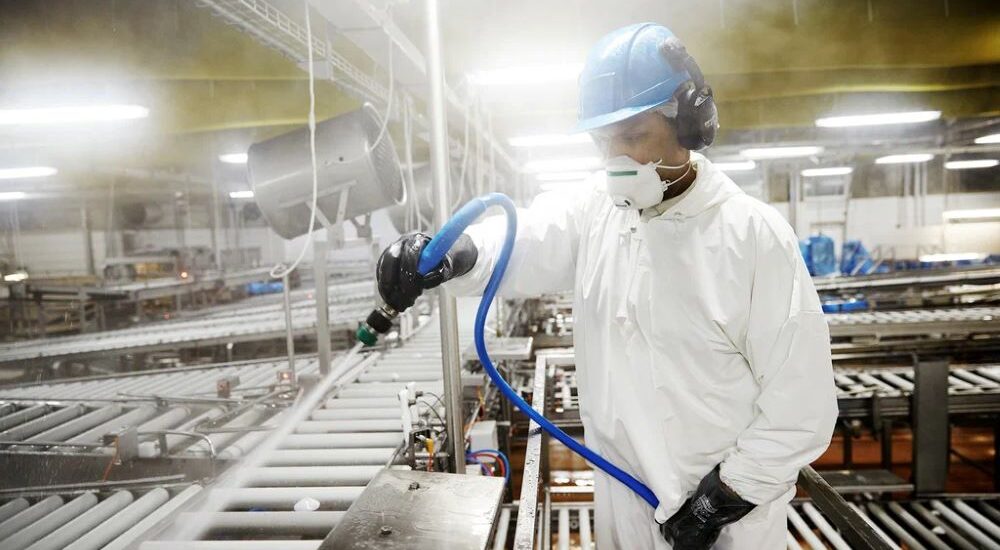
- Fogging and Misting Systems: Favored in agriculture, warehouses, and food processing for broad area disinfection.
- Ozone-Based Systems: Gaining popularity in water purification and large-space sterilization.
- Electrostatic Sprayers: Becoming ubiquitous in schools, offices, and transportation services.
Global and regional players are competing fiercely to claim market share. Leading manufacturers such as Xylem Inc., Trojan Technologies, Getinge AB, Steris Corporation, and Advanced UV, Inc. are continuously expanding their product portfolios through innovation, partnerships, and acquisitions.
Regional Outlook
- North America remains a dominant force in the market, driven by high healthcare spending, advanced infrastructure, and a culture of safety compliance.
- Europe is following suit, with significant uptake in UV-C disinfection in public transport and food processing.
- Asia-Pacific is emerging as the fastest-growing region, buoyed by rapid urbanization, industrial growth, and government-backed sanitation programs in countries like China, India, and Indonesia.
- Middle East & Africa and Latin America are expected to witness steady growth as disinfection becomes a priority in hospitality, healthcare, and tourism-driven economies.
Challenges Ahead
Despite the promising outlook, the market is not without hurdles. High initial investment costs, lack of standardized efficacy testing, and resistance to adoption in low-resource settings remain key challenges. Additionally, over-reliance on chemical disinfectants in some applications raises environmental and health concerns, pushing regulators and innovators toward greener alternatives.
Key Segments Covered in the Disinfection Equipment Industry Analysis
By Equipment Type:
- Disinfection Sprayers
- Electrostatic Sprayers
- UV Disinfection
By End User:
- Commercial
- Household
- Industrial
By Distribution Channel:
- Wholesalers / Distributors
- Online Retailers
- Independent Small Stores
- Other sales channels
By Region:
- North America
- Latin America
- Europe
- Asia Pacific
- Middle East and Africa
Purchase the in-depth market report now! https://www.futuremarketinsights.com/checkout/12897
About Future Market Insights (FMI)
Future Market Insights, Inc. (ESOMAR certified, recipient of the Stevie Award, and a member of the Greater New York Chamber of Commerce) offers profound insights into the driving factors that are boosting demand in the market. FMI stands as the leading global provider of market intelligence, advisory services, consulting, and events for the Packaging, Food and Beverage, Consumer Technology, Healthcare, Industrial, and Chemicals markets. With a vast team of over 400 analysts worldwide, FMI provides global, regional, and local expertise on diverse domains and industry trends across more than 110 countries.
Contact Us:
Future Market Insights Inc.
Christiana Corporate, 200 Continental Drive,
Suite 401, Newark, Delaware – 19713, USA
T: +1-347-918-3531
For Sales Enquiries: sales@futuremarketinsights.com
Website: https://www.futuremarketinsights.com
LinkedIn| Twitter| Blogs | YouTube