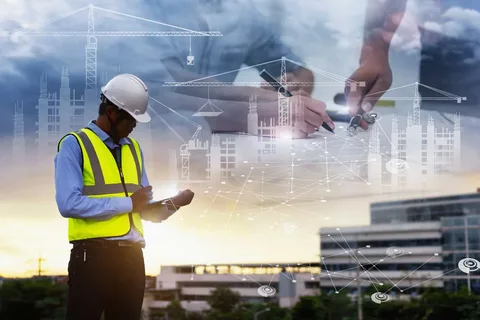
The remote construction market is estimated to be worth USD 1.45 billion in 2025 and anticipated to reach a value of USD 6 billion by 2035. Sales are projected to rise at a CAGR of 15.2% over the forecast period between 2025 and 2035. The industry is experiencing a profound change that could be attributed to technological progress, labor shortages, and the necessity of cost-efficient and effective construction solutions.
The remote construction market is rapidly evolving as the construction industry embraces digital transformation to improve efficiency, safety, and decision-making. Remote construction technologies enable real-time monitoring, remote collaboration, and virtual project management—reshaping how construction projects are planned, executed, and maintained. As infrastructure development accelerates globally, the need for flexible, tech-driven construction solutions is growing, positioning remote construction at the core of modern site operations.
Enabling Real-Time Project Visibility and Control
Remote construction tools provide stakeholders with instant access to site data, progress updates, and resource status from any location. Through cloud-based platforms, drones, 360-degree imaging, and IoT sensors, project managers can monitor workflows, detect delays, and enforce quality standards without being physically present. This real-time oversight reduces risks, optimizes resource allocation, and improves responsiveness throughout the project lifecycle.
Get Ahead with Our Report: Request Your Sample Now!
Strengthening Communication Across Distributed Teams
With job sites, contractors, suppliers, and clients often spread across regions, seamless communication is essential. Remote construction platforms offer video conferencing, document sharing, and real-time collaboration tools that connect field workers, engineers, and management teams. These solutions bridge geographic gaps, promote transparency, and ensure alignment across all stakeholders—reducing miscommunication and costly rework.
Improving Safety and Compliance Monitoring
Construction safety protocols can be remotely monitored through wearable devices, AI-powered cameras, and environmental sensors. These tools alert supervisors to hazards, monitor social distancing, and track equipment usage. By integrating safety analytics and automated reporting, remote construction platforms help companies maintain compliance with health and safety regulations while proactively mitigating risks.
Optimizing Workforce Management and Productivity
Remote time tracking, digital task assignments, and performance dashboards help project leaders manage labor more effectively. These systems offer insights into workforce productivity, attendance, and skill deployment, enabling better planning and real-time adjustments. For companies managing multiple sites, centralized workforce oversight enhances efficiency and cost control.
Leveraging Drones and Robotics for Remote Inspections
Unmanned aerial vehicles (UAVs) and ground robots are increasingly used to conduct site surveys, structural inspections, and thermal imaging. These tools reduce the need for manual checks in hazardous or hard-to-reach areas while accelerating data collection. Integration with mapping software and digital twins enables accurate documentation and supports predictive maintenance planning.
Digital Twins and BIM Integration
Remote construction benefits significantly from Building Information Modeling (BIM) and digital twin technology. These models provide virtual representations of physical structures, enabling real-time updates, clash detection, and change management. By syncing field data with BIM models, project teams can remotely coordinate design adjustments, material deliveries, and construction sequencing.
Cloud-Based Document and Workflow Management
Digitization of blueprints, permits, RFIs, and change orders allows teams to access and update documents remotely. Cloud-based project management platforms ensure that all stakeholders work from the latest version, reducing errors and administrative overhead. Automated workflows streamline approvals and improve traceability of project decisions.
Supporting Modular and Off-Site Construction Models
Remote construction technologies align well with the rise of prefabrication and modular building approaches. By coordinating off-site manufacturing with just-in-time delivery and on-site assembly, these systems enable better schedule adherence and resource optimization. Remote monitoring tools ensure that prefabricated components meet quality and specification standards.
Boosting Sustainability Through Smart Resource Use
Remote construction solutions help reduce material waste, energy consumption, and idle time by tracking resource utilization in real time. Data-driven insights support greener construction practices, improve forecasting, and aid in achieving sustainability targets. Virtual collaboration also reduces travel requirements, contributing to lower carbon footprints.
Power Your Business Growth: Invest in Key Insights with Our Report Checkout!
Future Outlook
The remote construction market is poised for significant growth as the industry seeks greater agility, safety, and operational intelligence. With the increasing integration of AI, machine learning, and 5G connectivity, remote construction technologies will become more predictive, autonomous, and scalable. As global infrastructure demands rise and labor shortages persist, remote construction will play a critical role in enabling resilient, cost-effective, and digitally connected job sites of the future.
About Future Market Insights (FMI)
Future Market Insights, Inc. (ESOMAR certified, recipient of the Stevie Award, and a member of the Greater New York Chamber of Commerce) offers profound insights into the driving factors that are boosting demand in the market. FMI stands as the leading global provider of market intelligence, advisory services, consulting, and events for the Packaging, Food and Beverage, Consumer Technology, Healthcare, Industrial, and Chemicals markets. With a vast team of 400 analysts worldwide, FMI provides global, regional, and local expertise on diverse domains and industry trends across more than 110 countries.
Contact Us:
Future Market Insights Inc.
Christiana Corporate, 200 Continental Drive,
Suite 401, Newark, Delaware – 19713, USA
T: +1-845-579-5705
For Sales Enquiries: sales@futuremarketinsights.com
Website: https://www.futuremarketinsights.com
LinkedIn| Twitter| Blogs | YouTube