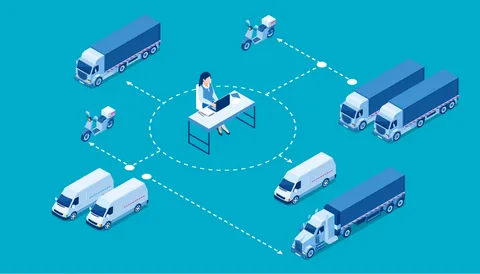
The global fleet management market is valued at USD 32.24 billion in 2025 and is projected to reach USD 153.3 billion by 2035, registering a substantial CAGR of 16.9% during the forecast period. This strong growth reflects the increasing reliance of businesses on advanced fleet monitoring and optimization solutions to improve operational efficiency and reduce costs.
The fleet management market is witnessing robust growth as organizations across logistics, transportation, utilities, and service industries seek smarter ways to manage vehicle operations. By leveraging connected technologies, telematics, and automation, fleet management solutions enable real-time tracking, predictive maintenance, route optimization, and compliance management. As the demand for efficient and sustainable transportation intensifies, fleet management is becoming a strategic enabler of operational excellence and customer satisfaction.
Optimizing Fleet Utilization and Cost Efficiency
Fleet management systems provide detailed insights into vehicle usage, idle time, fuel consumption, and driver behavior. These analytics help fleet operators identify inefficiencies, reduce operational costs, and maximize vehicle utilization. From scheduling to dispatch, integrated platforms empower managers to make informed decisions that extend vehicle life and reduce total cost of ownership.
Get Ahead with Our Report: Request Your Sample Now!
Enhancing Real-Time Visibility and Tracking
One of the core benefits of fleet management is GPS-enabled real-time tracking of vehicles. Fleet managers gain immediate access to vehicle location, speed, and status, allowing for dynamic route adjustments and proactive response to delays. This visibility not only improves logistics planning but also enhances service reliability and delivery accuracy for end customers.
Improving Driver Safety and Performance Monitoring
Fleet management systems support driver safety through continuous monitoring of driving patterns such as harsh braking, speeding, and abrupt lane changes. Real-time feedback and performance scorecards help encourage safer driving habits. In-cab coaching systems and integrated dashcams further improve driver accountability and reduce accident-related liabilities.
Facilitating Predictive Maintenance and Downtime Reduction
Telematics-enabled maintenance scheduling helps predict potential mechanical issues before they lead to breakdowns. Monitoring engine diagnostics, tire pressure, and oil levels allows fleet managers to plan timely servicing and reduce unplanned downtime. Predictive maintenance not only lowers repair costs but also improves fleet availability and reliability.
Ensuring Regulatory Compliance and Reporting
Fleet management platforms assist organizations in maintaining compliance with industry regulations such as hours-of-service limits, emissions standards, and safety inspections. Automated logging and digital documentation simplify compliance reporting and auditing, helping businesses avoid fines and maintain a strong regulatory posture.
Supporting Electrification and Sustainability Goals
As electric vehicles become more prominent in commercial fleets, fleet management solutions are evolving to support EV-specific needs such as battery monitoring, charging station integration, and range optimization. Emissions tracking tools also help companies measure carbon footprints and implement greener practices in line with sustainability goals.
Enabling Scalable Operations for Fleets of All Sizes
Whether managing a few vehicles or thousands, fleet management solutions offer scalable architectures suitable for businesses of all sizes. Small and mid-sized enterprises benefit from simplified dashboards and affordable tools, while large enterprises utilize advanced analytics, APIs, and integration with enterprise resource planning systems.
Driving Efficiency in Logistics and Delivery Services
In last-mile delivery, ride-hailing, and cargo transport, fleet management enables precise route planning, automated dispatch, and delivery tracking. These capabilities reduce fuel consumption, improve on-time delivery rates, and enhance customer communication. Integration with warehouse and inventory systems also ensures end-to-end supply chain visibility.
Leveraging Cloud, AI, and IoT for Smart Fleet Operations
Cloud-based platforms allow remote access to fleet data from any location, while AI and machine learning algorithms help uncover trends, forecast demand, and automate decision-making. IoT sensors embedded in vehicles collect data on usage, location, and environmental conditions, enabling data-driven strategies for fleet optimization.
Power Your Business Growth: Invest in Key Insights with Our Report Checkout!
Future Outlook
The fleet management market is set to expand as mobility ecosystems become more connected, autonomous, and electrified. With rising demand for delivery services, shared mobility, and sustainable transport, organizations will continue to invest in intelligent fleet solutions that drive performance, safety, and cost savings. As innovation accelerates, fleet management will remain a critical element in shaping the future of logistics, transportation, and urban mobility.
About Future Market Insights (FMI)
Future Market Insights, Inc. (ESOMAR certified, recipient of the Stevie Award, and a member of the Greater New York Chamber of Commerce) offers profound insights into the driving factors that are boosting demand in the market. FMI stands as the leading global provider of market intelligence, advisory services, consulting, and events for the Packaging, Food and Beverage, Consumer Technology, Healthcare, Industrial, and Chemicals markets. With a vast team of 400 analysts worldwide, FMI provides global, regional, and local expertise on diverse domains and industry trends across more than 110 countries.
Contact Us:
Future Market Insights Inc.
Christiana Corporate, 200 Continental Drive,
Suite 401, Newark, Delaware – 19713, USA
T: +1-845-579-5705
For Sales Enquiries: sales@futuremarketinsights.com
Website: https://www.futuremarketinsights.com
LinkedIn| Twitter| Blogs | YouTube