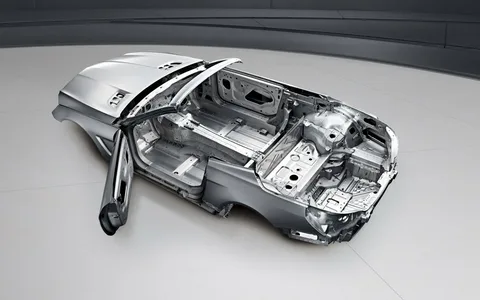
The automotive body in white market is expected to shape up with all new trends that change it into a new direction, sometimes in near future body in white refers to the body of the vehicle before paint and trim assembly it is the structural framework where crashworthiness, aerodynamics, and durability are established.
The market is likely to grow by more than USD 68,686.7 million in 2025, reaching USD 96,734.7 million by 2035, with a CAGR of 3.5% throughout the forecast period.
The automotive body in white (BIW) market is evolving rapidly as automakers focus on advanced vehicle architecture, weight reduction, and safety compliance. BIW refers to the stage in automotive manufacturing where a vehicle’s body structure—excluding moving parts, paint, and trims—is assembled. As vehicle design grows more complex and regulatory demands increase, BIW systems are at the heart of innovation in structural integrity, material optimization, and production efficiency across both conventional and electric vehicles.
Foundation for Strength, Safety, and Styling
The BIW forms the core structural framework of a vehicle, ensuring rigidity, crashworthiness, and geometric alignment for subsequent assembly stages. Designed to absorb and distribute impact forces during collisions, it plays a critical role in meeting global safety standards. Precision in BIW design also dictates how the final vehicle performs in terms of aerodynamics, NVH (noise, vibration, and harshness) control, and exterior aesthetics.
Get Ahead with Our Report: Request Your Sample Now!
Lightweighting Through Advanced Material Adoption
To improve fuel efficiency and extend electric vehicle range, automakers are increasingly adopting lightweight materials in BIW construction. High-strength steel, aluminum alloys, magnesium, and carbon fiber composites are being used in hybrid configurations to strike a balance between strength, weight, and cost. Material innovation in BIW design directly contributes to reduced emissions, better handling, and improved energy efficiency.
Integration in Electric and Autonomous Vehicle Platforms
The rise of electric and autonomous vehicles is reshaping BIW engineering. EVs require chassis that accommodate battery packs, wiring, and cooling systems, while maintaining structural integrity and crash performance. BIW structures are being re-engineered with flat-floor designs, integrated battery enclosures, and modular platforms that support flexibility across vehicle types. In autonomous vehicles, BIW design also accommodates sensor integration, computing modules, and connectivity hardware.
Adoption of Advanced Manufacturing Technologies
Manufacturing advancements such as robotic welding, laser joining, and adhesive bonding are revolutionizing BIW production lines. These technologies enable high-precision, high-speed assembly while maintaining structural consistency. Automated processes reduce human error, improve throughput, and support the scalability of mass production, particularly for new energy vehicles.
Simulation, Virtual Testing, and Digital Twin Capabilities
Automakers are leveraging digital twin models, computer-aided engineering (CAE), and simulation tools to optimize BIW designs before physical prototyping. Virtual crash testing, load analysis, and thermal simulations help engineers enhance performance while reducing development time and cost. These tools also enable more accurate prediction of part behavior under real-world conditions, accelerating design validation.
Focus on Modularity and Platform Flexibility
OEMs are increasingly building modular platforms that allow multiple vehicle models to share common BIW components. This approach enhances production flexibility, reduces tooling costs, and simplifies supply chain logistics. Modularity is especially important in electric vehicle manufacturing, where shared architectures enable faster deployment of new models while maintaining economies of scale.
Collaborations Across Material and Technology Providers
The BIW ecosystem is supported by strong collaboration between automakers, materials scientists, tooling manufacturers, and automation specialists. Joint ventures and R&D partnerships are focused on developing high-performance alloys, new joining techniques, and cost-effective solutions for next-generation vehicle structures. These collaborations are essential for keeping pace with evolving design and regulatory requirements.
Meeting Global Safety and Emission Standards
Stringent safety and environmental regulations across regions are driving innovation in BIW design. Crashworthiness, pedestrian protection, and emissions compliance are all influenced by body structure. Manufacturers are investing in BIW solutions that not only meet existing regulations but also anticipate future standards, helping ensure global market readiness.
BIW in Commercial and Specialty Vehicles
The importance of BIW is not limited to passenger cars. Commercial vehicles, buses, and specialty vehicles also benefit from optimized body structures that improve payload capacity, fuel economy, and operational durability. Customized BIW frameworks support diverse applications ranging from logistics to emergency services and agriculture.
Power Your Business Growth: Invest in Key Insights with Our Report Checkout!
Future Outlook
The automotive body in white market is set to grow as vehicle platforms become more diverse, lightweight, and intelligent. With ongoing advancements in materials, design software, and production technologies, BIW will remain a focal point in automotive engineering. As the industry moves toward electrification, autonomy, and circular manufacturing, BIW solutions will play a pivotal role in enabling safer, lighter, and more efficient vehicles—shaping the next era of automotive mobility.
About Future Market Insights (FMI)
Future Market Insights, Inc. (ESOMAR certified, recipient of the Stevie Award, and a member of the Greater New York Chamber of Commerce) offers profound insights into the driving factors that are boosting demand in the market. FMI stands as the leading global provider of market intelligence, advisory services, consulting, and events for the Packaging, Food and Beverage, Consumer Technology, Healthcare, Industrial, and Chemicals markets. With a vast team of 400 analysts worldwide, FMI provides global, regional, and local expertise on diverse domains and industry trends across more than 110 countries.
Contact Us:
Future Market Insights Inc.
Christiana Corporate, 200 Continental Drive,
Suite 401, Newark, Delaware – 19713, USA
T: +1-845-579-5705
For Sales Enquiries: sales@futuremarketinsights.com
Website: https://www.futuremarketinsights.com
LinkedIn| Twitter| Blogs | YouTube