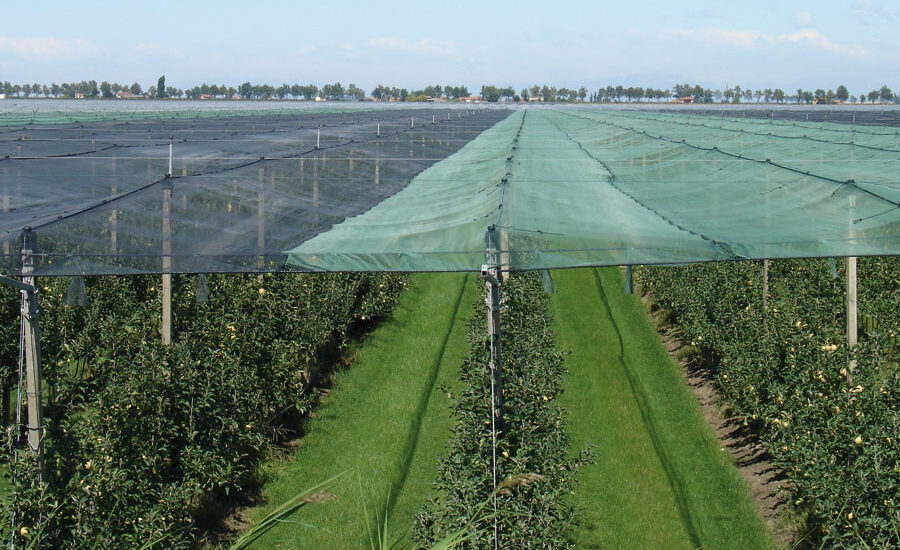
In an era increasingly defined by climate volatility, food security concerns, and evolving agricultural practices, one humble innovation is gaining unprecedented traction: agricultural nets. From sprawling vineyards in southern Europe to vegetable farms in sub-Saharan Africa, these protective mesh fabrics are becoming indispensable in modern farming. According to new market data, the global agricultural nets market is projected to grow from USD 11.8 billion in 2025 to USD 20.1 billion by 2035, expanding at a steady compound annual growth rate (CAGR) of 5.5%.
Unlock exclusive insights – Request your sample report! https://www.futuremarketinsights.com/reports/sample/rep-gb-12302
Growth Drivers: A Tangle of Technology, Economics, and Policy
The upward trajectory of the agricultural nets market is driven by a confluence of factors:
- Climate Adaptation and Food Security: With global temperatures on the rise and water scarcity becoming a daily reality, agricultural nets help reduce evapotranspiration, control humidity, and mitigate crop damage—thus safeguarding food production.
- Government Incentives and Subsidies: Countries like India, Israel, and China are rolling out policy frameworks that incentivize protected cultivation methods, including the use of shade nets in greenhouses and open-field farming.
- Booming Horticulture and High-Value Crops: The demand for quality produce—such as berries, grapes, and exotic vegetables—has pushed growers to adopt net-based cultivation systems to minimize loss and meet export standards.
- Technological Innovation: The advent of UV-stabilized, biodegradable, and multifunctional nets is reshaping the competitive landscape. Manufacturers are also exploring smart netting systems that can integrate with sensors and automated irrigation.
Regional Outlook: Where the Net is Spreading Fastest
- Asia-Pacific: The Dominant Player: Asia-Pacific currently leads the global market, fueled by large-scale agriculture in India, China, and Vietnam. In India, particularly, the National Horticulture Mission has spurred widespread adoption of shade nets, especially among small and marginal farmers.
- Europe: Sustainability as Strategy: Europe’s stringent environmental policies and high consumer awareness around pesticide-free produce are driving demand for insect nets and anti-hail nets. Spain, Italy, and France are leading adopters, especially in viticulture and greenhouse farming.
- North America: Technology Meets Scale: The United States and Canada are gradually embracing net-based farming, particularly in organic farms and orchards. The market here is being shaped by the dual forces of labor shortages and precision agriculture technologies.
Challenges: Tangled in Cost and Awareness
Despite its promising growth, the agricultural nets market faces several bottlenecks:
- High Initial Investment: Especially for large farms, the cost of net installation—including support structures and maintenance—can be prohibitive.
- Lack of Awareness and Training: In many developing regions, farmers remain unaware of the long-term benefits of nets or lack the technical know-how to use them effectively.
- Environmental Concerns: As the market grows, questions around the recyclability and disposal of polymer-based nets are also coming to the fore. Biodegradable options exist, but are currently costlier and less widely available.
The Road Ahead: Innovation, Integration, and Impact
Looking toward 2035, industry analysts predict a surge in product diversification, with manufacturers offering modular netting systems tailored to specific crops, climates, and farm sizes. Strategic partnerships between agri-tech startups and net manufacturers are also likely to fuel innovation—think AI-powered pest detection integrated with net deployment systems.
There’s also a clear opportunity in education and capacity building. Governments, NGOs, and the private sector can collaborate to train farmers in best practices for net installation, maintenance, and integration into broader agroecological systems.
Agricultural Nets Market Segmentation
By Type:
- Shading Nets
- Anti-hail
- Anti-insects
- Windbreak
- Others
By Form:
- Woven
- Non-woven Form
By Application:
- Farming Area
- Animal Husbandry
- Horticulture and Floriculture
- Aquaculture
- Others
By End Use:
- Industrial Agriculture
- Sustainable Agriculture
By Price Range:
- Economic
- Mid-range
- Premium
By Material Type:
- Metal
- Plastic
- Rubber
- Others
By Sales Channel:
- Hypermarkets/Supermarkets
- Specialty Stores
- Departmental Stores
- Independent Stores
- Hardware Stores
- Farm Equipment Stores
- Other Sales Channel
By Region:
- North America
- Latin America
- Western Europe
- Eastern Europe
- East Asia
- South Asia Pacific
- Middle East and Africa
Purchase the in-depth market report now! https://www.futuremarketinsights.com/checkout/12302
About Future Market Insights (FMI)
Future Market Insights, Inc. (ESOMAR certified, recipient of the Stevie Award, and a member of the Greater New York Chamber of Commerce) offers profound insights into the driving factors that are boosting demand in the market. FMI stands as the leading global provider of market intelligence, advisory services, consulting, and events for the Packaging, Food and Beverage, Consumer Technology, Healthcare, Industrial, and Chemicals markets. With a vast team of over 400 analysts worldwide, FMI provides global, regional, and local expertise on diverse domains and industry trends across more than 110 countries.
Contact Us:
Future Market Insights Inc.
Christiana Corporate, 200 Continental Drive,
Suite 401, Newark, Delaware – 19713, USA
T: +1-347-918-3531
For Sales Enquiries: sales@futuremarketinsights.com
Website: https://www.futuremarketinsights.com
LinkedIn| Twitter| Blogs | YouTube