The Ultrasonic Sensors Market is estimated to be valued at USD 7.2 billion in 2025 and is projected to reach USD 22.4 billion by 2035, registering a compound annual growth rate (CAGR) of 12.0% over the forecast period.
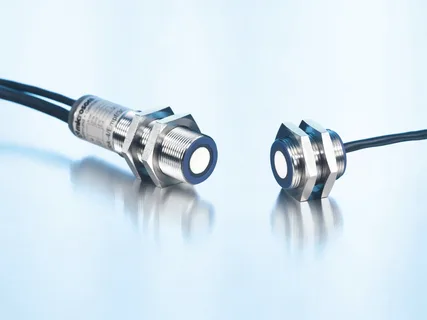
The ultrasonic sensors market is witnessing sustained growth as industries increasingly rely on non-contact sensing technologies for accurate measurement, detection, and automation. Ultrasonic sensors operate by emitting high-frequency sound waves and measuring the time it takes for the echo to return, allowing them to detect objects, measure distances, and monitor fluid levels. Their versatility, durability, and performance across challenging environments make them a key component in modern industrial, automotive, healthcare, and smart device applications.
Non-Contact Sensing for Diverse Applications
Ultrasonic sensors provide reliable measurements without physical contact, making them ideal for use in environments with dust, moisture, vibration, or variable lighting. These attributes support their deployment across a wide range of settings, from manufacturing lines and agricultural machinery to parking assistance systems and robotic automation. Their non-invasive nature also makes them suitable for medical diagnostics and fluid monitoring.
Get Ahead with Our Report: Request Your Sample Now!
Driving Automation in Industrial Processes
Industries are increasingly adopting ultrasonic sensors for real-time monitoring and process control. In manufacturing and logistics, they are used for level detection in tanks, object counting, pallet detection, and position sensing. These sensors contribute to production efficiency, quality control, and workplace safety by enabling automated systems to operate with greater awareness and responsiveness.
Enhancing Automotive Safety and Parking Assistance
In the automotive sector, ultrasonic sensors have become essential for driver assistance and safety systems. They are widely used in parking sensors, blind-spot detection, and proximity alerts, helping drivers avoid collisions and maneuver in tight spaces. As vehicles evolve toward semi-autonomous and fully autonomous capabilities, ultrasonic sensors are playing a crucial role in enhancing situational awareness and short-range detection.
Integration in Smart Devices and Consumer Electronics
The miniaturization and cost-effectiveness of ultrasonic sensors have facilitated their integration into consumer electronics and smart devices. Applications include gesture recognition in smartphones, automatic faucet control, and proximity sensing in wearables. These sensors enable intuitive human-machine interaction and contribute to energy efficiency by activating devices only when needed.
Adoption in Healthcare and Medical Equipment
Ultrasonic sensing technology is also expanding into the healthcare sector. It is used in non-invasive medical diagnostics, such as ultrasound imaging, as well as in liquid level monitoring for IV bags and fluid dispensers. Their ability to function without contact reduces the risk of contamination and enhances patient safety.
Resilient Performance in Harsh Environments
Ultrasonic sensors are engineered to operate reliably in environments that may be hazardous or unsuitable for optical or mechanical sensors. Their performance is unaffected by color, transparency, or reflectivity of the target object, making them highly dependable in agriculture, mining, and marine applications. Their resistance to dirt, chemicals, and extreme temperatures adds to their appeal in industrial automation.
Advancements in Sensor Technology and Smart Integration
Ongoing innovations in sensor design and signal processing are expanding the capabilities of ultrasonic sensors. Enhanced accuracy, faster response times, and intelligent filtering techniques allow them to detect smaller objects and operate in more complex scenarios. Integration with microcontrollers and IoT platforms enables remote monitoring, diagnostics, and adaptive control in connected systems.
Growing Role in Robotics and Autonomous Systems
As robotics become more prominent in logistics, agriculture, and service sectors, ultrasonic sensors are being adopted for obstacle detection, navigation, and collision avoidance. Their ability to function in low-light and cluttered environments makes them ideal for ensuring the safe operation of mobile robots and automated guided vehicles.
Environmental Monitoring and Smart Infrastructure
Ultrasonic sensors are contributing to smart city initiatives and environmental monitoring efforts. They are used in waste management systems for fill-level detection, in water treatment facilities for flow monitoring, and in transportation systems for traffic control and pedestrian detection. These applications support sustainability and improve urban efficiency.
Catapult Your Strategy: Secure Key Insights with Our Report Checkout!
Future Outlook
The ultrasonic sensors market is set for continued expansion as automation, smart technologies, and safety systems gain prominence across industries. With their adaptability, reliability, and compatibility with emerging technologies such as AI and IoT, ultrasonic sensors are expected to play an increasingly vital role in shaping intelligent systems and connected environments. From factories and vehicles to homes and hospitals, these sensors will remain at the forefront of the global shift toward precision sensing and responsive automation.
About Future Market Insights (FMI)
Future Market Insights, Inc. (ESOMAR certified, recipient of the Stevie Award, and a member of the Greater New York Chamber of Commerce) offers profound insights into the driving factors that are boosting demand in the market. FMI stands as the leading global provider of market intelligence, advisory services, consulting, and events for the Packaging, Food and Beverage, Consumer Technology, Healthcare, Industrial, and Chemicals markets. With a vast team of 400 analysts worldwide, FMI provides global, regional, and local expertise on diverse domains and industry trends across more than 110 countries.
Contact Us:
Future Market Insights Inc.
Christiana Corporate, 200 Continental Drive,
Suite 401, Newark, Delaware – 19713, USA
T: +1-845-579-5705
For Sales Enquiries: sales@futuremarketinsights.com
Website: https://www.futuremarketinsights.com
LinkedIn| Twitter| Blogs | YouTube