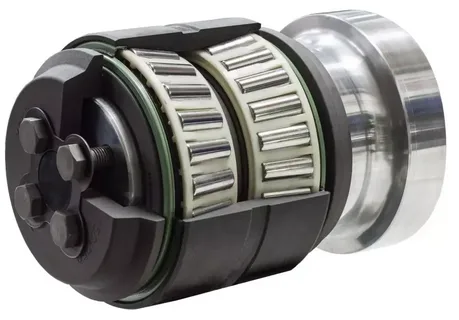
The global railway bearing market is expected to see strong growth over the coming decade, driven by increasing investments in railway infrastructure, rising urbanization, and the growing popularity of high-speed and freight rail networks. Bearings play a critical role in ensuring the smooth operation of railway vehicles, including locomotives, passenger cars, and freight wagons, by reducing friction, improving efficiency, and enhancing reliability.
Ongoing innovation in bearing materials, lubrication technologies, and manufacturing processes further supports the market’s steady growth through 2035. In 2025, the global railway bearing market is projected to be valued at approximately USD 1,568.2 Million. By 2035, it is expected to grow to around USD 3,545.8 Million, reflecting a compound annual growth rate (CAGR) of 8.5%.
The railway bearing market is gaining momentum as rail transport systems worldwide modernize to meet growing demands for reliable, efficient, and sustainable mobility. Bearings are vital components in rail vehicles, ensuring smooth motion, reducing friction, and absorbing loads under extreme operating conditions. As railway networks expand and technologies evolve, manufacturers are focusing on durable, low-maintenance bearing solutions that improve performance, safety, and lifecycle costs across both freight and passenger segments.
Crucial Role in Wheelset and Bogie Performance
Railway bearings play an essential role in enabling the rotation of axles while supporting the enormous loads carried by railcars. Positioned within axle boxes or mounted on wheelsets, these components endure high-speed, high-load conditions, vibrations, and temperature extremes. Precision-engineered bearings reduce mechanical resistance, increase fuel efficiency, and ensure stable, quiet operation—critical for both heavy-haul freight and high-speed passenger trains.
Get Ahead with Our Report: Request Your Sample Now!
Durability and Maintenance-Free Innovations
To meet the rigorous demands of rail operations, manufacturers are developing bearings with extended service intervals and minimal maintenance needs. Advanced materials, improved sealing systems, and heat-resistant lubricants are key to increasing bearing lifespan and reliability. Sealed, maintenance-free bearing units are becoming increasingly popular in modern rolling stock, reducing downtime and total cost of ownership for rail operators.
Material Advancements Supporting Load and Speed Capabilities
Railway bearings must support substantial static and dynamic loads. Innovations in materials—such as chrome steel, high-grade carbon steel, and specialty alloys—are enhancing load-bearing capacity, wear resistance, and thermal performance. These advances enable bearings to operate under higher speeds and loads, which is especially important in long-distance freight and high-speed rail corridors.
Safety and Condition Monitoring Integration
Safety is paramount in rail systems, and bearing failures can lead to derailments or costly disruptions. To address this, modern railway bearings are increasingly being integrated with condition monitoring systems. Sensors track temperature, vibration, and rotational speed to detect early signs of wear or failure. Predictive maintenance enabled by these systems enhances operational safety, reduces unplanned maintenance, and supports fleet reliability.
Customization for Diverse Rail Applications
Railway bearings are engineered for various applications, including locomotives, freight wagons, metros, trams, and light rail vehicles. Depending on speed, axle load, and operational environment, different configurations such as cylindrical roller bearings, tapered roller bearings, and spherical roller bearings are selected. Customization ensures optimal performance, whether on rugged freight routes or smooth urban railways.
Urbanization and Rail Infrastructure Expansion Fueling Demand
Urban population growth and increasing investments in public transportation infrastructure are key drivers of the railway bearing market. Governments across regions are upgrading existing rail systems and constructing new metro and high-speed rail lines to improve mobility, reduce road congestion, and meet climate goals. These developments are fueling demand for high-performance bearings that meet modern rail standards.
Sustainability and Energy Efficiency in Focus
As sustainability becomes a core priority for the transport sector, rail operators are under pressure to improve energy efficiency and reduce environmental impact. Bearings contribute to this goal by minimizing friction losses, enhancing fuel or energy efficiency, and reducing wear on other components. Additionally, eco-friendly production processes and recyclable materials are being adopted by bearing manufacturers to align with environmental regulations.
Strong Growth in Emerging Economies
Developing regions are witnessing a surge in railway modernization projects aimed at improving freight logistics and urban connectivity. Countries in Asia, Africa, and Latin America are investing in rail infrastructure as a sustainable alternative to road transport. This trend is creating significant opportunities for bearing manufacturers to supply rugged, high-capacity solutions for expanding rail fleets.
Aftermarket Services and Refurbishment Trends
In addition to OEM supply, the railway bearing aftermarket plays a vital role in maintaining aging fleets. Refurbishment, re-lubrication, and bearing reconditioning services are in demand as operators aim to extend asset life and reduce capital expenditures. Strategic partnerships between rail operators and bearing suppliers are emerging to ensure continuous performance and technical support.
Drive Your Business Growth Strategy: Checkout the Report for Key Insights!
Future Outlook
The railway bearing market is set for steady growth as rail transport becomes increasingly important in addressing urban mobility, freight logistics, and sustainability goals. Advances in materials, predictive maintenance, and high-speed capabilities will continue to shape product development. As countries invest in smart rail networks and electrified infrastructure, bearings will remain fundamental to ensuring safe, efficient, and cost-effective rail operations across the globe.
About Future Market Insights (FMI)
Future Market Insights, Inc. (ESOMAR certified, recipient of the Stevie Award, and a member of the Greater New York Chamber of Commerce) offers profound insights into the driving factors that are boosting demand in the market. FMI stands as the leading global provider of market intelligence, advisory services, consulting, and events for the Packaging, Food and Beverage, Consumer Technology, Healthcare, Industrial, and Chemicals markets. With a vast team of 400 analysts worldwide, FMI provides global, regional, and local expertise on diverse domains and industry trends across more than 110 countries.
Contact Us:
Future Market Insights Inc.
Christiana Corporate, 200 Continental Drive,
Suite 401, Newark, Delaware – 19713, USA
T: +1-845-579-5705
For Sales Enquiries: sales@futuremarketinsights.com
Website: https://www.futuremarketinsights.com
LinkedIn| Twitter| Blogs | YouTube