The Advanced Driver Assistance Systems (ADAS) sensor market is projected to be valued at USD 36.07 billion in 2025 and is expected to reach USD 78.6 billion by 2035, registering a CAGR of 8.1%. This expansion is being driven by the adoption of artificial intelligence, advancements in sensor fusion, and the integration of high-performance radar and LiDAR platforms. These technologies are being deployed to support greater levels of vehicle automation and functional safety.
The ADAS (Advanced Driver Assistance Systems) sensors market is witnessing robust growth as the automotive industry accelerates toward smarter, safer, and more automated vehicles. These sensors—ranging from cameras and radar to LiDAR and ultrasonic units—are the foundational elements of intelligent driving technologies. As governments enforce stricter road safety regulations and consumers demand enhanced vehicle awareness, the adoption of ADAS sensors is becoming central to both modern vehicle platforms and next-generation mobility solutions.
Core Components of Driver Assistance and Automation
ADAS sensors are engineered to perceive and interpret the vehicle’s surroundings in real time, providing critical input to systems like lane departure warning, adaptive cruise control, automatic emergency braking, and blind-spot detection. By enabling real-time environment monitoring, obstacle detection, and driver behavior analysis, these sensors enhance decision-making capabilities and reduce the risk of human error behind the wheel.
Get Ahead with Our Report: Request Your Sample Now!
https://www.futuremarketinsights.com/reports/sample/rep-gb-11865
Expanding Role Across Vehicle Segments
While ADAS was initially limited to premium models, it is now becoming standard across a wider range of vehicles, including mid-range sedans, commercial vans, and compact city cars. This democratization is driven by regulatory mandates for basic safety features and the growing emphasis on vehicle ratings and crash-test performance. In commercial fleets and public transport vehicles, ADAS sensors help reduce accidents, lower insurance costs, and increase driver accountability.
Diverse Sensor Technologies Working in Tandem
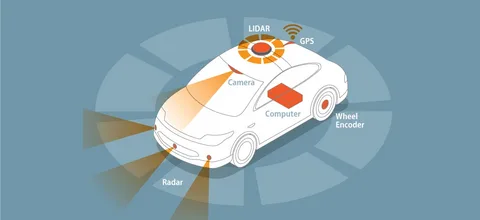
The ADAS ecosystem relies on a combination of sensor technologies to ensure redundant, high-accuracy perception. Radar sensors detect object distance and velocity, even in poor visibility. Cameras provide object classification and lane tracking. Ultrasonic sensors assist with close-range detection during parking and low-speed maneuvers. LiDAR sensors, though more commonly associated with higher-level automation, are gradually entering ADAS systems due to their 3D mapping capabilities and long-range precision. Together, these sensors create a comprehensive, multi-layered situational awareness framework.
Regulatory Support and Road Safety Initiatives Fueling Growth
Regulatory bodies across regions are mandating the inclusion of features such as forward collision warning, lane keeping assistance, and pedestrian detection in new vehicles. These policies are accelerating sensor integration by OEMs and pushing suppliers to innovate in terms of cost, performance, and form factor. Government incentives, crash avoidance standards, and smart transportation initiatives are further enhancing market momentum.
Integration with AI and Sensor Fusion Platforms
Modern ADAS platforms depend on sophisticated sensor fusion algorithms that combine inputs from multiple sensors to create a cohesive understanding of the vehicle’s environment. Artificial intelligence and machine learning are enabling predictive analytics, adaptive decision-making, and continuous performance optimization. These technologies allow vehicles to recognize complex scenarios—such as unpredictable pedestrian movement or multilane merges—and respond appropriately.
Electric and Autonomous Vehicles Driving Sensor Innovation
The transition to electric and autonomous vehicles is creating new demands for compact, energy-efficient, and high-resolution sensors. EVs require ADAS solutions to compensate for silent operation and rapid torque delivery, while autonomous vehicles rely entirely on sensors for perception and navigation. As OEMs develop autonomous driving features in incremental levels, sensor integration is expanding to cover full 360-degree perception, edge-case detection, and redundancy for fail-safe operation.
Miniaturization and Cost Optimization for Mass Adoption
To enable broad deployment, manufacturers are focusing on miniaturizing sensors and reducing production costs. Innovations such as system-on-chip (SoC) radar, integrated camera modules, and solid-state LiDAR are making sensors more affordable and easier to integrate. These developments are crucial for maintaining vehicle design aesthetics while meeting the growing list of safety requirements and feature expectations.
Sensor Reliability and Environmental Durability
ADAS sensors must operate accurately across various weather conditions, lighting environments, and road surfaces. Dust, rain, snow, glare, and vibrations can all affect sensor performance. Manufacturers are developing ruggedized, weather-sealed sensor housings and advanced signal processing technologies to ensure consistent accuracy. Reliability in real-world scenarios is a critical success factor, particularly in regions with challenging driving conditions.
Collaboration Between OEMs, Tier-1 Suppliers, and Tech Firms
The ADAS sensor value chain is characterized by strong partnerships among automakers, traditional Tier-1 suppliers, and technology companies. These collaborations drive innovation in sensor hardware, embedded software, and vehicle integration. Companies are investing in joint R&D centers, pilot programs, and global manufacturing capabilities to scale up production and accelerate time-to-market for advanced ADAS features.
Drive Your Business Growth Strategy: Checkout the Report for Key Insights!
https://www.futuremarketinsights.com/checkout/11865
Future Outlook
The ADAS sensors market is poised for sustained growth as vehicles evolve toward higher levels of autonomy and smarter, more connected driving experiences. Emerging trends such as vehicle-to-everything (V2X) communication, augmented reality dashboards, and AI-driven predictive safety will continue to shape sensor requirements. As the automotive landscape transforms, ADAS sensors will remain indispensable—acting as the eyes and ears of intelligent vehicles, and paving the way for a safer, more autonomous future.
About Future Market Insights (FMI)
Future Market Insights, Inc. (ESOMAR certified, recipient of the Stevie Award, and a member of the Greater New York Chamber of Commerce) offers profound insights into the driving factors that are boosting demand in the market. FMI stands as the leading global provider of market intelligence, advisory services, consulting, and events for the Packaging, Food and Beverage, Consumer Technology, Healthcare, Industrial, and Chemicals markets. With a vast team of 400 analysts worldwide, FMI provides global, regional, and local expertise on diverse domains and industry trends across more than 110 countries.
Contact Us:
Future Market Insights Inc.
Christiana Corporate, 200 Continental Drive,
Suite 401, Newark, Delaware – 19713, USA
T: +1-845-579-5705
For Sales Enquiries: sales@futuremarketinsights.com
Website: https://www.futuremarketinsights.com
LinkedIn| Twitter| Blogs | YouTube