The India’s stainless steel industry has long been lauded for its rapid expansion, robust domestic demand, and competitive manufacturing capabilities. Often analyzed through the lens of production capacities, export growth, and raw material consumption, one critical yet underexplored pillar of this industry lies in its relationship with stainless steel scrap. While the Indian stainless steel market continues to rise in prominence on the global stage, its dependence on imported raw materials, including nickel and stainless scrap, raises vital questions about sustainability, circular economy potential, and cost efficiency. The overlooked dynamics of stainless steel scrap recycling are quietly reshaping the future contours of the sector.
A Snapshot of Scrap: India’s Current Recycling Landscape
India’s stainless steel scrap ecosystem is characterized by fragmentation, limited traceability, and an overwhelming reliance on informal collection systems. Despite being the second-largest producer of stainless steel globally, India recycles only a modest proportion of its scrap domestically. The country imports approximately 60–70% of its stainless steel scrap requirements, primarily from the United States, the European Union, and the Middle East. In contrast, mature economies like Japan and Germany have established robust stainless steel recycling loops that rely heavily on domestic scrap collection, sorting, and reprocessing.
Request Your Sample and Stay Ahead with Our Insightful Report!
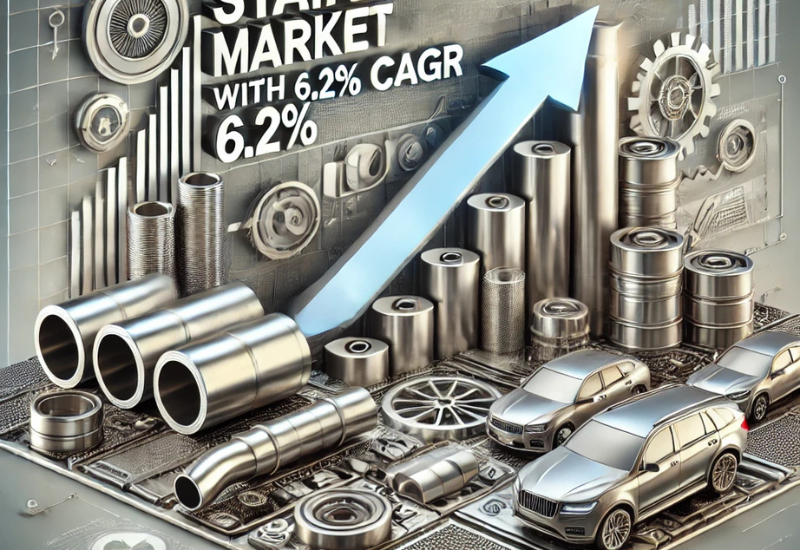
As per Future Market Insights, India’s stainless steel industry value is forecast to increase from USD 17,452.5 million in 2024 to USD 31,905.2 million by 2034. It will emerge as a highly lucrative pocket for manufacturers, with sales rising at a CAGR of 6.2%.
In India, the low rate of organized scrap recovery can be attributed to a lack of centralized collection systems, inconsistent quality of domestically available scrap, and limited investment in scrap processing infrastructure. Most stainless steel scrap collected in India comes from small-scale dismantling operations, urban scavengers, and unorganized recyclers, where contamination and alloy misclassification remain persistent issues. This scenario often makes domestic scrap less reliable and costlier to process compared to standardized imported alternatives.
Economic and Environmental Upsides of Scrap Optimization
A more integrated stainless steel scrap recycling network in India could yield transformative economic and environmental benefits. First, stainless steel production from scrap consumes significantly less energy than primary production using virgin raw materials such as ferrochrome and nickel pig iron. According to industry estimates, producing stainless steel from recycled scrap can reduce energy consumption by up to 60%, while simultaneously lowering carbon emissions by nearly 70%. These reductions are increasingly relevant as India works toward meeting its net-zero carbon targets under international climate agreements.
From a cost perspective, enhanced scrap utilization can insulate manufacturers from volatile international prices of critical inputs like nickel and molybdenum. Secondary stainless steel production, especially through the electric arc furnace (EAF) route, is more cost-effective when scrap quality is consistent and readily available. Encouraging the use of high-grade domestic scrap can, therefore, reduce the overall cost of production, while also shortening supply chains and minimizing foreign exchange outflows.
To Gain More Insights about this Research, Visit!
Bottlenecks to Scaling Stainless Steel Scrap Recycling
Despite these advantages, India’s stainless steel scrap recycling remains far from reaching its full potential. One of the key challenges lies in the absence of policy-level incentives or frameworks encouraging scrap-based production. Unlike developed nations that offer tax rebates or carbon credits to steelmakers using recycled inputs, India’s regulatory environment lacks explicit promotion of stainless steel scrap as a green input. Moreover, the Bureau of Indian Standards (BIS) still lacks granular classification norms for stainless steel scrap grades, making quality assurance a frequent challenge.
The infrastructural limitations also cannot be overlooked. While some large stainless steel producers have backward-integrated scrap yards, the vast majority of recycling occurs in small-scale, decentralized units without access to advanced sorting or spectrometry equipment. These units typically struggle with alloy misidentification, leading to defective outputs or costly reprocessing. The situation is further compounded by a shortage of trained personnel skilled in stainless steel metallurgy and scrap analysis.
Innovation at the Edge: The Role of Technology and Startups
The silver lining, however, lies in the emerging wave of innovation and collaboration aimed at transforming India’s stainless steel recycling model. Tech-driven startups are exploring blockchain-based traceability platforms that can authenticate scrap origin, alloy composition, and processing history. Such transparency could significantly boost buyer confidence in domestic scrap, reducing the current overreliance on imported material.
Another promising frontier is the concept of urban mining—recovering stainless steel scrap from end-of-life buildings, appliances, and transport infrastructure within cities. Pilot initiatives in metropolitan hubs like Delhi and Mumbai are exploring targeted dismantling zones, where used stainless steel components can be collected, graded, and melted for reuse. Some public-private partnerships have also begun experimenting with mobile scrap testing laboratories and cloud-linked sorting stations that enable small recyclers to meet global quality benchmarks.
Reach out to Sales to Secure Your Copy of the Report Now!
Additionally, major players in India’s stainless steel ecosystem, such as Jindal Stainless and Salem Steel, are beginning to invest in R&D to improve melting efficiency and impurity removal techniques in scrap-based production. These efforts, though still nascent, could bridge the gap between the informal and formal segments of the recycling value chain, creating a more integrated and quality-assured scrap economy.
Unlocking Strategic and Sustainable Value
The stainless steel industry in India stands at a strategic inflection point. While production numbers and export volumes continue to impress, the sector’s long-term competitiveness and sustainability depend increasingly on how effectively it manages resources—especially recyclable ones. Stainless steel scrap, once considered a peripheral concern, is now emerging as a cornerstone of cost optimization, energy efficiency, and carbon reduction.
India Stainless Steel Industry Segmentations
By Type:
- Austenitic Stainless Steel
- Ferritic Stainless Steel
- Duplex Stainless Steel
- Martensitic Stainless Steel
- Precipitation Hardening Stainless Steel
By Form:
- Flat Products
- Long Products
By Grade:
- 200 Series
- 300 Series
- 400 Series
- Other Grades
By End-use:
- Building & Construction
- Industrial Machinery & Components
- Automotive & Transportation
- Consumer Goods
- Medical & Surgical Tools
- Aerospace & Defense
- Marine
- Oil & Gas
- Other End-uses
By Region:
- North India
- East India
- West India
- South India
About Future Market Insights (FMI)
Future Market Insights, Inc. (ESOMAR certified, recipient of the Stevie Award, and a member of the Greater New York Chamber of Commerce) offers profound insights into the driving factors that are boosting demand in the market. FMI stands as the leading global provider of market intelligence, advisory services, consulting, and events for the Packaging, Food and Beverage, Consumer Technology, Healthcare, Industrial, and Chemicals markets. With a vast team of over 400 analysts worldwide, FMI provides global, regional, and local expertise on diverse domains and industry trends across more than 110 countries.
Join us as we commemorate 10 years of delivering trusted market insights. Reflecting on a decade of achievements, we continue to lead with integrity, innovation, and expertise.
Contact Us:
Future Market Insights Inc.
Christiana Corporate, 200 Continental Drive,
Suite 401, Newark, Delaware – 19713, USA
T: +1-347-918-3531
For Sales Enquiries: sales@futuremarketinsights.com
Website: https://www.futuremarketinsights.com
LinkedIn| Twitter| Blogs | YouTube