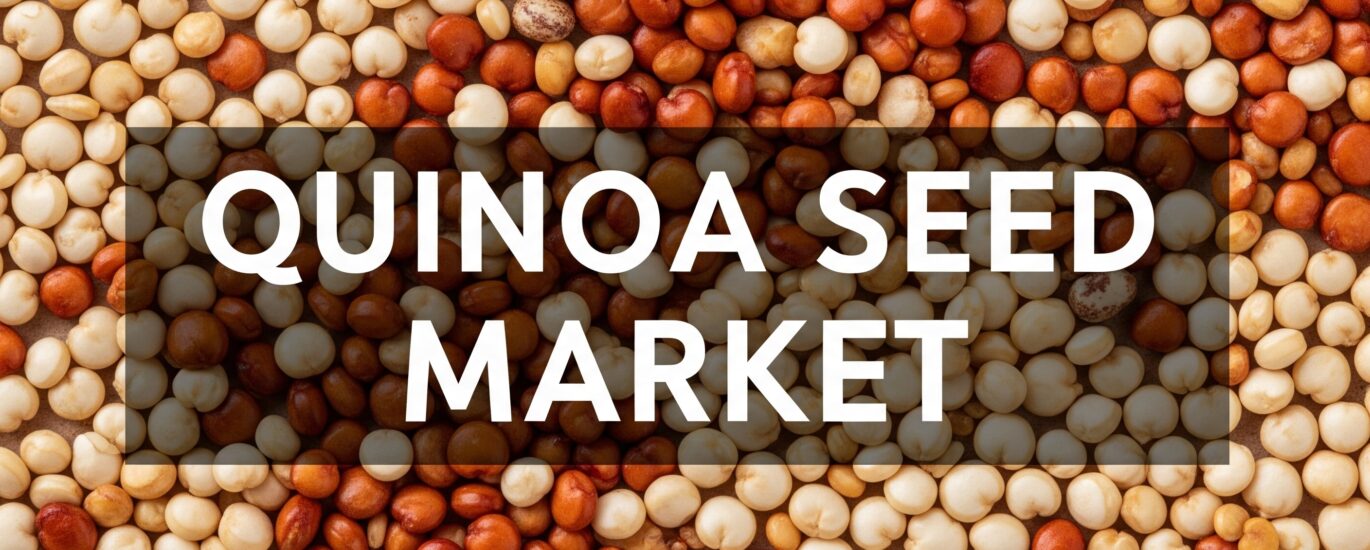
The global quinoa seed market is poised for continued expansion, with an estimated valuation of USD 384.2 million in 2025, projected to reach USD 487 million by 2035, exhibiting a Compound Annual Growth Rate (CAGR) of 2.4% over the forecast period. This steady upward trajectory is predominantly driven by increasing health consciousness worldwide and the rising demand for nutrient-dense, gluten-free, and plant-based food options. In 2025, the quinoa seed market currently accounts for a mere 0.06% of the broader grains market, valued at USD 650 billion, highlighting significant untapped potential.
See What’s Inside – Access Your Sample Report Today: https://www.futuremarketinsights.com/reports/sample/rep-gb-18450
Key Market Dynamics and Competitive Landscape:
The quinoa seed market, while growing, demonstrates distinct characteristics across its segments and geographies. Inorganic quinoa seeds currently dominate the market, holding nearly 60% share in 2025, a 20-point lead over organic counterparts. This is primarily attributed to economies of scale in conventional farming and the slower throughput of organic certification processes. However, a “hidden disruptor” – rising consumer interest in heritage grain varieties – has contributed an 8.5% incremental share growth for specialty brands, indicating a burgeoning niche.
White quinoa remains the preferred color, commanding 50% of the market share in 2025, 15 points ahead of red quinoa. Its broad retail adoption in Western supermarkets and a premium pricing strategy reinforce its perceived value. The emergence of tri-color blends, however, is a notable “hidden disruptor,” capturing an incremental 4.2% share by appealing to premium-label consumers.
Direct consumption of quinoa constitutes the largest application segment, holding 55% market share in 2025, outpacing processed products by 10 points. This is largely driven by the increasing integration of quinoa into home-meal kits and the logistical hurdles associated with scaling ready-to-cook lines. Subscription-based meal-kit services, acting as a “hidden disruptor,” have further boosted direct consumption, increasing their share by 5.2% through curated quinoa recipes and strengthened retailer partnerships.
Distribution channels are heavily skewed towards offline stores, which held a dominant 70% share in 2025, leading online stores by 40 points. This robust presence is due to established retail partnerships with major supermarkets and limited digital infrastructure in emerging markets. Direct-to-consumer subscription platforms are emerging as a “hidden disruptor” in this segment, adding a 6.3% incremental share by offering tailored quinoa-based meal kits.
Geographic Concentration and Import/Export Trends:
The global quinoa supply chain remains heavily concentrated in the Andean region. Peru accounts for approximately 48% of global export value in 2025, with Bolivia contributing around 24%. The United States, surprisingly, ranks third with about 5% of exports, followed by the Netherlands (3.5%) and Germany (3%).
On the import front, the United States leads globally, with roughly USD 200 million of quinoa imports in 2024. Canada is another significant importer, sourcing substantial volumes directly from Peru and the United States. Within Europe, Germany, France, and the United Kingdom are among the top ten importers, reflecting a strong regional demand for gluten-free and plant-based foods. However, Europe’s import dependence exceeded 54% in 2024, highlighting a vulnerability to supply chain disruptions. High retail prices, averaging USD 4,500 per ton in 2024, coupled with limited consumer awareness in import-reliant regions, have somewhat constrained broader adoption.
Competitive Analysis: Key Players and Strategic Outlook
Major players in the quinoa seed market, including Alter Eco, Andean Naturals Inc. (Ardent Mills), Irupana Andean Organic Food S.A., Quinoabol SRL, and The British Quinoa Company Ltd., are strategically focusing on geographic diversification and vertical integration to secure supply chains and meet evolving consumer demands. South American exporters are investing in post-harvest processing to minimize losses, while brands in developed markets like the UK and EU are expanding traceable sourcing models. USA-based Above Food Inc. is prioritizing proprietary varietals and regenerative cultivation partnerships for consistent year-round supply.
The market faces short-term challenges from production volatility in Peru and Bolivia, which collectively account for over 70% of global supply. Input cost inflation and climate-linked yield fluctuations are pushing players towards forward contracts with large retailers, a move that hedges risk but can tighten margins. Mergers and acquisitions are targeted, favoring companies with established B2B distribution or certified-organic portfolios.
Looking ahead, companies with direct control over cultivation and strong access to premium health-food retail networks are positioned for superior performance. Those reliant on fragmented sourcing or bulk wholesale channels may experience slower growth due to tightening import regulations and increasing demands for food traceability. The market is also seeing investment in non-traditional cultivation regions, spurred by processing technology advancements, which supports the positive CAGR outlook.
Regional Spotlights:
- United States: Projected at USD 114.0 million in 2025 (CAGR of 1.2%), the U.S. remains the world’s top importer. Premium pricing in organic and specialty retail segments (over 42% of market value) and direct-to-consumer channels support margins, despite price sensitivity among middle-income households.
- United Kingdom: Valued at USD 18.6 million in 2025 (CAGR of 2.3%), the UK is seeing domestic cultivation grow, with acreage expanding by 9.4% in 2025. Organic quinoa commands a 26% price premium, and health-food retailers and farm shops drive 38% of sales.
- Germany: At USD 38.3 million in 2025 (CAGR of 2.1%), Germany’s demand is rooted in plant-based diets, with quinoa featured in 19% of vegetarian and vegan SKUs. Local production is expanding, supported by EU subsidies.
- France: Estimated at USD 30.5 million in 2025 (CAGR of 1.6%), France is Europe’s top importer. Strong competition from South American imports and slower retail rotation outside major cities present challenges, though organic private labels are aiding stabilization.
- Japan: Valued at USD 21.4 million in 2025 (CAGR of 2.2%), Japan’s imports are driven by quinoa’s positioning in diabetic and heart-health diets, despite high price sensitivity.
The global quinoa seed market is a dynamic sector driven by evolving consumer preferences for healthy and sustainable food options. While traditional production hubs and distribution channels maintain their dominance, emerging trends like heritage grain interest, tri-color blends, and direct-to-consumer models, coupled with investments in non-traditional cultivation, are shaping a competitive and expanding future for this ancient grain.
Purchase the Complete Market Report Today: https://www.futuremarketinsights.com/checkout/18450
About Future Market Insights (FMI)
Future Market Insights, Inc. (ESOMAR certified, recipient of the Stevie Award, and a member of the Greater New York Chamber of Commerce) offers profound insights into the driving factors that are boosting demand in the market. FMI stands as the leading global provider of market intelligence, advisory services, consulting, and events for the Packaging, Food and Beverage, Consumer Technology, Healthcare, Industrial, and Chemicals markets. With a vast team of over 400 analysts worldwide, FMI provides global, regional, and local expertise on diverse domains and industry trends across more than 110 countries.
Contact Us:
Future Market Insights Inc.
Christiana Corporate, 200 Continental Drive,
Suite 401, Newark, Delaware – 19713, USA
T: +1-347-918-3531
For Sales Enquiries: sales@futuremarketinsights.com
Website: https://www.futuremarketinsights.com
LinkedIn| Twitter| Blogs | YouTube