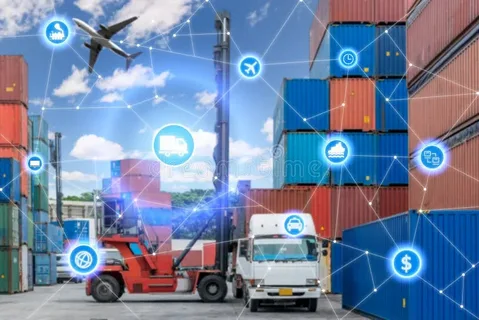
The global sales of connected logistics are worth USD 29.73 billion in 2025 and are anticipated to reach a value of USD 97.39 billion by 2035. Sales are projected to rise at a CAGR of 12.6% over the forecast period between 2025 and 2035. The market is experiencing significant growth due to the rapid advancement and integration of digital technologies across supply chains.
The connected logistics market is experiencing rapid growth as global supply chains embrace digital transformation to improve efficiency, transparency, and responsiveness. Connected logistics refers to the integration of advanced technologies—such as IoT, cloud computing, big data, artificial intelligence, and sensor networks—within logistics operations to streamline processes, enhance communication, and enable real-time tracking of goods and assets. As businesses face increasing pressure to meet customer expectations, reduce costs, and navigate complex global networks, connected logistics solutions are becoming indispensable.
Transforming Traditional Supply Chains into Intelligent Ecosystems
Connected logistics transforms static, linear supply chains into dynamic and adaptive ecosystems. Through real-time data collection and automated decision-making, businesses can optimize inventory management, predict disruptions, and improve delivery accuracy. These solutions enable seamless communication between transport vehicles, warehouses, suppliers, and distribution centers, reducing latency and enhancing operational control. The ability to monitor and react to changes in real time empowers logistics providers to stay ahead of demand fluctuations, delays, and compliance issues.
Get Ahead with Our Report: Request Your Sample Now!
https://www.futuremarketinsights.com/reports/sample/rep-gb-4287
Real-Time Visibility Driving Transparency and Trust
A core advantage of connected logistics is end-to-end visibility into supply chain operations. By using GPS-enabled devices, RFID tags, and telematics, stakeholders can track the movement of goods in real time, monitor storage conditions, and receive instant alerts about anomalies. This level of transparency reduces the risk of loss, theft, and damage, while also building trust with customers through accurate delivery timelines and proactive communication. Real-time insights also support performance benchmarking and continuous improvement.
Widespread Adoption Across Key Industry Verticals
Connected logistics solutions are being widely adopted across industries such as retail, manufacturing, pharmaceuticals, food and beverage, automotive, and e-commerce. Retailers use them to synchronize inventory with sales channels and ensure just-in-time delivery. Pharmaceutical companies rely on connected logistics to maintain cold chain integrity and regulatory compliance. In the automotive sector, parts suppliers and OEMs leverage connected systems to coordinate complex global sourcing and reduce production downtime. The flexibility and scalability of these solutions make them suitable for enterprises of all sizes.
Integration with IoT Devices for Intelligent Asset Monitoring
The use of IoT sensors and smart devices is central to connected logistics. These sensors capture critical parameters such as temperature, humidity, shock, and location during transit. Fleet operators can monitor vehicle health, fuel usage, and driver behavior, enabling predictive maintenance and safety improvements. In warehouses, IoT-enabled equipment tracks inventory movement and supports automation. The continuous stream of data from these devices enables predictive analytics, real-time alerts, and improved decision-making across the logistics value chain.
Cloud-Based Platforms Enhancing Scalability and Collaboration
Cloud computing provides the backbone for connected logistics systems, allowing stakeholders to access data, analytics, and applications from any location. Cloud platforms support multi-party collaboration, enabling seamless data sharing between logistics providers, suppliers, and customers. This centralization improves coordination, accelerates order fulfillment, and reduces IT infrastructure costs. Cloud-based systems also facilitate integration with other enterprise solutions such as ERP, CRM, and TMS, creating a unified operational environment.
Artificial Intelligence and Predictive Analytics Powering Optimization
AI and machine learning are transforming logistics by enabling predictive analytics, automated decision-making, and demand forecasting. These technologies help identify patterns in historical and real-time data to predict delivery delays, optimize routes, and manage risk. AI-powered chatbots and virtual assistants enhance customer service, while automated workflows reduce manual intervention and improve operational consistency. Advanced analytics also help assess supplier performance, forecast inventory needs, and fine-tune pricing and logistics strategies.
Sustainability and Green Logistics Integration
Connected logistics plays a vital role in advancing sustainability goals. By optimizing transport routes, consolidating shipments, and monitoring fuel consumption, businesses can reduce their carbon footprint and operational waste. Real-time data helps ensure compliance with environmental regulations and supports the adoption of eco-friendly practices such as electric fleets and low-emission routes. Sustainability-focused logistics strategies are increasingly becoming a competitive differentiator in the market.
Enhancing Risk Management and Disruption Recovery
In an era of global supply chain disruptions—ranging from pandemics and geopolitical tensions to natural disasters—connected logistics offers enhanced risk management capabilities. The ability to detect issues early, reroute shipments, and communicate with stakeholders in real time enables faster recovery and minimized downtime. Scenario planning and digital twin technologies, supported by connected systems, allow organizations to simulate potential disruptions and prepare contingency plans.
Customization and Modularity for Scalable Solutions
Connected logistics platforms are designed to be modular and customizable, allowing businesses to tailor solutions to their unique operational needs. Whether implementing real-time fleet tracking, warehouse automation, or inventory forecasting, companies can deploy components that align with their priorities and scale as they grow. This adaptability makes connected logistics accessible to startups, mid-sized firms, and large multinational corporations alike.
Accelerate Your Business Strategy: Unlock Key Insights with Our Report Checkout!
https://www.futuremarketinsights.com/checkout/4287
Future Outlook
The connected logistics market is poised for continued expansion, driven by increasing digitalization, e-commerce growth, and the need for resilient and agile supply chains. Emerging technologies such as 5G connectivity, blockchain for secure data sharing, and autonomous logistics systems will further enhance the capabilities of connected logistics. As global trade and customer expectations evolve, connected logistics will remain a cornerstone of efficient, transparent, and sustainable supply chain operations—empowering businesses to deliver faster, smarter, and more responsibly.
About Future Market Insights (FMI)
Future Market Insights, Inc. (ESOMAR certified, recipient of the Stevie Award, and a member of the Greater New York Chamber of Commerce) offers profound insights into the driving factors that are boosting demand in the market. FMI stands as the leading global provider of market intelligence, advisory services, consulting, and events for the Packaging, Food and Beverage, Consumer Technology, Healthcare, Industrial, and Chemicals markets. With a vast team of 400 analysts worldwide, FMI provides global, regional, and local expertise on diverse domains and industry trends across more than 110 countries.
Contact Us:
Future Market Insights Inc.
Christiana Corporate, 200 Continental Drive,
Suite 401, Newark, Delaware – 19713, USA
T: +1-845-579-5705
For Sales Enquiries: sales@futuremarketinsights.com
Website: https://www.futuremarketinsights.com
LinkedIn| Twitter| Blogs | YouTube