The global automotive in-wheel motors market is projected to grow from USD 4.18 billion in 2025 to USD 24.02 billion by 2035, registering a robust compound annual growth rate (CAGR) of 19.1%. This expansion is being driven by rising electric vehicle (EV) adoption, the push for vehicle platform flexibility, and ongoing innovations in powertrain decentralization.
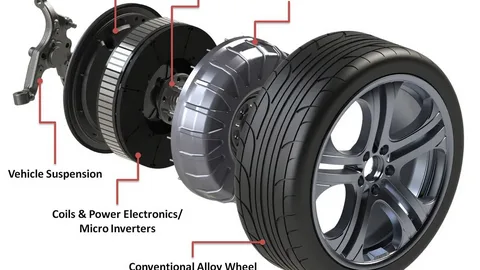
The automotive in-wheel motors market is witnessing rising interest as electric vehicle (EV) manufacturers explore more efficient, compact, and performance-enhancing propulsion technologies. In-wheel motors, which are integrated directly into the wheels of a vehicle, eliminate the need for conventional transmission, axles, and differentials. This architecture enables greater design flexibility, improved power efficiency, and enhanced handling characteristics. As electrification becomes central to the future of mobility, in-wheel motors are emerging as a transformative solution for next-generation vehicles.
Get Ahead with Our Report: Request Your Sample Now!
https://www.futuremarketinsights.com/reports/sample/rep-gb-7677
Revolutionizing Vehicle Architecture with Wheel-Integrated Power
In-wheel motors fundamentally change how vehicles are powered and controlled. By decentralizing propulsion to each wheel, these systems allow for individual torque control, facilitating more responsive acceleration, smoother braking, and superior traction. This architecture reduces mechanical complexity and allows for more interior space, making it ideal for compact EVs and purpose-built autonomous platforms. Automakers and startups alike are exploring in-wheel motor designs to unlock new possibilities in both performance and packaging.
Expanding Applications Across Vehicle Categories
While in-wheel motors have gained initial traction in electric passenger cars, their applications are rapidly expanding into other segments. Lightweight urban vehicles, commercial delivery vans, electric buses, and off-road utility vehicles are all exploring this technology for its efficiency and maneuverability. Performance-oriented EVs benefit from enhanced torque vectoring capabilities, while micro-mobility solutions leverage the compact design of in-wheel systems for agile movement in crowded urban environments.
Alignment with Evolving Vehicle Electrification Trends
The shift toward electrification and cleaner transportation is a key driver of in-wheel motor adoption. These systems complement battery-electric vehicle designs by simplifying the powertrain and increasing energy efficiency. As more countries implement stringent emissions standards and encourage the development of zero-emission vehicles, in-wheel motors provide a viable pathway for manufacturers to meet regulatory and sustainability goals.
Advanced Control and Vehicle Dynamics
One of the most significant advantages of in-wheel motors is the ability to enable advanced control strategies, such as independent torque distribution to each wheel. This supports real-time torque vectoring, enhancing stability, cornering performance, and safety. These capabilities are particularly valuable in autonomous and connected vehicles, where precise and dynamic vehicle behavior is critical. Integrated braking and regenerative features further optimize energy use and vehicle control.
Material Advancements and Thermal Management
In-wheel motors must withstand high rotational forces, heat generation, and environmental exposure. Manufacturers are investing in lightweight materials such as advanced composites and aluminum alloys to reduce unsprung mass while maintaining durability. Effective thermal management solutions, including liquid or air cooling systems, ensure consistent performance and prevent overheating. These innovations help in achieving both performance and longevity under demanding operating conditions.
Customization and Platform Versatility
The modular nature of in-wheel motors allows for customization based on vehicle type, size, and usage scenario. Whether designed for compact urban cars, rugged terrain vehicles, or delivery fleets, in-wheel motor systems can be tailored to meet specific performance and packaging needs. Their flexibility also supports scalable vehicle platforms, enabling automakers to design multiple variants without drastically changing the drivetrain layout.
Reduced Mechanical Complexity and Maintenance
With fewer moving parts compared to traditional propulsion systems, in-wheel motors offer a more streamlined mechanical architecture. This results in lower maintenance requirements and fewer points of failure. The elimination of driveshafts, differentials, and gearboxes simplifies vehicle construction and contributes to a quieter, smoother ride. Maintenance cost savings and enhanced reliability make in-wheel motors especially attractive for fleet operators and shared mobility services.
User Experience and Space Optimization
By relocating the propulsion mechanism to the wheels, in-wheel motor systems free up space within the vehicle chassis. This design freedom allows for innovative cabin layouts, increased storage capacity, and the development of flat-floor vehicle interiors. The result is a better user experience, especially in electric shuttles, ride-hailing vehicles, and compact EVs designed for urban commuting.
Strategic Collaborations and Innovation Ecosystem
The automotive in-wheel motors market is driven by a growing ecosystem of partnerships between vehicle manufacturers, motor developers, and technology providers. Collaborations are focused on refining motor efficiency, integration techniques, and control software. Research initiatives and pilot programs are advancing testing and validation, while startups and R&D centers play a key role in pushing technological boundaries.
Drive Your Business Growth Strategy: Checkout the Report for Key Insights!
https://www.futuremarketinsights.com/checkout/7677
Future Outlook
As the automotive industry accelerates toward electric and autonomous mobility, in-wheel motors are positioned to play a pivotal role in reshaping vehicle design and performance. Continued innovation in motor materials, control algorithms, and integration methods will drive adoption across diverse vehicle categories. With their promise of enhanced efficiency, dynamic control, and design flexibility, in-wheel motors represent a foundational technology for the future of sustainable, intelligent transportation.
About Future Market Insights (FMI)
Future Market Insights, Inc. (ESOMAR certified, recipient of the Stevie Award, and a member of the Greater New York Chamber of Commerce) offers profound insights into the driving factors that are boosting demand in the market. FMI stands as the leading global provider of market intelligence, advisory services, consulting, and events for the Packaging, Food and Beverage, Consumer Technology, Healthcare, Industrial, and Chemicals markets. With a vast team of 400 analysts worldwide, FMI provides global, regional, and local expertise on diverse domains and industry trends across more than 110 countries.
Contact Us:
Future Market Insights Inc.
Christiana Corporate, 200 Continental Drive,
Suite 401, Newark, Delaware – 19713, USA
T: +1-845-579-5705
For Sales Enquiries: sales@futuremarketinsights.com
Website: https://www.futuremarketinsights.com
LinkedIn| Twitter| Blogs | YouTube