The Safety Laser Scanner Market is estimated to be valued at USD 357.1 million in 2025 and is projected to reach USD 651.6 million by 2035, registering a compound annual growth rate (CAGR) of 6.2% over the forecast period.
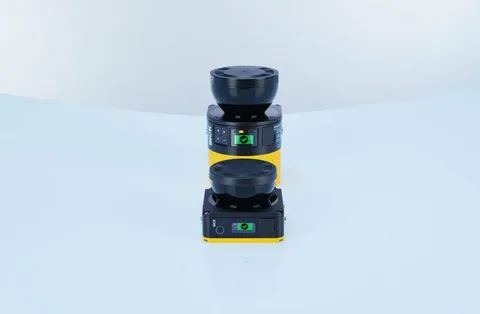
The safety laser scanner market is experiencing robust growth as industries adopt smarter safety technologies to protect personnel, equipment, and automated systems. These devices, known for their ability to create configurable protective fields and detect objects with high precision, are becoming vital components across sectors such as manufacturing, logistics, robotics, and healthcare.
Get Ahead with Our Report: Request Your Sample Now!
Ensuring Workplace Safety with Non-Contact Monitoring
Safety laser scanners enhance occupational safety by continuously monitoring defined zones and automatically initiating protective actions when intrusions occur. Unlike traditional safety barriers, these scanners offer non-contact detection and flexible area coverage, which allows for greater design freedom and optimized workspace layouts. This capability is particularly important in dynamic environments where human-machine interaction is frequent.
Integration with Smart Manufacturing and Robotics
With the rise of Industry 4.0 and the increasing adoption of collaborative robots, safety laser scanners are essential for enabling safe coexistence between humans and machines. These scanners detect approaching operators or obstacles in real time, allowing robots and automated guided vehicles to respond intelligently—by slowing down, stopping, or rerouting—to prevent accidents and maintain productivity.
Flexible Configuration and Zone Customization
One of the defining strengths of safety laser scanners is their configurability. Operators can set up multiple protection zones and warning fields tailored to specific operational needs. This adaptability allows businesses to implement scalable safety strategies that change in real time based on machine status, production cycles, or spatial constraints.
Widespread Applications Across Industries
Safety laser scanners are being deployed across a variety of industrial environments. In logistics and warehousing, they safeguard loading zones and monitor automated storage systems. In automotive and electronics manufacturing, they protect workers around robotic arms and assembly lines. The healthcare and pharmaceutical sectors are also adopting these scanners for laboratory automation and cleanroom operations where precision and compliance are paramount.
Exhaustive Market Report: A Complete Study
Compact Designs with High Detection Reliability
Modern safety laser scanners feature compact and modular designs that simplify installation in constrained or complex layouts. Despite their size, these devices offer high-resolution detection and wide scanning angles, ensuring comprehensive coverage. Innovations in scanning algorithms and signal processing continue to improve object recognition accuracy and reduce false triggers caused by dust, reflections, or vibrations.
Compliance with International Safety Standards
As workplace safety regulations become more stringent, compliance is a top priority. Safety laser scanners are developed and certified in accordance with international standards such as ISO 13849 and IEC 61496. These certifications assure end users that the devices meet rigorous safety performance levels and can be confidently integrated into certified safety systems.
Support for Data Logging and Diagnostics
Advanced models offer built-in data logging, diagnostic features, and network connectivity. These capabilities support predictive maintenance, operational analytics, and real-time status monitoring. Integration with industrial communication protocols allows the scanners to be part of a larger automation ecosystem, contributing to both safety and operational intelligence.
Growing Demand for Mobile and Autonomous Solutions
As mobile robots and autonomous guided vehicles become more prevalent in material handling and production environments, safety laser scanners are being integrated to provide dynamic obstacle detection and navigation support. Their 360-degree monitoring ability enables real-time path planning and collision avoidance, enhancing safety without sacrificing mobility or performance.
Future Outlook
The safety laser scanner market is poised for sustained growth, driven by the increasing complexity of industrial operations and the need for adaptive, intelligent safety systems. As automation and human-machine collaboration deepen across sectors, safety laser scanners will remain central to achieving high standards of protection, productivity, and regulatory compliance. Continuous innovation in sensing technology, connectivity, and artificial intelligence will further elevate their role in shaping the future of safe industrial automation.
Power Your Business Growth: Invest in Key Insights with Our Report Checkout!
About Future Market Insights (FMI)
Future Market Insights, Inc. (ESOMAR certified, recipient of the Stevie Award, and a member of the Greater New York Chamber of Commerce) offers profound insights into the driving factors that are boosting demand in the market. FMI stands as the leading global provider of market intelligence, advisory services, consulting, and events for the Packaging, Food and Beverage, Consumer Technology, Healthcare, Industrial, and Chemicals markets. With a vast team of 400 analysts worldwide, FMI provides global, regional, and local expertise on diverse domains and industry trends across more than 110 countries.
Contact Us:
Future Market Insights Inc.
Christiana Corporate, 200 Continental Drive,
Suite 401, Newark, Delaware – 19713, USA
T: +1-845-579-5705
For Sales Enquiries: sales@futuremarketinsights.com
Website: https://www.futuremarketinsights.com
LinkedIn| Twitter| Blogs | YouTube