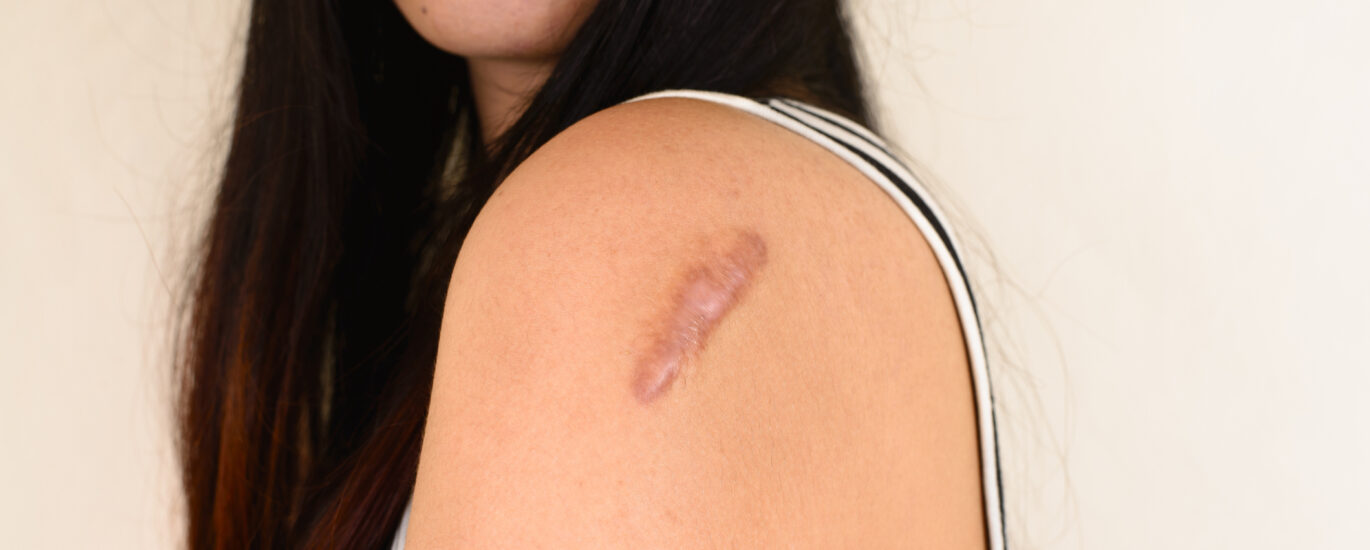
The global keloid treatment market is on a robust growth trajectory, with an estimated value of USD 4,135.1 million in 2025. Projections indicate a substantial expansion to USD 5,975.7 million by 2035, demonstrating a Compound Annual Growth Rate (CAGR) of 3.8% over the forecast period. This significant surge is primarily driven by the increasing global demand for scar management, a higher incidence of keloids in individuals with darker skin tones, and continuous advancements in dermatological and regenerative medicine.
Market Overview and Evolution of Treatment
Keloids, characterized by excessive scar tissue formation, are becoming more prevalent, particularly among individuals with darker skin, intensifying the demand for advanced treatment options. Historically, keloid management was limited to surgical removal, corticosteroid injections, and rudimentary topical applications, often leading to high recurrence rates. However, recent technological innovations have transformed the landscape. Non-invasive laser treatments, radiation therapy, cryotherapy, and the introduction of topical silicone gels and pressure therapy have improved efficacy and patient outcomes.
Pharmaceutical and biotech companies are now investing heavily in research and development to explore novel therapeutics, including gene-based treatments and regenerative medicine like stem cell therapy. Dermatologists are increasingly adopting combination therapies—such as surgical intervention followed by post-treatment approaches—to enhance treatment success and acceptance. The burgeoning application areas of personalized medicine and the expansion of teledermatology to remote areas further underscore the market’s future growth potential, driven by rising awareness and a continuous demand for aesthetic care.
Click Here for More Information:- https://www.futuremarketinsights.com/reports/keloid-treatment-market
Key Growth Drivers and Opportunities
The market’s expansion is fueled by several critical factors. The inherent challenge of keloid recurrence, even with advanced modalities, has spurred the search for more effective, long-term solutions. This has created a significant opportunity for the development of biologic and regenerative therapies. Biologic medications, such as monoclonal antibodies and gene therapies, are designed to target the fundamental mechanisms of scar tissue development, while stem cell therapy holds promise for promoting more effective skin healing and preventing keloid formation from the outset. As technology advances and funding increases in dermatology and biotech, these new treatments are poised to revolutionize keloid management.
Furthermore, advancements in laser and cryotherapy treatments are providing more non-invasive and effective approaches. Fractional CO2 and pulsed dye lasers (PDLs) are gaining acceptance for their ability to remodel collagen, reduce redness, and minimize scar pigmentation. Cryotherapy, which freezes keloids with liquid nitrogen, offers pain-minimizing effects and reduces scar tissue. These therapies are increasingly seen as feasible alternatives to surgery or corticosteroid injections, with lower side effects and recurrence rates, significantly contributing to market growth.
Segment Insights: Dominance and Specialization
Intralesional Corticosteroid Injections are expected to dominate the market as a widely used first-line treatment for keloids. These injections effectively reduce keloid volume, redness, and pain by inhibiting fibroblast growth and collagen formation. The increasing prevalence of hypertrophic and keloid scars, coupled with a preference for minimally invasive and non-surgical solutions, drives their adoption.
Laser therapy holds the second-largest share, owing to its effectiveness in managing complex keloids, particularly in minimizing scar pigmentation and improving overall skin quality. The increasing demand for non-invasive scar modification and the integration of laser treatment with other therapies are fueling this segment’s expansion.
By end-user, Hospitals represent the largest segment, providing comprehensive scar management solutions for severe cases, including surgical removal and radiation therapy. Dermatology clinics are also a key segment, rapidly emerging as a preferred choice for non-surgical procedures like laser therapy, cryosurgery, and corticosteroid injections, driven by the increasing need for cosmetic dermatology treatments and patient demand for aesthetic scar revision.
Regional Market Trends
North America continues to lead the keloid treatment market, driven by a high demand for cosmetic procedures, the increasing prevalence of keloids in individuals with darker skin tones, and strong support for advanced treatments. The United States, in particular, benefits from high keloid incidence, robust insurance coverage, and significant R&D investments in regenerative therapies and AI tools for skin assessment.
Europe is a leading market due to government-sponsored dermatology research, a growing demand for non-surgical procedures, and the increasing application of regenerative medicine for scar treatment. Countries like Germany, France, and the UK benefit from structured healthcare policies and high consumer spending on aesthetic procedures.
The Asia-Pacific market is booming due to increasing keloid scarring incidences, greater awareness about scar revision techniques, and rising affordability for laser therapy. China, Japan, and India are key markets, witnessing the emergence of new dermatological service providers and a growing preference for herbal-based scar management solutions, alongside the rapid development of non-invasive therapeutic technologies.
Competitive Landscape and Strategic Initiatives
The keloid treatment market is highly competitive, fueled by rising keloid scarring, innovations in dermatologic treatments, and increased demand for reconstructive and aesthetic procedures. Leading firms are investing in surgical procedures, corticosteroid injections, laser treatment, and cryotherapy to maintain a competitive edge. Well-established pharmaceutical companies, dermatology companies, and new biotech players are influencing the market.
Key players like Novartis AG, Bristol-Myers Squibb Company, Perrigo Company plc., and Sensus Healthcare are at the forefront. Novartis AG specializes in biologic treatments and corticosteroids, while Bristol-Myers Squibb focuses on immune modulators and biologic therapies. Perrigo Company plc. is a leader in over-the-counter silicone-based solutions, and Sensus Healthcare pioneers non-invasive laser and radiation-dependent scar management technology. These companies are actively engaged in R&D, strategic partnerships, and product diversification to address unmet medical needs and enhance patient outcomes globally.
Get Sample Report: – https://www.futuremarketinsights.com/reports/sample/rep-gb-1313
About Future Market Insights (FMI)
Future Market Insights, Inc. (ESOMAR certified, recipient of the Stevie Award, and a member of the Greater New York Chamber of Commerce) offers profound insights into the driving factors that are boosting demand in the market. FMI stands as the leading global provider of market intelligence, advisory services, consulting, and events for the Packaging, Food and Beverage, Consumer Technology, Healthcare, Industrial, and Chemicals markets. With a vast team of over 400 analysts worldwide, FMI provides global, regional, and local expertise on diverse domains and industry trends across more than 110 countries.
Contact Us:
Future Market Insights Inc.
Christiana Corporate, 200 Continental Drive,
Suite 401, Newark, Delaware – 19713, USA
T: +1-347-918-3531
For Sales Enquiries: sales@futuremarketinsights.com
Website: https://www.futuremarketinsights.com
LinkedIn| Twitter| Blogs | YouTube