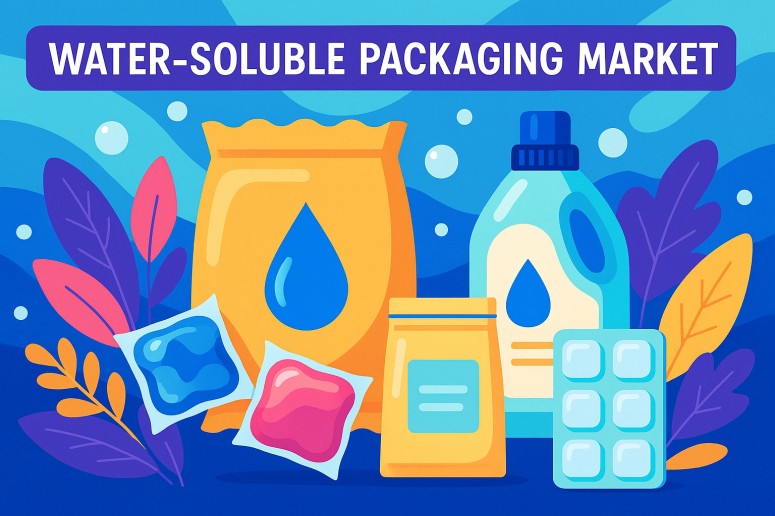
The global water-soluble packaging market is on a fast-track growth trajectory. Estimated to be worth USD 3.9 billion in 2025, the market is forecast to reach USD 7.3 billion by 2035, growing at a Compound Annual Growth Rate (CAGR) of 6.5%. In 2024 alone, the market generated USD 3.6 billion in revenue, reflecting the surging interest in sustainable packaging solutions.
This growth is powered by a convergence of regulatory pressures, rising environmental consciousness, technological innovations, and shifting consumer behaviors all reshaping the future of packaging.
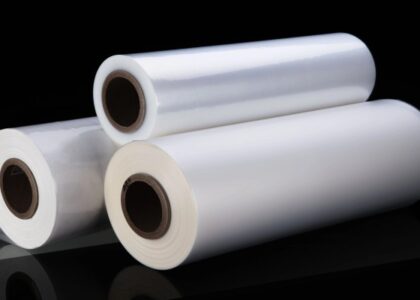
Water-soluble packaging is a biodegradable material that dissolves in water, leaving no harmful residues behind. It’s primarily made from polyvinyl alcohol (PVA), a synthetic polymer known for its solubility and non-toxicity. These materials break down completely when exposed to water, making them ideal for single-use applications in sectors like detergents, agriculture, pharmaceuticals, and food packaging.
Unlock Growth Potential – Request Your Sample Now and Explore Market Opportunities!
https://www.futuremarketinsights.com/reports/sample/rep-gb-17202
Unlike traditional plastics, water-soluble packaging decomposes into non-toxic byproducts, reducing the ecological footprint of discarded packaging. It’s an innovation that speaks directly to the growing call for circular economy solutions.
The Rise of Sustainable and Eco-Friendly Packaging
At the heart of the water-soluble packaging market’s growth is the global emphasis on sustainability. With alarming levels of plastic pollution threatening ecosystems, governments, brands, and consumers are increasingly looking for greener alternatives. Water-soluble packaging, which dissolves completely in water without leaving any toxic residue, offers a compelling solution to the persistent problem of plastic waste.
This packaging is often made from biodegradable polymers like polyvinyl alcohol (PVOH), known for its excellent film-forming, adhesion, and barrier properties. Once exposed to water, these materials break down safely, significantly reducing land and ocean pollution. Industries are thus embracing water-soluble films not just for their functionality but for their environmental compatibility.
Key Takeaways from the Water-soluble Packaging Market
- Pods are expected to dominate the market with a 52.4% share in 2025, driven by demand for precision dosing and user convenience.
- Home and personal care applications are forecasted to make up 47.9% of the total water-soluble packaging demand in 2025.
- The USA market is projected to grow steadily, registering a CAGR of 5.4% through 2035.
- Spain is expected to lead growth in Europe with a CAGR of 6.1% by 2035.
Regulatory Push Accelerating Market Momentum
Governments and international regulatory bodies are enforcing stricter rules around plastic usage and waste management. For instance, single-use plastic bans, extended producer responsibility (EPR) mandates, and carbon neutrality targets are compelling industries to innovate their packaging approaches. Water-soluble packaging, due to its ability to completely degrade in water without leaving microplastics, is well-positioned to benefit from these evolving compliance landscapes.
Single-Dose Convenience Meets Safety and Hygiene Demands
Water-soluble packaging is gaining traction in segments where precision dosing and hygiene are critical. In pharmaceuticals and cleaning products, for instance, unit-dose packaging ensures that the right amount of product is used each time, minimizing waste and enhancing safety.
Post-pandemic, the world has become more hygiene-conscious, further propelling demand for single-use, touch-free product delivery. Products like detergent pods, disinfectant sachets, and pre-measured pharmaceutical solutions are becoming increasingly common, giving water-soluble packaging a strong foothold in these applications.
Growing Adoption in Agriculture for Fertilizers and Pesticides
The agricultural sector represents a high-growth opportunity for water-soluble packaging. Traditionally, fertilizers and pesticides require handling and measuring, which can be hazardous and inefficient. Water-soluble pouches eliminate this challenge by enabling exact dosing and safe handling, while also minimizing product loss and environmental contamination.
Additionally, water-soluble films eliminate plastic container waste on farms, aligning with sustainable agriculture initiatives and giving farmers a cost-effective, eco-conscious option.
Pharmaceutical Industry’s Demand for Smart, Soluble Packaging
In the healthcare and pharmaceutical sectors, packaging plays a vital role in ensuring product efficacy, safety, and patient compliance. Water-soluble packaging is increasingly used for oral thin films, fast-dissolving strips, and unit-dose sachets, which cater to patients requiring fast action or those with difficulty swallowing tablets.
Furthermore, the pharmaceutical industry is under pressure to reduce its environmental impact. Water-soluble packaging supports this objective by offering biodegradable and non-toxic options that safely disintegrate, preventing pharmaceutical pollution a growing global concern.
Competitive Landscape
The water-soluble packaging market is moderately fragmented with a mix of established packaging firms and innovative start-ups. Some of the major players include:
- Lithey Inc.
- Mondi Group
- Sekisui Chemicals
- Kuraray Co.Ltd
- Mitsubishi Chemicals Holdings
- Aquapak Polymers Ltd
- Lactips
- Cortec Corporation
- Acedag Ltd.
- MSD Corporation
- Prodotti Solutions
- JRF Technology LLC
- Amtopak Inc.
Key Segments of the Water-soluble Packaging Market
By Raw Material:
The water-soluble packaging market is segmented based on raw materials, including polymers, surfactants, and fibers.
By Design:
Water-soluble packaging is available in different designs, primarily categorized into plate and tubular formats.
By End-User Industry:
This market serves various end-user industries, including industrial, food and beverages, pharmaceuticals, agriculture, chemical, water treatment, and residential sectors.
By Region:
Key Countries of North America, Latin America, East Asia, South Asia & Pacific, Western Europe, Eastern Europe and Middle East & Africa are covered.
Checkout Now to Access Exclusive Data:
https://www.futuremarketinsights.com/checkout/17202
About Future Market Insights (FMI)
Future Market Insights, Inc. (ESOMAR certified, recipient of the Stevie Award, and a member of the Greater New York Chamber of Commerce) offers profound insights into the driving factors that are boosting demand in the market. FMI stands as the leading global provider of market intelligence, advisory services, consulting, and events for the Packaging, Food and Beverage, Consumer Technology, Healthcare, Industrial, and Chemicals markets. With a vast team of over 400 analysts worldwide, FMI provides global, regional, and local expertise on diverse domains and industry trends across more than 110 countries.
Contact Us:
Future Market Insights Inc.
Christiana Corporate, 200 Continental Drive,
Suite 401, Newark, Delaware – 19713, USA
T: +1-347-918-3531
For Sales Enquiries: sales@futuremarketinsights.com
Website: https://www.futuremarketinsights.com
LinkedIn| Twitter| Blogs | YouTube