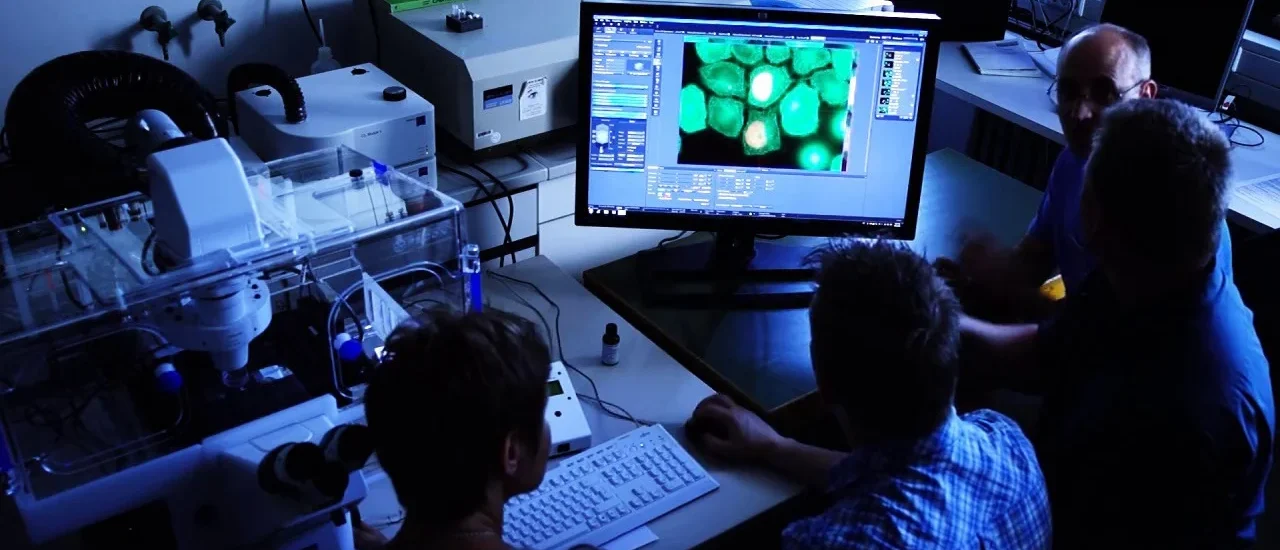
The global high content screening (HCS) market is projected to expand steadily, growing from USD 1.9 billion in 2025 to USD 3.1 billion by 2035, at a CAGR of 5.2%. The 2024 valuation stood at USD 1.84 billion. This sustained growth is attributed to increased adoption of image-based drug discovery, phenotypic screening, and precision oncology platforms in early-stage translational research and preclinical trials.
Get Sample Report: – https://www.futuremarketinsights.com/reports/sample/rep-gb-426
💣 The Data Is Winning
High-content screening generates data at a scale few were prepared for. One run can produce hundreds of thousands of high-resolution cellular images. That’s not just a storage issue—it’s a full-blown crisis in data management, analysis, and reproducibility.
It’s stunning how many labs still rely on outdated workflows, cobbling together image files and spreadsheets. The result? Bottlenecks. Lost insights. Slowed-down discovery. We’re sitting on mountains of cellular data, and in too many cases, we simply don’t know what to do with it.
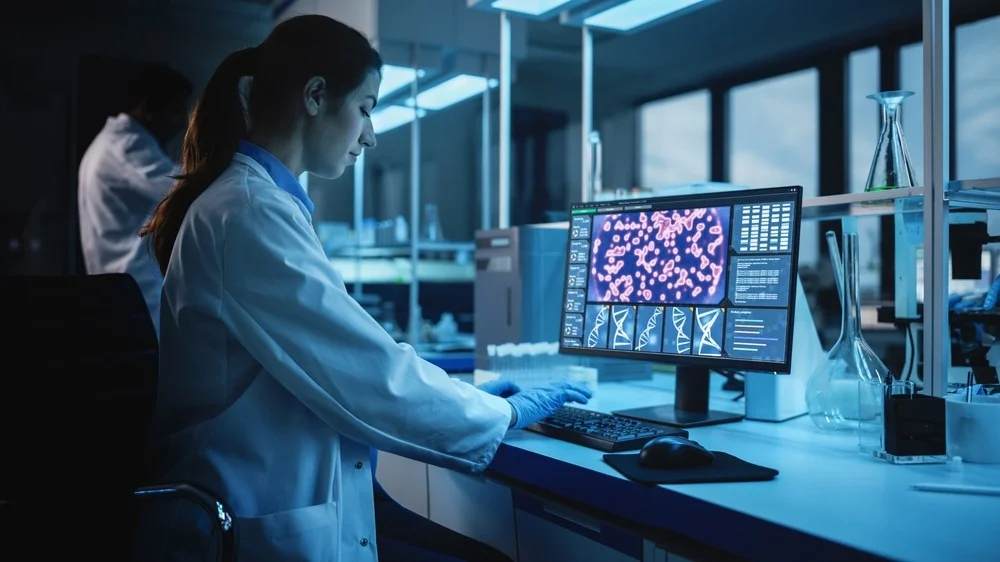
📉 The Infrastructure Gap Is Glaring
The FMI report points to strong market drivers—oncology, neurodegeneration, 3D cell cultures. But let’s be clear: those ambitions will collapse without modern infrastructure. While some pharma giants are investing in end-to-end platforms, academic labs and startups are left behind, strangled by fragmented tools and zero support for scalable analysis.
It’s like giving someone a satellite and expecting them to interpret the data with a magnifying glass.
The industry keeps building faster microscopes. But if no one can make sense of what they’re seeing, what’s the point?
🧠 This Isn’t Just a Tech Issue—It’s a Strategic Failure
We talk about precision medicine. About AI in drug discovery. About revolutionizing biomedical research. But until this field gets serious about centralized, automated, and FAIR-compliant data systems, we’re just setting ourselves up for scientific gridlock.
The solution isn’t complicated. It’s investment in smart infrastructure. It’s pushing vendors to ship intelligent software with their instruments. It’s training scientists to interpret image data as fluently as they run assays.
FMI’s forecast is optimistic. Rightfully so. The need is real. But the future of high-content screening won’t be defined by who has the most advanced microscope. It will be decided by who can actually do something meaningful with the data.
High Content Screening Market Segmentation
By Product Type:
- Cell Imaging & Analysis
- Consumables
- Software
- Services
- Vacuums
By Industry:
- Pharmaceutical & Healthcare
- Biotechnology
- Educational Institutions
- Independent CRO
- Government Organizations
- Others
By Application:
- Primary & Secondary Screening
- Target Identification & Validation
- Toxicity Studies
- Compound Profiling
- Others
By Region:
- North America
- Latin America
- Western Europe
- Eastern Europe
- East Asia
- South Asia Pacific
- Middle East and Africa
Click Here to Purchase the Report:- https://www.futuremarketinsights.com/checkout/426
About Future Market Insights (FMI)
Future Market Insights, Inc. (ESOMAR certified, recipient of the Stevie Award, and a member of the Greater New York Chamber of Commerce) offers profound insights into the driving factors that are boosting demand in the market. FMI stands as the leading global provider of market intelligence, advisory services, consulting, and events for the Packaging, Food and Beverage, Consumer Technology, Healthcare, Industrial, and Chemicals markets. With a vast team of over 400 analysts worldwide, FMI provides global, regional, and local expertise on diverse domains and industry trends across more than 110 countries.
Contact Us:
Future Market Insights Inc.
Christiana Corporate, 200 Continental Drive,
Suite 401, Newark, Delaware – 19713, USA
T: +1-347-918-3531
For Sales Enquiries: sales@futuremarketinsights.com
Website: https://www.futuremarketinsights.com
LinkedIn| Twitter| Blogs | YouTube