In a marketplace that increasingly rewards nuance, story, and substance, salt—the most elemental of seasonings—is undergoing a transformation few would have predicted a decade ago. What was once a background staple relegated to dollar-store shakers is being rebranded as a luxury, with crystals harvested by hand, smoked over rare wood, or extracted from ancient seabeds.
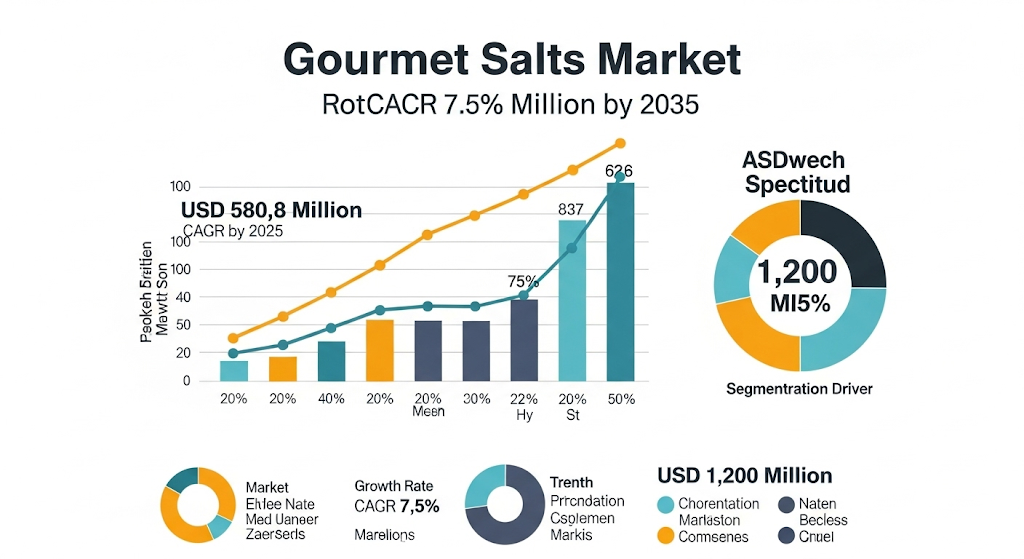
This is more than culinary fashion. According to Future Market Insights, the global gourmet salts market is projected to grow from USD 580.8 million in 2025 to USD 1.2 billion by 2035, expanding at a compound annual growth rate (CAGR) of 7.5%. It’s a clear signal that consumers are rethinking their relationship with everyday ingredients—and willing to pay more for depth, origin, and quality.
Get Insights into Market Movements: Request a Sample Report: https://www.futuremarketinsights.com/reports/sample/rep-gb-898
From Functional to Aspirational
Salt’s pivot from utility to identity is a result of shifting consumer priorities. Today’s kitchen culture prizes detail and intention. Gourmet salts—ranging from flaky sea salts to smoked, herbed, and infused varieties—deliver on both. These products don’t just season food; they signal taste in a cultural sense.
Even casual cooks now seek out specific textures and mineral profiles, using different salts for cooking, curing, baking, or finishing. The rise of gourmet salts mirrors a broader move toward ingredient curation, where flavor is only part of the appeal. Packaging, source origin, and traceability now matter almost as much as taste.
The Paradox of “Less is More”
One of the more fascinating dynamics in the gourmet salt boom is how it aligns with health-conscious consumer behavior. Even as people reduce their overall sodium intake, they are upgrading the salts they do use—prioritizing impact over volume. Gourmet salts typically offer more flavor per gram than processed iodized salt, allowing for smaller, more deliberate usage.
As consumers continue to reject overly processed ingredients and artificial additives, salt in its rawest, most elemental forms is enjoying a renaissance. This shift is a reflection of modern food values: clean, minimal, but elevated.
Global Trade in a Grain
Behind the booming gourmet salt market lies a complex web of international supply and demand. While production remains largely artisanal, distribution is going global. The category is no longer confined to boutique food stores or culinary gift boxes—major retailers and e-commerce platforms are now cashing in, adding gourmet salts to their premium offerings.
According to Future Market Insights, this expansion is being driven by rising demand across North America, Europe, and Asia, with consumers increasingly willing to experiment with new textures, flavors, and culinary traditions. As cultural barriers to premium ingredients continue to fall, gourmet salt is becoming a gateway product to broader food exploration.
Looking Ahead: Opportunity with Accountability
The outlook is bright, but the category may soon face growing scrutiny. With premium status comes expectation—particularly around sourcing transparency and sustainability. While much of the gourmet salt market is built on handcrafted processes and heritage methods, questions around scalability, environmental impact, and labor practices are likely to emerge as the market matures.
Still, the numbers don’t lie. With a projected market value of USD 1.2 billion by 2035, gourmet salt is no longer a fringe item. It’s a centerpiece in the modern pantry, a symbol of how far food culture has evolved—and how much further it’s likely to go.
Key Market Players
- Cargill Inc.
- Morton Salt, Inc.
- SaltWorks, Inc.
- Maldon Crystal Salt Company
- Cheetham Salt
- Amagansett Sea Salt Co.
- Halen Môn
- Caravel Gourmet
- Saltverk
- The Anglesey Sea Salt Company
Key Segmentation
By Type:
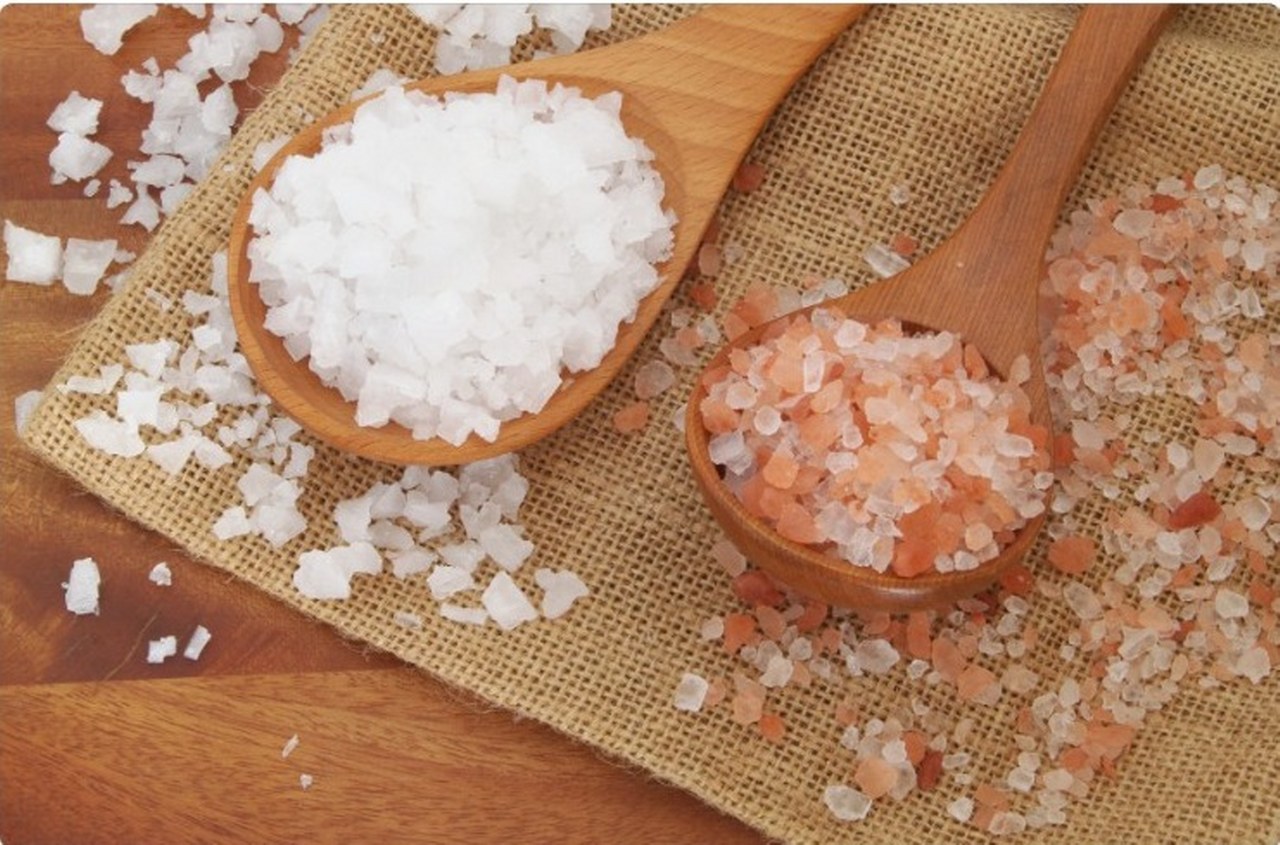
By type, the industry is segmented into Sel Gris, Flakey Salt, Himalayan Salt, Fleur de Sel, and Specialty Salt.
By Application:
By application, the industry is segmented into bakery & confectionery, meat & poultry, seafood, and savouries & sauces.
By Region:
By region, the industry is segmented into North America, Latin America, Europe, Asia Pacific, and the Middle East & Africa (MEA).
Don’t Miss Out: Buy the Report Before Trends Shift: https://www.futuremarketinsights.com/checkout/898
About Future Market Insights (FMI)
Future Market Insights, Inc. (ESOMAR certified, recipient of the Stevie Award, and a member of the Greater New York Chamber of Commerce) offers profound insights into the driving factors that are boosting demand in the market. FMI stands as the leading global provider of market intelligence, advisory services, consulting, and events for the Packaging, Food and Beverage, Consumer Technology, Healthcare, Industrial, and Chemicals markets. With a vast team of over 400 analysts worldwide, FMI provides global, regional, and local expertise on diverse domains and industry trends across more than 110 countries.
Contact Us:
Future Market Insights Inc.
Christiana Corporate, 200 Continental Drive,
Suite 401, Newark, Delaware – 19713, USA
T: +1-347-918-3531
For Sales Enquiries: sales@futuremarketinsights.com
Website: https://www.futuremarketinsights.com
LinkedIn| Twitter| Blogs | YouTube