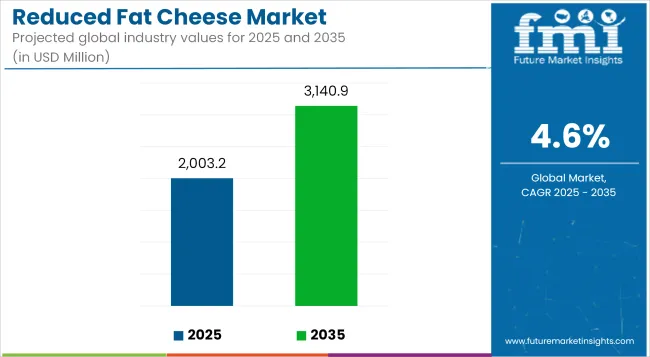
 Despite the identity crisis, the reduced fat cheese market is expanding steadily. According to a new report from Future Market Insights, the category is projected to grow from USD 12.4 billion in 2023 to USD 20.7 billion by 2033, with a compound annual growth rate (CAGR) of 5.1%.
On the surface, that puts it ahead of legacy staples like canned tuna, which is forecasted to grow at a slower pace over the next decade. But the bigger question is whether this growth reflects genuine demand—or just old habits dying hard.
Discover Market Shifts: Secure Your Sample Report Now: https://www.futuremarketinsights.com/reports/sample/rep-gb-9198
Built on Outdated Beliefs?
Reduced-fat cheese is a product of a bygone era—one where fat was vilified, and “light” versions of everything from salad dressing to ice cream promised salvation from calories. That era also gave us fat-free cookies, margarine masquerading as heart-healthy, and a food culture obsessed with volume over satisfaction.
Today’s consumers are smarter. They read labels. They question trade-offs. And they’re increasingly skeptical of any product that replaces something natural with something engineered.
Still, reduced-fat cheese lingers, not because it inspires—but because it’s institutional. It’s embedded in supermarkets, foodservice contracts, and household habits formed decades ago.
Rising Interest in Market Trends: Our Detailed Report Provides Essential Insights: https://www.futuremarketinsights.com/reports/reduced-fat-cheese-market
Global Demand, Local Doubts
According to FMI, North America and Europe remain major drivers of growth in the reduced-fat cheese market, largely fueled by continued concerns over obesity and cholesterol. Meanwhile, manufacturers are experimenting with new processing methods and ingredient tweaks to reduce fat while maintaining texture—sometimes with success, often with compromise.
On the global stage, emerging markets are also contributing to demand. In parts of Asia and the Middle East, reduced-fat cheese is gaining a foothold among consumers looking for “healthier” dairy options without going fully plant-based.
But here’s the rub: reduced-fat cheese rarely satisfies. It lacks the melt, the mouthfeel, the flavor complexity that makes real cheese so beloved. And no matter how cleverly it’s engineered, there’s a limit to how much innovation can mask absence.
Still Growing—But At What Cost?
Despite all of this, the reduced-fat cheese market is growing. FMI’s forecasted 5.1% CAGR suggests the category still holds commercial potential—though it’s far from explosive. It’s a growth story built more on shelf stability and diet culture inertia than on culinary desire or nutritional clarity.
The irony is rich: consumers are asking for cleaner, more natural foods—and in response, the food industry is tweaking processed cheese to appear more “healthful” by removing something nature already put there.
Final Bite: A Product in Search of Purpose
Reduced-fat cheese sits at a crossroads. Is it a stepping stone to better food choices—or a relic of a food philosophy that no longer makes sense? The numbers say it’s not going anywhere soon. But cultural momentum may tell another story.
If today’s consumers are finally embracing fat in moderation and demanding real food with fewer trade-offs, perhaps it’s time to re-evaluate whether “reduced-fat” really means “better”—or just less of everything that makes cheese worth eating.
Leading Manufacturers
- Kraft Heinz Company
- Arla Foods
- Sargento Foods Inc
- Bel Group
- Lactalis Group
- Savencia Fromage & Dairy
- Tillamook County Creamery Association
- Dairy Farmers of America (DFA)
- Fonterra Co-operative Group
- Leprino Foods
- Crystal Farms
- Emmi Group
- Cabot Creamery
- Meadow Foods
- Devondale Murray Goulburn

Key Segments
By Product Type:
- Cheddar Cheese
- Mozzarella Cheese
- Cottage Cheese
By Fat Content:
- Low-Fat Cheese
- Reduced-Fat Cheese
- Light Cheese
By Distribution Channel:
- B2B
- B2C
By Application:
- Ingredient in Recipes
- Cooking/Baking Applications
- Cheese Toppings
- Foodservice/Commercial Use
- Others
By Region:
- North America
- Latin America
- Western Europe
- Eastern Europe
- East Asia
- South Asia & Pacific
- Middle East & Africa