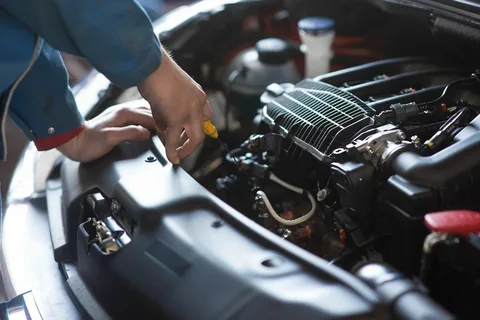
The automotive repair & maintenance services market is poised for sustained growth between 2025 and 2035, driven by the increasing global vehicle parc, rising complexity of modern vehicles, and growing consumer focus on vehicle longevity and safety.
Thus, the repair and maintenance service market is likely to grow from USD 1,033.6 Billion in 2025 to nearly USD 2,065.2 Billion by 2035, getting a CAGR of 7.2% along the way. The facility covers a multitude of services which broadly include like mechanical repairs, diagnostics, bodywork, tire services, oil changes, brake replacements, and preventive maintenance.
As vehicles grow more sophisticated and the expectations of drivers rise, the automotive repair and maintenance services market is undergoing a significant transformation. No longer just about oil changes and brake checks, this sector now encompasses a broad spectrum of services designed to support the longevity, performance, safety, and digital health of modern vehicles.
From connected diagnostics to eco-friendly service models, repair and maintenance are becoming smarter, faster, and more customer-centric—reshaping the way both consumers and businesses approach vehicle care.
Get Ahead with Our Report: Request Your Sample Now!
https://www.futuremarketinsights.com/reports/sample/rep-gb-5335
From Routine to Responsive: A New Approach to Vehicle Care
Traditionally, vehicle maintenance followed fixed schedules—mileage-based oil changes, periodic tire rotations, and annual inspections. Today, smart vehicles equipped with sensors and telematics systems are enabling predictive and condition-based maintenance, alerting drivers to service needs in real time.
This shift reduces the risk of unexpected breakdowns and optimizes service intervals based on actual usage and driving conditions. As a result, automotive repair has become more responsive and proactive, enhancing both vehicle reliability and customer convenience.
Expanding Scope of Services
Modern repair and maintenance offerings go well beyond mechanical work. Service providers now manage everything from:
-
Mechanical and Electrical Repairs: Addressing engine, transmission, brake, and steering issues as well as increasingly complex electronic control systems.
-
Software Diagnostics and Updates: Handling updates to vehicle software, ADAS recalibrations, and troubleshooting electronic malfunctions.
-
Battery and Powertrain Services: Servicing hybrid and electric vehicle components including high-voltage batteries, inverters, and regenerative braking systems.
-
Digital Inspections: Leveraging imaging, sensors, and AI-based tools to assess wear, damage, and performance without invasive methods.
This broadening of services is making workshops more specialized and equipping technicians with advanced training and digital tools.
The Impact of Electric and Hybrid Vehicles
The growing adoption of electric and hybrid vehicles is reshaping service needs. EVs generally require less routine maintenance—no oil changes, fewer moving parts—but demand specialized attention for battery health, software integration, and electrical safety systems.
Service providers are investing in EV-compatible equipment, training, and infrastructure, while also adapting their business models to address new revenue opportunities in diagnostics, software updates, and battery lifecycle management.
Rise of Connected and Remote Diagnostics
With the integration of IoT and telematics in vehicles, many service interventions can now begin remotely. Remote diagnostics tools can monitor a vehicle’s performance in real time, identify potential issues, and even send data directly to service centers before the car arrives.
This level of connectivity improves efficiency, reduces repair times, and enhances customer satisfaction. It also enables fleet operators to manage maintenance schedules across large vehicle groups, reducing downtime and optimizing operational costs.
Digitization and the Customer Experience
Customer expectations are changing in the digital age, and repair shops are responding with tech-enabled service models. Online appointment scheduling, real-time service updates via mobile apps, digital inspection reports, and contactless payment options are becoming standard.
Some service centers offer vehicle pick-up and drop-off, while others provide live video consultations or AR-based walkthroughs of repairs. These innovations make maintenance more transparent and accessible, building trust and loyalty in an increasingly competitive marketplace.
Independent Garages vs. Authorized Service Centers
The market is a mix of independent workshops, authorized dealerships, specialty service providers, and quick-service chains—each catering to different customer segments. While dealerships offer brand-certified expertise and original parts, independent garages appeal to cost-conscious customers and often provide more personalized service.
The growing complexity of vehicles, however, is nudging both segments toward greater specialization and investment in advanced diagnostics, technician training, and customer service tools.
Sustainability in Service
Environmental awareness is driving change in repair practices. Eco-friendly workshops are adopting recyclable materials, waterless car washes, energy-efficient equipment, and waste management systems to minimize their environmental footprint.
Additionally, the remanufacturing and refurbishment of vehicle components—like alternators, brake calipers, and hybrid batteries—is gaining traction as a sustainable alternative to full replacements.
Exhaustive Market Report: A Complete Study
https://www.futuremarketinsights.com/reports/automotive-repair-and-maintenance-services-market-102017
Challenges in Labor, Technology, and Standardization
Despite rapid growth, the market faces several challenges. A shortage of skilled technicians, especially those trained in high-voltage systems and digital diagnostics, is straining service capacity. Rapid advancements in vehicle technology also require constant upskilling and investment in updated tools and infrastructure.
Standardization across vehicle brands and platforms remains limited, posing hurdles for independent repair shops dealing with multiple makes and models.
A Critical Component of the Mobility Ecosystem
As vehicles continue to evolve, automotive repair and maintenance services are becoming more critical—not just for individual car owners, but for fleet operators, ride-sharing platforms, and logistics providers. Reliable, efficient, and intelligent service capabilities ensure that mobility remains safe, sustainable, and uninterrupted.
Whether extending vehicle lifespan, ensuring road safety, or enabling digital upgrades, the repair and maintenance industry plays a vital role in the future of mobility—keeping innovation on the road and customers confidently behind the wheel.