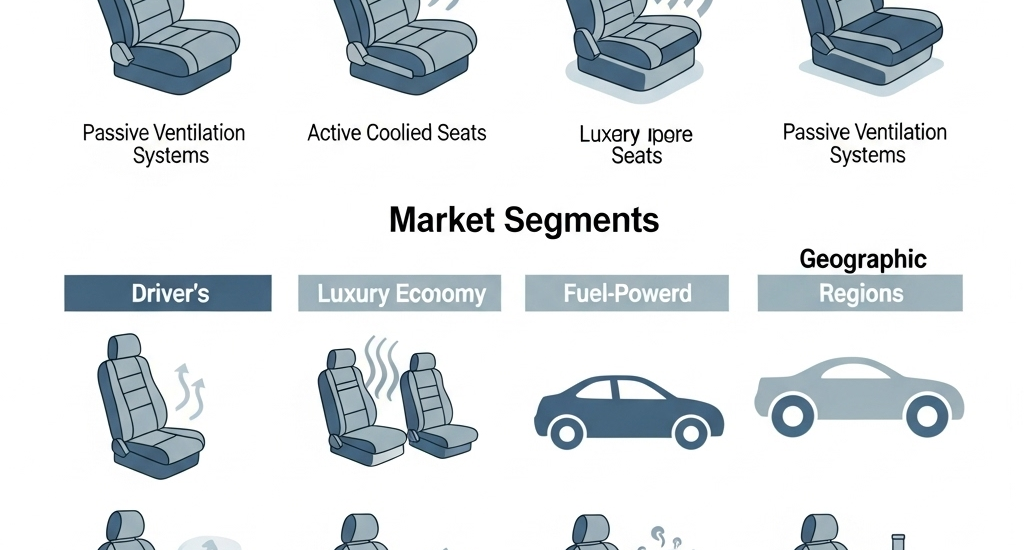
The auto ventilated seats market is poised for significant growth between 2025 and 2035, driven by increasing demand for luxury and comfort features in vehicles, advancements in climate control technologies, and the rising adoption of premium seating systems. The market is projected to expand from USD 9,984.5 million in 2025 to USD 21,555.8 million by 2035, reflecting a CAGR of 8.0% over the forecast period.
As automotive interiors evolve into smarter, more comfortable spaces, ventilated seating systems are emerging as essential features—not just luxury add-ons. What was once reserved for premium models is now gaining widespread appeal across vehicle segments, driven by consumer demand for enhanced comfort, wellness, and climate control.
Auto ventilated seats are transforming the in-cabin experience by combining ergonomic design with climate technology, ensuring drivers and passengers stay cool, comfortable, and focused, no matter the weather or journey duration.
Request Your Sample and Stay Ahead with Our Insightful Report!
https://www.futuremarketinsights.com/reports/sample/rep-gb-5062
Beyond Comfort: A Technological Leap in Climate Control
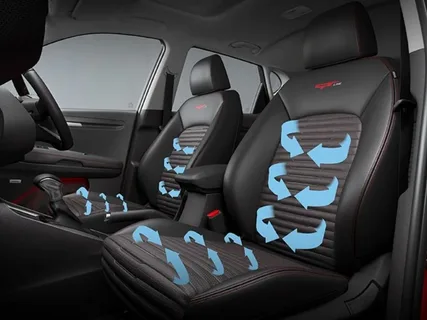
Ventilated seats use a network of built-in fans and perforated materials to circulate air through the seat cushion and backrest. This active airflow reduces perspiration, maintains body temperature, and prevents seat surfaces from becoming uncomfortably warm—especially in sun-exposed interiors.
Unlike traditional air conditioning systems that rely on ambient airflow, ventilated seats offer targeted climate relief, allowing each occupant to fine-tune their seating environment. Some advanced systems even integrate with cabin sensors and HVAC units for automatic thermal adjustments.
Integration with Smart Interior Systems
As vehicles become increasingly connected, ventilated seat technology is being integrated into smart cabin ecosystems. Paired with touchscreen controls, voice assistants, and personalized driver profiles, modern seat ventilation systems are part of a broader shift toward customizable and intelligent in-car environments.
Features like dual-zone or tri-zone ventilation, automatic activation based on weather conditions, and synchronization with seat heating functions offer a holistic approach to occupant comfort—blending luxury with smart functionality.
Enhancing Focus, Wellness, and Driving Experience
Comfort directly affects driver performance and fatigue levels, particularly on long journeys. Ventilated seats help regulate body temperature, reduce discomfort, and minimize distractions—enhancing focus and alertness behind the wheel.
For passengers, especially in warm or humid climates, these seats offer a more pleasant ride, preventing stickiness and heat buildup. Combined with other ergonomic advancements like lumbar support and massage functions, ventilated seats contribute to overall wellness and a premium travel experience.
Wider Adoption Across Vehicle Classes
What began as a feature in luxury sedans and high-end SUVs is now making its way into mid-range and even entry-level vehicles. Automakers are responding to consumer expectations by incorporating ventilated seats into more trims and models, often as part of comfort or technology packages.
Electric vehicles, with their emphasis on energy-efficient climate control, are also leveraging ventilated seat systems to minimize HVAC loads—demonstrating the technology’s value beyond traditional comfort.
Challenges in Design, Cost, and Efficiency
Despite their growing popularity, ventilated seat systems come with design and engineering challenges. The integration of fans and airflow channels requires careful consideration of seat thickness, upholstery materials, and acoustic noise reduction. Balancing effective ventilation with low energy consumption and quiet operation remains a key focus for manufacturers.
Additionally, the added components and complexity can increase production costs, which may be passed on to consumers. Ensuring durability, ease of maintenance, and consistent performance across different climates is also essential for long-term user satisfaction.
Comprehensive Industry Report: A Full Market Analysis
https://www.futuremarketinsights.com/reports/auto-ventilated-seats-market
Driving the Future of Personalized Comfort
As the automotive industry continues to focus on personalization, wellness, and occupant-centric innovation, ventilated seating is poised to play a larger role. The integration of smart textiles, adaptive temperature control, and biometric feedback systems will further elevate seat functionality in the coming years.
Future models may feature sensors that respond to real-time temperature changes or physiological cues, automatically adjusting airflow for optimal comfort—bringing a new dimension to personalized in-car wellness.
Sitting in the Center of Innovation
Auto ventilated seats are more than a creature comfort—they represent the fusion of climate control, health-conscious design, and intelligent automation. As consumers prioritize comfort and automakers compete to enhance the in-cabin experience, ventilated seats are becoming a central element in the evolution of modern mobility.
Whether beating the heat, reducing fatigue, or enhancing the sense of luxury, ventilated seating technology is helping redefine what it means to sit comfortably—on every drive, in every climate, and in every class of vehicle.