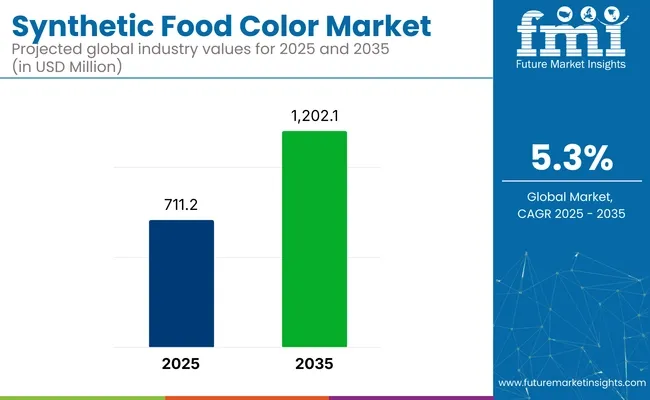
The global synthetic food color market is experiencing robust expansion, projected to grow by USD 1,202.1 million by 2035. This growth is driven by rising consumer demand for visually appealing food and beverages, especially in categories like soft drinks, candies, baked goods, and packaged snacks. With advancements in formulation stability and regulatory oversight, synthetic food colors remain essential for food manufacturers aiming to enhance product appeal and shelf performance.
Explore Key Trends in the Market: Request Your Sample Report: https://www.futuremarketinsights.com/reports/sample/rep-gb-15299
Market Trends Highlighted
Surging Demand from Beverage Industry: Beverages are expected to account for 28% of the synthetic food color market share by 2025, driven by their reliance on vibrant and long-lasting hues.
Color Innovation and Formulation Stability: Ongoing R&D has led to synthetic colorants that are more stable across pH ranges, heat levels, and shelf life, enhancing their performance in processed and premium food products.
Regulatory Evolution and Consumer Confidence: Markets like the U.S., U.K., and Germany are strengthening regulatory oversight, improving consumer trust in synthetic food colors used in daily consumables.
Rise of Packaged and Processed Foods: As global diets shift towards convenience foods, the demand for synthetic colors in ready-to-eat meals, snacks, and sweets continues to escalate.
Urbanization and Lifestyle Changes in Emerging Markets: In countries like China and India, increasing urban populations and growing middle classes are fueling greater consumption of colorful, packaged food.
Surge in Market Demand: Explore Comprehensive Trends and Analysis in Our Full Report: https://www.futuremarketinsights.com/reports/synthetic-food-colors-market
Key Takeaways of the Report
- The global synthetic food color market is expected to expand significantly, with USD 1.2 billion added to its value by 2035.
- A 10-year CAGR ranging between 3.9% and 5.8% is forecasted across major economies, with India and China leading growth.
- The beverage industry will continue to dominate applications, followed by confectionery, bakery, dairy, and savory snacks.
- Synthetic colors offer superior vibrancy and stability compared to natural alternatives, making them critical for mass-market food production.
- Regulatory frameworks across the U.S., EU, and Asia are harmonizing to ensure safe usage and clearer labeling of food colorants.
Regional Market Outlook
United States – Consumer Preferences Driving Color Adoption
CAGR: 3.9% (2025–2035)
The U.S. market is expanding steadily due to consumer demand for brightly colored processed foods and beverages. The FDA’s tight regulation of synthetic food colors fosters trust and ensures consistent product quality. Innovation in colorant formulations is helping food brands achieve visual appeal while maintaining safety standards.
Germany – Demand for Functional & Premium Products
CAGR: 4.1% (2025–2035)
Germany’s strong F&B industry and consumer preference for premium, visually attractive products are key growth drivers. EU safety regulations and innovation in synthetic color stability are supporting wider adoption, especially in dairy and confectionery products.
China – Expanding Urban Food Culture
CAGR: 5.3% (2025–2035)
China’s synthetic food color market is booming with the rise of urbanization and consumption of packaged foods. The government’s focus on food safety and residue-free additives is spurring adoption of compliant synthetic colorants in snacks, beverages, and frozen products.
United Kingdom – Technology-Driven Color Enhancements
CAGR: 4.0% (2025–2035)
The UK’s market is evolving through innovations in food coloring technology and regulatory compliance. Synthetic colors are used extensively in bakery, confectionery, and beverage sectors, supported by the FSA’s guidelines and consumer demand for safe, vibrant products.
India – Rapid Adoption Amid Packaged Food Boom
CAGR: 5.8% (2025–2035)
India is the fastest-growing market due to urbanization, increasing disposable incomes, and expanding processed food industries. Synthetic colors are widely used in soft drinks, sweets, and packaged snacks. The relatively flexible regulatory environment and booming retail sector further amplify market potential.
Competition Outlook
The synthetic food color market is highly competitive, with global and regional manufacturers focusing on innovation, compliance, and cost-effective solutions
Key Players in the Synthetic Food Color Market
- Archer Daniels Midland Company
- Sensient Colors LLC.
- Symrise AG
- Allied Biotech Corporation
- DIC Corporation
- BioconColors
- Dohler Group
- Kalsec Inc.
- Nature S.A.
- Vinayak Ingredients India Pvt Ltd.

Synthetic Food Color Market Analyzed by Key Investment Segments
By Form:
Liquid, powder, and gel.
By Type:
Pigment and dyes.
By Color:
Yellow, blue, red, green and others.
By Applications:
Beverages; bakery, snacks, and cereals; candy/ confectionery; dairy; fruit preparations/ fillings; meat, poultry, fish, and eggs; potatoes, pasta, and rice; sauces, soups, and dressings; seasonings; and pet food.
By Region:
North America, Latin America, Western Europe, Eastern Europe, Balkans & Baltic, Russia & Belarus, Central Asia, East Asia, South Asia & Pacific, and the Middle East & Africa.