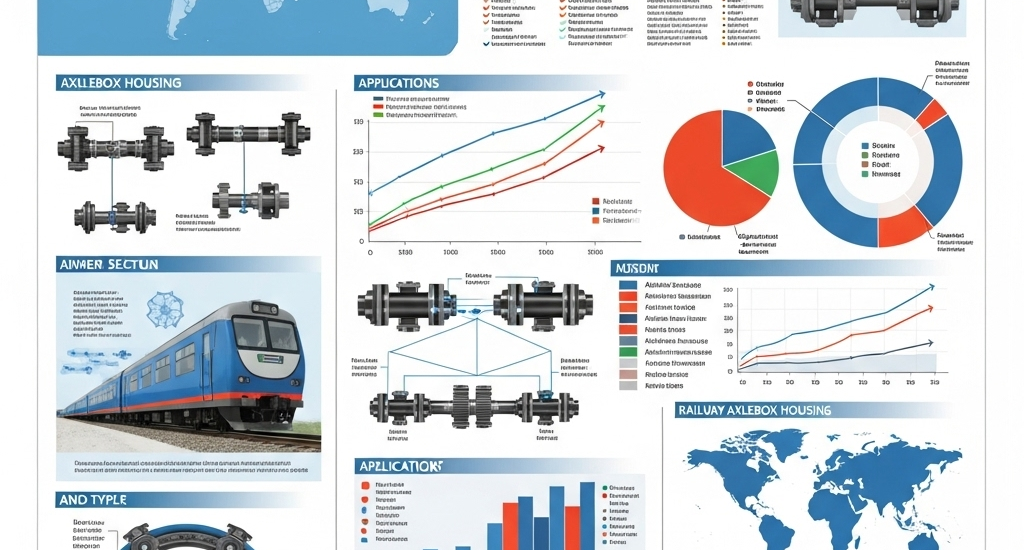
The railway axlebox housing market is estimated to grow to a valuation of USD 785.3 million in 2025. Demand is likely to grow to USD 1,140.3 million by 2035, at a CAGR of 3.8% during the forecast period.
In an era where high-speed rail, urban transit, and freight logistics are driving mobility transformation, much of the focus is placed on propulsion systems, smart signaling, and passenger amenities. Yet, hidden beneath every railcar is a component that quietly bears the load and ensures smooth, safe journeys—railway axlebox housing.
Often overshadowed by flashier technologies, axlebox housings are foundational to railway safety and performance. These precision-engineered casings protect the wheelset bearings, support massive loads, and endure the relentless mechanical stress of rail transport across thousands of kilometers. As railway systems modernize, the role of axlebox housing is becoming more critical than ever.
Get Ahead with Our Report: Request Your Sample Now!
https://www.futuremarketinsights.com/reports/sample/rep-gb-22377
At the Crossroads of Load, Motion, and Precision
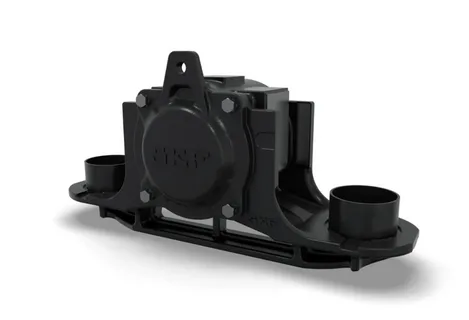
The axlebox housing is the mechanical interface between the wheelset and the suspension of a rail vehicle. It accommodates bearings that support the axle while allowing it to rotate freely, ensuring low-friction movement and alignment even under extreme loads.
Beyond rotation, these housings absorb vibration, manage impact forces, and help distribute the stresses of braking, acceleration, and track irregularities. In both freight and passenger applications, axlebox housings are essential to maintaining wheel-to-rail contact, preserving ride quality, and ensuring long-term operational reliability.
Engineered for Durability and Safety
Operating under high static and dynamic loads, axlebox housings are built with high-strength materials—typically cast steel, ductile iron, or aluminum alloys. These materials must withstand not just mechanical forces but also exposure to moisture, temperature fluctuations, and contaminants like dust and grease.
Modern designs incorporate advanced surface coatings, precision machining, and optimized geometries to reduce wear and extend service life. In high-speed and heavy-haul applications, housing strength and fatigue resistance are paramount, with every component engineered to meet stringent safety standards and lifecycle requirements.
Integrating with Condition Monitoring and Smart Maintenance
As rail systems embrace digitalization, axlebox housings are being adapted to support real-time condition monitoring. Sensor-equipped housings can now detect changes in temperature, vibration, and rotational speed—providing early warnings of potential bearing failures or alignment issues.
These predictive maintenance capabilities are helping rail operators reduce downtime, extend service intervals, and enhance safety. With smart axleboxes feeding data into broader fleet management systems, railway infrastructure is becoming more proactive and resilient.
Tailored for Every Rail Application
From metro trains and light rail vehicles to freight wagons and bullet trains, axlebox housing requirements vary widely based on load profiles, speed, terrain, and climate. Manufacturers offer customized solutions with specific bearing configurations, sealing systems, and mounting designs to meet these diverse operational needs.
Lightweight variants are favored in passenger applications for fuel efficiency, while heavy-duty housings with reinforced construction are critical for freight operations traversing rugged terrain. Modular designs are also gaining traction, allowing easier assembly, disassembly, and replacement across vehicle platforms.
Thorough Market Evaluation: Full Report
https://www.futuremarketinsights.com/reports/railway-axlebox-housing-market
Facing the Future: Challenges and Innovation
Despite their robust construction, axlebox housings face increasing performance demands in a changing industry. High-speed rail pushes thermal and dynamic limits, while environmental pressures are calling for more sustainable materials and manufacturing practices.
Moreover, global interoperability and compliance with railway standards—ranging from EN and AAR to UIC norms—add complexity to design and production. Manufacturers must balance performance, cost, safety, and regulatory compliance in a market that demands both innovation and reliability.
The Hidden Strength Behind Every Rail Journey
Though rarely visible, railway axlebox housings are indispensable to the everyday operation of trains around the world. They ensure stability on curves, resilience on rugged tracks, and safety at high speeds—making them silent contributors to the efficiency and trustworthiness of rail transport.
As mobility shifts toward cleaner, smarter, and faster modes, axlebox housings will continue to evolve—integrating with intelligent systems, adopting advanced materials, and supporting the momentum of global rail expansion. Durable, dependable, and deeply engineered, they remain a cornerstone of every railway journey—ensuring the wheels keep turning, safely and smoothly.