In a world craving both convenience and protein, canned tuna is having a moment. Long considered a pantry staple for frugal shoppers and health-conscious eaters alike, the global canned tuna market is quietly undergoing a transformation — and it’s not just about what’s in the can.
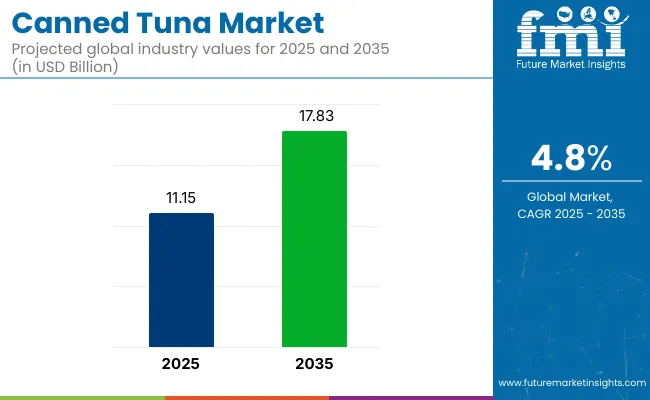
Canned Tuna Market Valued at USD 11.15 billion in 2025, the market is projected to surge to USD 17.83 billion by 2035, growing at a compound annual growth rate of 4.8%, according to Future Market Insights. From Tokyo to Texas, demand is rising — driven by increased interest in shelf-stable protein, dietary shifts toward pescatarian diets, and rising food insecurity.
But behind the tidy pull-tab is a murkier reality: a tangled web of overfishing, labor risk, and sustainability spin that the industry can no longer afford to ignore.
Explore Key Trends in the Market: Request Your Sample Report: https://www.futuremarketinsights.com/reports/sample/rep-gb-14896
A Resurgence of an Old Staple
Canned tuna has long been a reliable source of nutrition for households worldwide. In 2025, its appeal is only growing — thanks to inflation-weary shoppers seeking affordable proteins, and a growing wave of consumers seeking high-protein, low-prep options.
The pandemic-era shift toward pantry stocking made shelf-stable foods like tuna a mainstay again. That behavior has stuck — and it’s being amplified by global uncertainties, climate-related supply chain disruptions, and increasing food insecurity in urban and rural communities alike.
Rising Interest in Market Trends: Our Detailed Report Provides Essential Insights: https://www.futuremarketinsights.com/reports/canned-tuna-market
Environmental Questions Linger
Yet the sharp rise in demand comes with significant ecological questions. Tuna species — especially skipjack and yellowfin — are increasingly under pressure from industrial fishing operations that supply the global canning industry. The sheer scale of demand, if not matched with sustainable practices, threatens to tip fragile marine ecosystems toward collapse.
And while many products carry “sustainably sourced” labels, enforcement mechanisms are often weak or unverified. As the canned tuna market expands, the need for traceability and genuinely sustainable fishing practices becomes not just a consumer demand — but an ecological necessity.
Ethical Sourcing: A Growing Concern
Beyond environmental stress, the human side of tuna production is also under the spotlight. Though the market data paints a picture of growth and opportunity, the reality at sea is far more complex. The global supply chain behind canned tuna stretches across international waters, transshipment hubs, and remote ports — often in jurisdictions with minimal oversight.
As consumers become more conscious of food ethics, they are beginning to ask not just what is in their tuna — but who is behind it. And whether fair labor and safe conditions are part of that story.
A Call for Accountability
Future Market Insights projects strong double-digit growth over the next decade. But for the industry to sustain that trajectory without deepening the environmental and ethical costs, real transparency must take priority over empty certification labels and selective storytelling.
The surge in popularity is clear. What’s unclear — and more important — is whether the industry will choose growth at any cost or pivot toward accountability that consumers, ecosystems, and workers deserve.
Because in 2025, the most important thing about that can of tuna may no longer be how much protein it delivers — but what it leaves behind.
Leading Manufacturers
- Thai Union Group PCL
- Bumble Bee Foods, LLC
- Starkist Co.
- Dongwon Industries Co., Ltd.
- Princes Group
- Bolton Group (Rio Mare)
- Century Pacific Food, Inc.
- American Tuna, Inc.
- Wild Planet Foods, Inc.
- Jealsa Rianxeira S.A.U.
- Frinsa del Noroeste S.A.
- Alfa Gamma Group (Calvo)
- Iberconsa Seafood Processing

Key Segments of the Report
By Product Type:
Canned White Tuna, Canned Light Tuna, Canned Specialty Tuna
By Product Form:
Chunk, Solid, Flakes, Others
By Flavor:
Unflavored, Flavored
By Sales Channel:
B2B/HoReCa, B2C, Hypermarkets/Supermarkets, Convenience Stores, Online Retail, Others
By Region:
Industry analysis has been carried out in key countries of North America, Latin America, Europe, Middle East and Africa, East Asia, South Asia, and Oceania