The global demand for Automotive Airbag is estimated to be worth USD 19.8 billion in 2025 and is anticipated to reach a value of USD 37.3 billion by 2035. Demand for automotive airbag is projected to rise at a CAGR of 6.5% over the forecast period between 2025 and 2035. The revenue generated by implementation of automotive airbag in 2024 was USD 18.6 billion. The industry is predicted to exhibit a Y-o-Y growth of 6.4% in 2025. This projected growth indicates a value growth of nearly 1.9X from the current value over the study period.
In an era driven by connected vehicles, autonomous systems, and evolving mobility patterns, road safety remains a timeless priority. Among the many unsung innovations quietly shaping automotive safety, one technology stands out—not for how flashy it is, but for how effectively it protects: the automotive airbag.
What was once considered a luxury safety feature has now become a critical component of vehicle design. Behind every successful deployment is a complex web of sensors, materials science, and real-time decision-making—working invisibly, yet impactfully, to save lives when it matters most.
Get Ahead with Our Report: Request Your Sample Now!
https://www.futuremarketinsights.com/reports/sample/rep-gb-4345
More Than a Cushion: Engineering Instant Protection
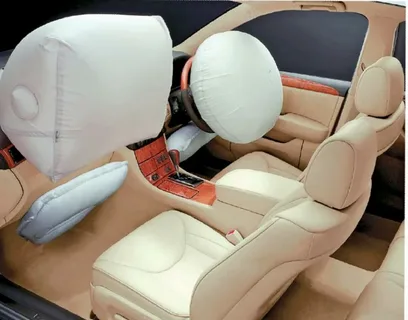
Modern airbag systems go far beyond a single frontal bag. Today’s vehicles are equipped with sophisticated arrays of airbags—side, curtain, knee, and even pedestrian-protecting external units—all triggered within milliseconds of detecting a collision.
At the core lies an integration of advanced accelerometers, pressure sensors, and crash algorithms capable of calculating the precise moment and force needed for deployment. It’s not just about cushioning impact—it’s about orchestrating protection tailored to the exact dynamics of a crash.
An Invisible Hero in the Evolution of Safety
In a world captivated by adaptive cruise control, self-parking systems, and heads-up displays, airbags continue their quiet vigil. While they don’t grab headlines, they are instrumental in lowering fatality rates and reducing severe injuries globally.
From compact city cars to luxury SUVs, airbag systems are no longer optional—they’re essential. And as vehicle structures evolve and crash scenarios become more varied, airbag technology is keeping pace, becoming smarter, faster, and more adaptive than ever before.
Built for Complexity, Designed for Reliability
Airbag systems must function with unwavering precision—every time, in every condition. That means rigorous testing, integration with onboard diagnostics, and seamless communication with electronic control units (ECUs).
From temperature extremes to high-impact force scenarios, these systems are engineered to work without fail. They are often the last line of defense in a crash—activated only when absolutely necessary, but designed to deliver maximum protection when they do.
Balancing Cost, Complexity, and Compliance
While the role of airbags is universally recognized, deploying them effectively across global markets brings real challenges. Cost pressures, regulatory compliance, and the need to accommodate varying vehicle sizes and types require careful innovation.
Manufacturers are addressing this through scalable airbag modules, standardized sensors, and platform-based airbag control units that can be integrated across multiple models. Meanwhile, evolving regulations continue to push the bar higher—encouraging smarter designs, more comprehensive coverage, and new forms of occupant protection.
Exhaustive Market Report: A Complete Study
https://www.futuremarketinsights.com/reports/automotive-airbag-market
A Cornerstone of Future Mobility Safety
As the automotive industry marches toward autonomous and semi-autonomous vehicles, the role of passive safety systems like airbags becomes even more critical. Until vehicles can fully avoid every crash, the need for impact protection remains.
New scenarios, such as rotated seating layouts or alternative cabin configurations, are already driving the development of next-generation airbags that deploy from the roof, center consoles, or even the seatbelt itself. These innovations ensure that even as the vehicle experience transforms, safety is never compromised.
Quiet Force, Lasting Impact
You won’t hear about them during a smooth drive. You may never see them at all. But when the unexpected happens, automotive airbags act with silent precision—turning milliseconds into miracles.
As the industry continues to prioritize smart, safe, and sustainable mobility, airbags remain a foundational technology—evolving in the background, protecting in the foreground. Their story is one of reliability, innovation, and quiet strength. Because in the most critical moments on the road, it’s the unseen that makes all the difference.