Let’s not sugarcoat it. Parenteral nutrition — intravenous formulas that bypass the digestive system entirely — is a medical lifeline. It keeps cancer patients going when their bodies can’t absorb food. It gives premature infants a fighting chance. It supports recovery after major surgery or trauma.
And yet, despite its proven necessity, the system around it is outdated, underfunded, and disturbingly unequal.
The parenteral formula market, as projected by Future Market Insights, is expected to reach USD 12.27 billion by 2035. Demand is rising. That should be good news. But behind the numbers is a healthcare system barely keeping up, and a market that’s growing without fixing the foundation.
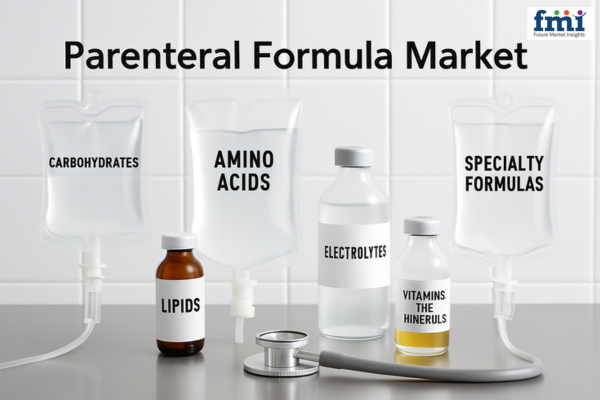
Parenteral formulas, administered intravenously, deliver critical nutrients directly into the bloodstream. These formulations contain essential amino acids, lipids, glucose, vitamins, and trace minerals. Because they bypass the digestive system, these nutrients are rapidly absorbed and utilized by the body, making them indispensable for intensive care and long-term hospitalization. With hospitals seeing more immunocompromised and critically ill patients globally, demand for complete parenteral nutrition continues to surge.
Preview the Latest Trends – Request a Sample Copy: https://www.futuremarketinsights.com/reports/sample/rep-gb-19343
Critical Care — But Only If You Can Get It
Parenteral nutrition isn’t optional. For millions, it’s the only way to survive. But access is a mess.
In many parts of the world, getting parenteral formulas means long waits, inadequate training, or simply no availability. Hospitals are overwhelmed. Home-based care is often a pipe dream. In lower-income regions, patients die not because we don’t have the solution — but because the system won’t deliver it.
This is more than a healthcare problem. It’s a moral failure.
Hospitals Are Maxed Out — And Still We Keep Pushing
Patient numbers are exploding. Chronic illness is up. Cancer rates are up. Surgical cases are up.
And yet, parenteral care remains stuck in yesterday. Hospitals don’t have the specialists. Supply chains are stretched thin. Equipment shortages are routine. Many patients wait too long, or worse, never receive what they need.
We’re not underprepared anymore — we’re just unwilling to evolve. That’s dangerous.
The Formulas Work — But They Should Be Better
Yes, parenteral formulas do what they’re supposed to. They keep people alive. But most of them are still based on the same standard ingredients — dextrose, amino acids, lipids — with minor tweaks.
Where’s the innovation? Where’s the push for personalized, disease-specific nutrition? It’s not that the science doesn’t exist. It does. But the system isn’t moving fast enough.
FMI points to increasing demand for condition-specific blends, and it’s a good start. But it’s not nearly enough. Patients need more than a generic fix. They need care that adapts to their condition — and that care needs to be available now, not 10 years from now.
This Isn’t Just a Market — It’s a Lifeline
The global parenteral formula market is expanding. But growth means nothing if it doesn’t translate to access.
Too many healthcare systems treat nutrition as secondary — something to focus on after stabilizing a patient. That logic is backward. Without nutrition, recovery stalls. Wounds don’t heal. Infections take root. And patients die.
We have the tools. We have the knowledge. What we don’t have is urgency. Or equity.
A Call to Action — Not Complacency
The forecast from Future Market Insights paints a clear picture: the parenteral formula market is growing because the world needs it. But growth alone isn’t success. Not when half the people who need this care can’t access it.
This is a moment for governments, hospitals, manufacturers, and regulators to act. Not with small fixes, but with system-wide reform. Better training. Better infrastructure. Better supply chains.
More importantly, a rethinking of how we define essential care. Because parenteral nutrition is not a luxury. It’s a right.
And until it’s treated like one, we’re failing the very people medicine is meant to save.
Access the Complete Report – Drive Your Strategy Forward: https://www.futuremarketinsights.com/reports/parenteral-formula-market
Region-wise Insights
- USA: With a CAGR of 5.2%, the U.S. market benefits from high ICU admissions, rising cancer rates, and favorable insurance frameworks.
- Germany: Posting a 5.7% CAGR, Germany’s growth is supported by robust hospital infrastructure and demand for advanced nutrition therapy.
- China: Growing at 6.0% CAGR, China sees increasing parenteral nutrition adoption in urban hospitals, driven by a growing elderly population and modernization of care.
- Japan: With a CAGR of 5.4%, Japan’s aging demographic and chronic disease burden are key growth factors.
- India: Leading the pack with a 6.3% CAGR, India’s booming healthcare infrastructure, coupled with increased public-private partnerships, fuels high demand.
Leading Brands
- 20Baxter International Inc.
- B. Braun Melsungen AG
- Fresenius Kabi AG
- Hospira, Inc. (a subsidiary of Pfizer Inc.)
- Sichuan Kelun Pharmaceutical Co., Ltd.
- Otsuka Pharmaceutical Co., Ltd.
- Grifols, S.A.
- Aculife Healthcare Private Limited
- Vifor Pharma Group
- Terumo Corporation
- Nutricia (a subsidiary of Danone)
- Other Players (On Additional Requests)