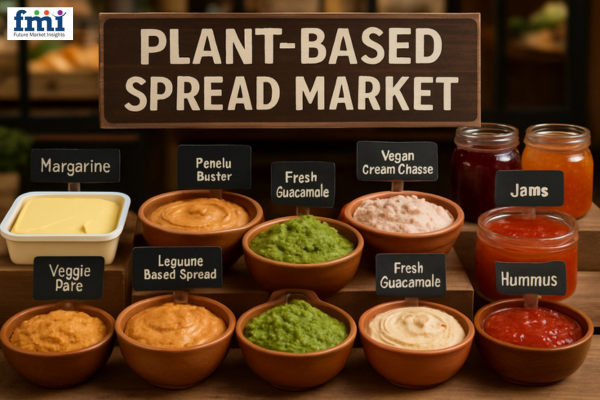
Plant-based spreads have experienced a dramatic rise in popularity, driven by the growing demand for nutritious, ethical, and eco-friendly foods. With rising concerns over animal welfare, carbon emissions, and personal health, consumers are gravitating toward alternatives to butter, cream cheese, and margarine. These spreads not only support a plant-based lifestyle but also align with broader trends such as clean eating, allergen-free diets, and functional nutrition.
Let’s get one thing straight: butter is no longer untouchable. It may still dominate breakfast plates in many parts of the world, but its grip is slipping — fast. A quiet revolution is happening in kitchens, bakeries, and grocery aisles. The new staple? Plant-based spreads — and they’re not here to imitate. They’re here to replace.
According to Future Market Insights, the global plant-based spread market is projected to hit USD USD 851.4 million by 2035, expanding at a compound annual growth rate of 5.1%. Those aren’t numbers fueled by health fads or vegan trends. They reflect a seismic shift in how the world eats — and why.
Request Your Sample Now! https://www.futuremarketinsights.com/reports/sample/rep-gb-14829
Beyond Butter: A Culture Rewriting Itself
The rise of plant-based spreads isn’t about avoiding dairy. It’s about demanding better — from our food, from our supply chains, and from the companies shaping what lands on our plates.
Today’s consumers are fed up with the status quo. They’re rejecting processed, mass-manufactured spreads loaded with palm oil and preservatives. They’re turning to clean-label alternatives with ingredients they can pronounce — almond, chickpea, olive oil, even pea protein.
What was once a substitute has evolved into a statement. You’re not just choosing a spread — you’re choosing a worldview.
The Innovation Isn’t Just Real — It’s Revolutionary
As FMI’s data shows, brands are doubling down on innovation — not just to match the taste of butter, but to blow past it. We’re talking about rich, herb-infused cashew spreads. Fermented oat butters with tang and texture. Avocado-lime blends that feel more like gourmet dips than anything in the dairy aisle.
And it’s not just health food stores carrying them anymore. These spreads are claiming space in mainstream supermarkets. Right next to the butter. Because they deserve to be there.
The World Is Watching — and Adapting
The European market continues to lead, but the real growth is coming from unexpected places. Asia-Pacific is emerging as the next big frontier, with consumers actively seeking out dairy-free alternatives that align with their diets and digestion.
North America? It’s catching up quickly. The U.S. consumer is more aware than ever — about climate, about health, and about ethical food systems. Plant-based spreads tap into all three. That’s not a trend. That’s a tectonic shift.
According to FMI, innovation will be key — but so will authenticity. Brands that cut corners to scale fast will fail. Those that prioritize quality, sustainability, and real storytelling? They’ll win the aisle and the heart.
The Risks Are Real — But So Is the Potential
Let’s not sugarcoat it. The industry has a problem. Too many brands slap on the “plant-based” label and fill their jars with junk. Over-processed, artificially flavored, nutritionally void sludge dressed up as a wellness product.
Consumers aren’t stupid. They want real food — not marketing spin. If this category becomes just another greenwashed cash grab, it risks losing the trust it’s worked so hard to earn.
But get it right, and the sky’s the limit.
It’s Not Just a Spread. It’s a Signal.
Here’s the truth: we’re at a turning point. The growth of plant-based spreads reflects something far bigger than changing grocery lists. It reveals a global appetite for accountability, creativity, and conscious consumption.
The butter dish may still have a place on the table — for now. But make no mistake: its days of dominance are numbered. Plant-based spreads aren’t coming. They’re already here. And they’re rewriting the rules of what food can — and should — be.
Your Competitive Advantage Starts Here – Access Full Report: https://www.futuremarketinsights.com/reports/plant-based-spreads-market
Key Takeaways
- Market Size: Expected to grow from USD 518.2 million in 2025 to USD 851.4 million by 2035.
- Growth Rate: Projected CAGR of 5.1% from 2025 to 2035.
- Drivers: Health consciousness, plant-based diets, lactose intolerance, and climate concerns.
- Challenges: Price sensitivity, limited shelf life, and flavor customization.
- Opportunities: Product innovation, functional ingredients, and expansion into emerging economies.
Leading Brands
- DAIYA FOODS INC.
- Meridian Group.
- Amy’s Kitchen Inc.
- Follow Your Heart
- B&G Foods Inc.
- Litehouse Inc.
- Red Duck Foods, Inc.
- Majestic Garlic
- Bear Pond Farm
- KENSINGTON & SONS
- KATE HILL
- WayFare Health Foods
- Good Foods Group LLC
- Galaxy Nutritional Foods, Inc.
- Frito-Lay North America, Inc.