The world is undergoing a transformation in how it views a humble kitchen staple: the egg. Once considered irreplaceable in food production and baking, eggs are now being challenged by a new generation of substitutes—functional, scalable, and increasingly vital. From climate volatility to food safety risks, the egg-replacement ingredient market is emerging not as a novelty, but as a necessity.
Market Growth with Serious Momentum
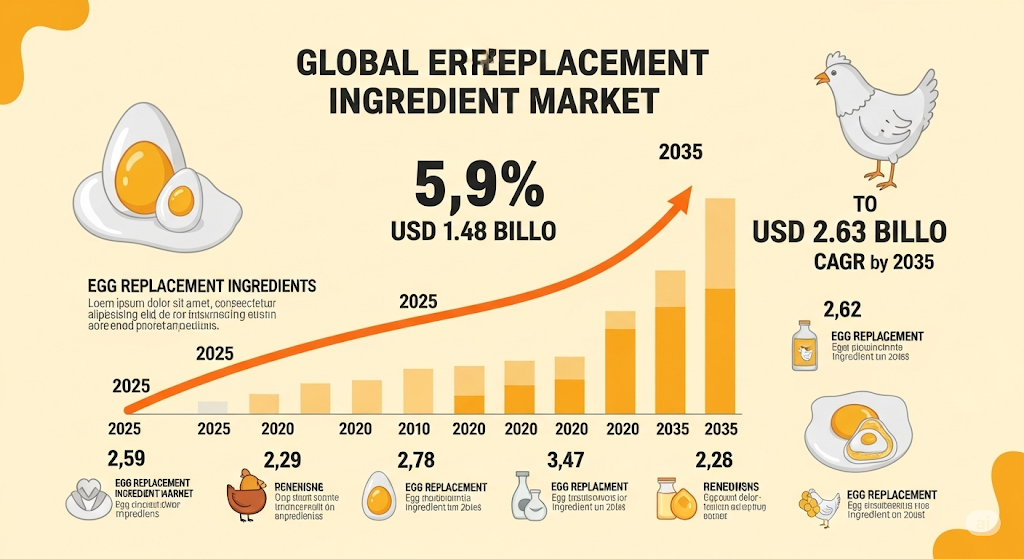
According to Future Market Insights (FMI), the global egg-replacement ingredient market is valued at USD 1.48 billion in 2025, with expectations to reach USD 2.63 billion by 2035, growing at a compound annual growth rate (CAGR) of 5.9% over the decade.
These ingredients—ranging from plant-based proteins to functional starches—are gaining traction across foodservice, bakery, and processed food sectors, proving particularly popular in the wake of disruptions across the traditional egg supply chain.
Discover Market Shifts: Secure Your Sample Report Now: https://www.futuremarketinsights.com/reports/sample/rep-gb-908
What’s Driving the Shift?
- Egg Shortages and Price Volatility
Traditional egg supply chains have shown extreme fragility, with outbreaks of avian flu and volatile feed prices leading to regional shortages and sharp price spikes. For food manufacturers, this has translated into a risk they can no longer ignore. - Allergen and Diet-Conscious Consumers
As plant-based, vegan, and allergen-free diets become more mainstream, demand for alternatives that don’t compromise on texture or functionality has surged. FMI data shows that this demand is strongest in the bakery segment, which accounts for the largest share of egg-replacement ingredient usage globally. - Sustainability and Ethical Pressure
Industrial egg production’s environmental toll—ranging from water use to greenhouse gas emissions—is a growing concern for both consumers and regulators. FMI notes that ethical and clean-label considerations are pushing both startups and multinational food brands toward scalable egg-free solutions.
Surge in Market Demand: Explore Comprehensive Trends and Analysis in Our Full Report: https://www.futuremarketinsights.com/reports/egg-replacement-ingredient-market
Who’s Leading the Charge?
From North America to Europe and South Asia, food manufacturers are racing to reformulate recipes and reduce dependence on conventional eggs. FMI identifies North America as the dominant regional market due to a strong base of health-aware consumers and a high concentration of innovation-led food producers.
Meanwhile, India’s egg-replacement market is projected to nearly double, from USD 0.42 billion in 2025 to USD 0.81 billion by 2035, driven by rapid urbanization, rising incomes, and a surge in plant-forward diets.
Challenges That Still Remain
Despite momentum, FMI highlights several persistent barriers:
- Functionality: Matching the binding, leavening, and emulsifying powers of eggs remains a scientific hurdle.
- Cost Pressure: In many markets, egg alternatives still cost more per unit than traditional eggs, limiting consumer adoption in price-sensitive regions.
- Ingredient Supply Chains: The ingredients used in replacements—like pea protein, soy isolates, and gums—face their own availability and price volatility.
Where Do We Go From Here?
The egg is not disappearing—but its dominance is being questioned. What was once a singular ingredient solution is now a growing field of competitive replacements, shaped by necessity, science, and ethics. As FMI’s report makes clear, we are not looking at a passing food trend—we are watching the restructuring of an essential part of the global food system.
Bottom Line:
The egg-replacement market is surging because the old model is breaking. With more than USD 1 billion in market value today, and nearly USD 3 billion projected by 2035, it’s not a question of if this shift will continue—but how fast. For food manufacturers, chefs, and consumers alike, the scramble to replace the egg is very real—and very much here to stay.
Company Profile
-
- Bob’s Red Mill
- Chiaki
- Earth Grown
- Ecomil
- Eggcitables
- Ener-G Foods
- Arla Foods
 Explore Egg and Egg Products Industry Analysis : https://www.futuremarketinsights.com/industry-analysis/egg-and-egg-products
Key Segments of the Report
By Ingredient Type:
By ingredient type, methods industry has been categorized into Whey Proteins, Soy Proteins, Wheat Proteins, Xanthan Gum, Guar Gum, Gellan gum, Carrageenan, Emulsifiers, Chia seed gel, Flaxseed gel and Algal flours
By Form:
By form, industry has been categorized into powder and liquid
By Region:
The market spans North America, Latin America, Western Europe, Eastern Europe, South Asia & Pacific, East Asia, Central Asia, Balkan and Baltic Countries, Russia and Belarus, and The Middle East & Africa.