

The air brake systems market is anticipated to experiences steady growth from 2025 to 2035 growing above production of commercial vehicles, introduction of new safety regulation on the vehicles along with growth of logistics and transportation infrastructure.
It has been forecast that the market could reach USD 2,263.3 million in 2025 and go up to USD 3,131.5 million by 2035 while posting a CAGR of 3.3% during the forecast period.
In a world rapidly embracing electrification, automation, and digital diagnostics, one legacy system continues to hold its ground with precision and reliability: the air brake system. While it may not grab headlines like autonomous driving software or lithium-ion breakthroughs, air brake technology is the foundation upon which the safety of heavy-duty vehicles rests.
From freight trucks and buses to trailers and military transports, air brake systems are not just stopping mechanisms—they’re highly engineered safety systems designed to perform under extreme weight, speed, and stress. As mobility evolves, these systems are quietly evolving too.
Get Ahead with Our Report: Request Your Sample Now!
https://www.futuremarketinsights.com/reports/sample/rep-gb-16112
More Than Braking: Controlling Kinetic Giants
Air brake systems do more than simply stop vehicles. They manage kinetic energy on a massive scale, modulating braking force across axles, adapting to vehicle load, and maintaining control under dynamic road conditions.
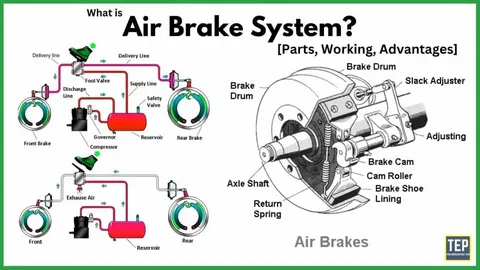
At the core are compressors, reservoirs, valves, and actuators—all working in concert to deliver pressurized air where and when it’s needed. The result is not just stopping power, but controlled deceleration—critical for long hauls, steep grades, and unpredictable traffic environments.
Outpaced by Digital Disruption, But Not Outdated
While electric drivetrains and autonomous sensors dominate the innovation narrative, air brake systems are undergoing a quiet transformation. Smart sensors, electronic braking controls (EBS), and predictive diagnostics are being layered onto traditional air systems—modernizing them without replacing their proven core architecture.
These systems are becoming more intelligent—monitoring pressure fluctuations, wear rates, and performance anomalies in real time. In this hybrid space between hardware reliability and digital insight, air brake systems are finding a renewed relevance.
Essential for Commercial and Regulatory Demands
Heavy-duty transport doesn’t operate in a vacuum—it runs within tight safety regulations, weight limits, and operational expectations. Air brake systems offer fail-safe performance that’s hard to match. Even in the event of an air line failure, spring brake actuators automatically engage, preventing runaway scenarios.
Fleet operators and regulators alike rely on the predictability and redundancy of these systems. As commercial transport scales up, both in volume and load capacity, air brakes remain the only viable option for consistent, high-pressure braking performance.
Integration and Interoperability Challenges
The shift toward digital vehicle platforms is not without hurdles. Integrating traditional air brake components with electronic control units, telematics, and autonomous driving systems demands a rethink of protocols, software compatibility, and system architecture.
For OEMs and Tier 1 suppliers, this means re-engineering components to communicate effectively with other digital subsystems, without compromising the mechanical integrity that air brake systems are known for.
Exhaustive Market Report: A Complete Study
https://www.futuremarketinsights.com/reports/air-brake-systems-market
A Role in Greener Mobility
As the push for sustainable transport accelerates, air brake systems are adapting. Lightweight materials, energy-efficient compressors, and regenerative braking interfaces are reshaping what air brake systems can be. In electric commercial vehicles, they are being paired with electronic and regenerative braking systems to ensure redundancy and optimal energy usage.
By supporting hybrid braking strategies, air systems can help reduce brake wear, extend maintenance cycles, and contribute to a lower environmental footprint.
Unseen, Yet Unshakable
Air brake systems don’t trend on social media or make headlines in trade expos—but they are the quiet constant in the world of commercial and industrial mobility. Their robustness, modularity, and reliability make them irreplaceable for the foreseeable future.
In an industry racing toward transformation, it’s these foundational technologies—refined, upgraded, and quietly innovating—that continue to carry the weight, literally and figuratively. Air brake systems may be invisible to the end user, but their importance remains immovable at the heart of every safe stop.
