Feldspar isn’t flashy. It doesn’t headline commodities reports. It’s not traded on Wall Street or hoarded like lithium. But if you’ve held a smartphone, used a ceramic mug, or driven past a stretch of glass-fronted architecture, you’ve touched feldspar — possibly every day of your life.
And now, it’s having a moment.
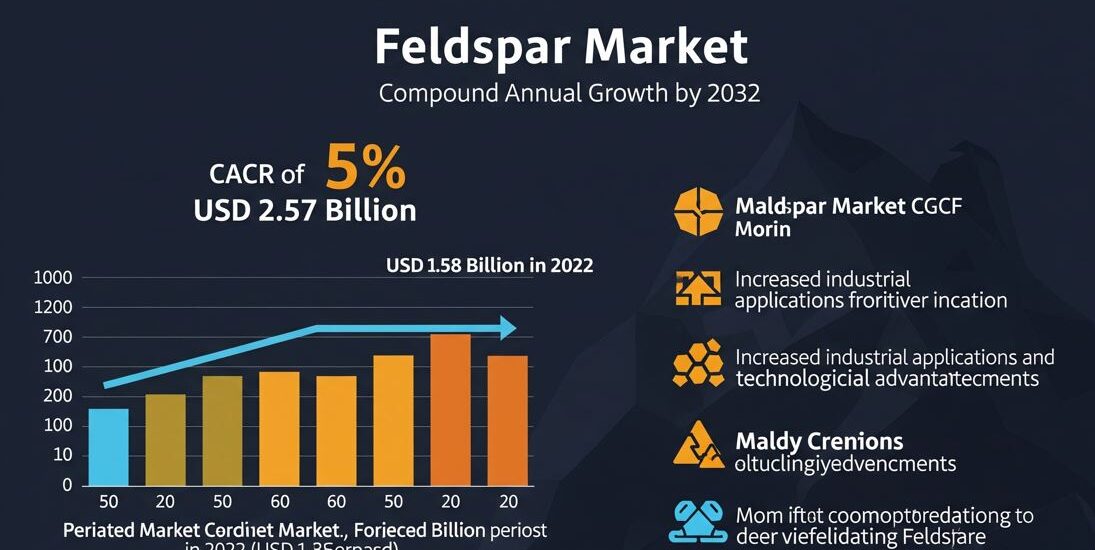
According to Future Market Insights, the global feldspar market is projected to grow from USD 1.6 billion in 2023 to over USD 2.6 billion by 2033, registering a steady CAGR of 5.1%. On the surface, that might seem modest. But in the world of industrial minerals, that’s nothing short of momentum.
So why is this ancient silicate rock — largely composed of potassium, sodium, and calcium — in the spotlight now?
America’s Fragile Glass Backbone
The U.S. consumes hundreds of thousands of tons of feldspar each year, mostly in glassmaking and ceramics. From smartphone screens to insulation fiberglass, feldspar is the silent enabler of durability and clarity. It lowers the melting temperature of glass, improves hardness, and enhances chemical resistance.
Here’s the rub: the U.S. is a net importer. Despite significant reserves in states like North Carolina, Idaho, and South Dakota, the feldspar supply chain is increasingly reliant on Turkey, India, and China — countries that have tightened export policies or face infrastructure disruptions.
Request Report Sample: https://www.futuremarketinsights.com/reports/sample/rep-gb-2736
This raises an uncomfortable question: what happens when geopolitics collides with geology?
An Underrated Raw Material for a High-Tech Future
In the public discourse around critical minerals, feldspar is often left out. It’s not rare. It’s not strategic in the conventional sense. But it’s deeply embedded in the backbone of green tech manufacturing.
Solar panels? Feldspar-derived glass.
EV battery housing? Often ceramic-based and thermally insulated.
5G infrastructure? Requires high-performance ceramics.
In other words, feldspar is the uncredited stagehand behind the scenes of innovation. And with the global push for electrification and smart infrastructure, its value is being quietly recalibrated.
Asia Dominates, But Not Without Friction
FMI notes that Asia Pacific remains the dominant player, especially due to robust growth in construction and electronics in China and India. Turkey, meanwhile, continues to lead in feldspar exports — feeding the raw material appetite of the EU.
But this dominance comes with risk. Inconsistent regulatory frameworks, rising energy costs, and environmental restrictions in these regions are starting to reshape supply conversations.
For U.S. and European manufacturers, security of supply is no longer a footnote — it’s a boardroom discussion.
Environmental Crossroads: Feldspar Mining Isn’t Clean
Let’s be clear: feldspar is plentiful, but mining it isn’t without environmental cost. Open-pit operations generate dust, disrupt local ecosystems, and use vast water resources. While not as destructive as lithium or rare earths, feldspar mining sits in an awkward gray area—vital to modernity, but hard to greenwash.
Sustainable mining initiatives have gained traction in Europe, where “green feldspar” extraction is being trialed using recycled ceramics and low-energy beneficiation methods. But adoption is slow, and the industry has been late to embrace ESG standards.
If feldspar wants to keep its place in clean tech, its own production processes must get cleaner — fast.
What’s Next: Reindustrialization and the Feldspar Reboot
The real inflection point for feldspar may come not from Asia or Europe, but from America’s manufacturing revival.
The Inflation Reduction Act, CHIPS Act, and infrastructure spending are reigniting domestic demand for raw materials — and feldspar is on the list. Not officially “critical,” but practically indispensable.
Ceramics are returning. Glass is booming. Construction is up. And feldspar sits at the center of it all. There’s a clear opportunity here for U.S. miners and processors to reshore production, reduce import dependence, and build a more resilient supply chain.
But only if they act now.
Final Take: Time to Take Feldspar Seriously
It won’t make headlines like cobalt. It won’t fuel geopolitical intrigue like rare earths. But feldspar is quietly powering the industries that will define the next decade — electronics, clean energy, smart buildings.
Ignoring its importance isn’t just shortsighted. It’s bad economics.
Feldspar deserves more than a line item in mining reports. It’s a strategic asset hiding in plain sight — and the global market is waking up to its quiet power.
Browse the Complete Report: https://www.futuremarketinsights.com/reports/feldspar-market