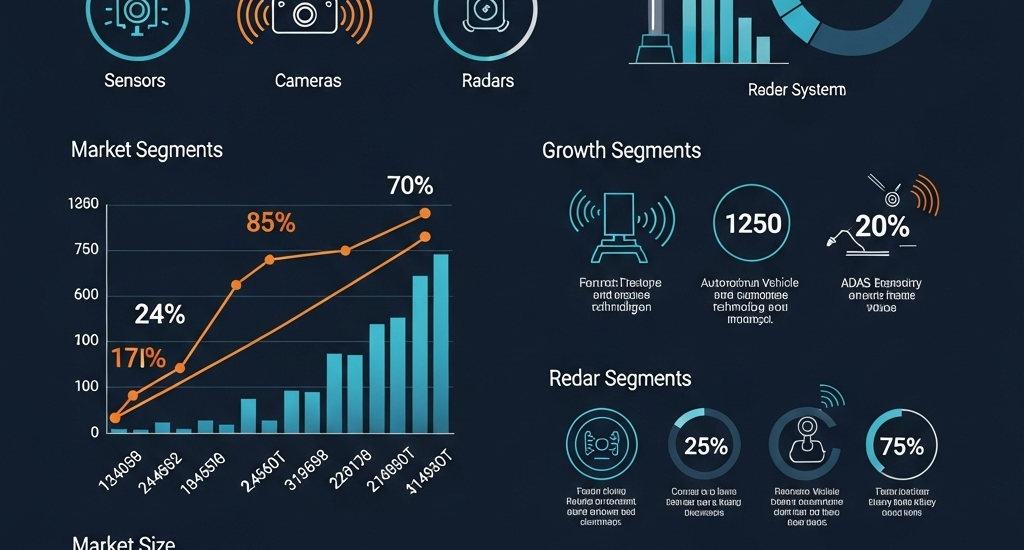
The advanced driver assistance system (ADAS) testing equipment market, currently valued at USD 72.7 billion in 2025, is expected to reach of USD 260.5 billion by 2035. Major driving force for this market is the high adoption of ADAS in vehicles nowadays, growing demanding on enhanced road safety, and tougher government regulation.
As vehicles evolve into autonomous, sensor-driven platforms, the stakes around safety, performance, and reliability have never been higher. Advanced Driver Assistance Systems (ADAS) are at the core of this transformation—empowering features like automatic emergency braking, lane-keeping, blind-spot detection, and adaptive cruise control. But behind every successful deployment of ADAS lies a rigorous and often invisible process: testing.
ADAS testing equipment is the silent force that ensures these systems work flawlessly in unpredictable real-world conditions. From wind tunnels to dynamic proving grounds, this specialized gear verifies that every sensor, algorithm, and decision-making unit performs with precision, consistency, and safety.
Get Ahead with Our Report: Request Your Sample Now!
https://www.futuremarketinsights.com/reports/sample/rep-gb-283
Beyond Sensors: Validating the Brain Behind the Wheel
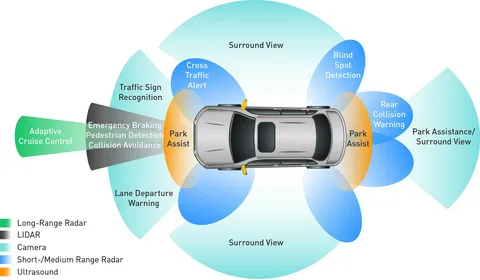
ADAS isn’t just hardware—it’s an ecosystem of radars, cameras, LiDARs, and software fused into one decision-making machine. Testing these components in isolation isn’t enough. The true challenge lies in validating how they work together, how they handle edge cases, and how they react under changing environmental or behavioral conditions.
Modern testing equipment simulates these conditions in both virtual and physical environments. From driving robots and soft targets to GPS-guided test platforms and scenario-based simulation software, the focus is on reproducing complex real-life situations to fine-tune vehicle response. It’s not about making systems work—it’s about ensuring they don’t fail.
Overshadowed by Features, Built for Trust
Much of the public attention in automotive innovation goes to the features ADAS enables—hands-free parking, collision alerts, or highway autopilot. Yet the credibility of these features hinges entirely on their accuracy and reliability. That credibility is built long before the car hits the road, through thousands of hours of rigorous, repeatable testing.
ADAS testing equipment is the backbone of that process, offering engineers the tools to detect blind spots—literally and figuratively. It ensures the system responds properly to pedestrians in low light, interprets traffic signs in bad weather, and distinguishes real hazards from false positives. Without comprehensive validation, even the most advanced system becomes a liability.
Real-World Complexity, Lab-Level Control
Testing ADAS functionality is not just about evaluating hardware—it’s about recreating reality. Modern testing setups offer both physical track-based and simulated environments, giving developers total control over variables like vehicle speed, lighting, road conditions, and object movement.
In simulation labs, digital twins of vehicles are exposed to countless road scenarios within minutes. On test tracks, synchronized platforms allow precise recreation of high-speed lane changes or vulnerable road user crossings. This synergy between virtual and real-world testing accelerates development while maintaining safety and precision.
A New Era for System Integration and Certification
As vehicles edge closer to full autonomy, regulatory expectations are rising. ADAS testing equipment is no longer just a development tool—it’s also a gateway to certification. Standards around functional safety, sensor fusion reliability, and human-machine interaction are driving demand for more comprehensive, modular, and repeatable testing methods.
OEMs, Tier-1 suppliers, and regulatory bodies increasingly rely on sophisticated test setups to validate not just individual functions, but entire ADAS stacks across different driving modes and geographies. The focus is shifting from proving capability to proving safety under all conceivable conditions.
Exhaustive Market Report: A Complete Study
https://www.futuremarketinsights.com/reports/advanced-driver-assistance-systems-market
Tied to Performance, Compliance, and Consumer Confidence
The ability to test ADAS systems thoroughly isn’t just about engineering excellence—it’s about brand trust and consumer adoption. As drivers hand over more responsibility to their vehicles, they expect systems to perform without fail. That expectation can only be met through exhaustive, precise, and transparent testing.
Moreover, as insurance providers, fleet operators, and governments evaluate vehicle safety from a data-driven perspective, the role of validated ADAS testing becomes central to everything from risk modeling to market approval. Testing equipment, in this context, becomes a critical enabler of compliance and competitiveness.
The Unseen Infrastructure of Autonomous Mobility
While drivers may never see or interact with ADAS testing systems, their presence is embedded in every confident lane change, every prevented collision, and every smooth highway merge. They ensure that complex vehicle behaviors are not just theoretical, but field-tested and road-ready.
In the race toward intelligent mobility, innovation without validation is reckless. ADAS testing equipment brings balance to that equation—ensuring that every algorithm and sensor array has been tested, refined, and proven under pressure. Ignore its role, and autonomy becomes guesswork. Embrace it, and the road ahead becomes safer, smarter, and more predictable.
In a future defined by intelligent systems and machine-led decisions, the unsung hero is the equipment ensuring those systems are worthy of trust—quietly working behind the scenes, mile after mile, test after test.