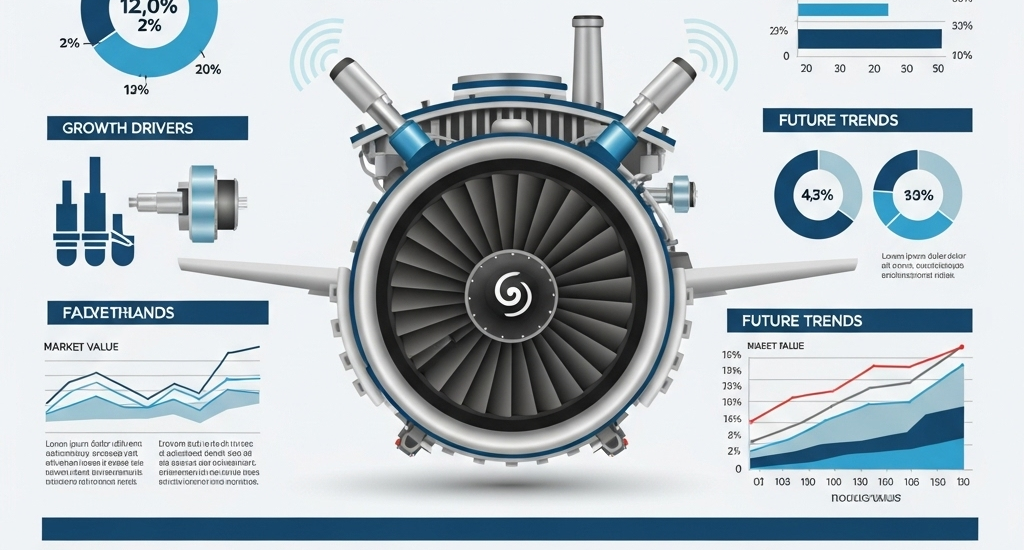
Aero Engine coatings Market is currently seated in USD 111.0 Billion by 2025 and which is expected to reach USD 142.0 Billion by 2035. This implies a compound annual growth rate (CAGR) of 2.5% and shows the dependence of the industry on high-performance coatings to guarantee operational efficiency, safety, and compliance with changing regulations.
In the aerospace world, where performance is measured in millimeters and reliability is non-negotiable, some of the most important technologies are those we never see. Aero engine coatings are one such technology—thin, complex layers that quietly protect the heart of every aircraft: the engine.
While composite fuselages, advanced avionics, and aerodynamic designs often dominate headlines, the materials science behind engine coatings plays a foundational role in enabling modern aviation. These coatings ensure that engines run hotter, longer, and more efficiently—safeguarding both performance and safety at cruising altitude and beyond.
Get Ahead with Our Report: Request Your Sample Now!
https://www.futuremarketinsights.com/reports/sample/rep-gb-13845
Beyond Protection: Engineering for Performance
Aero engine coatings are far more than just protective films. These advanced materials are designed to withstand extreme thermal, mechanical, and chemical stresses—conditions where traditional components would fail rapidly. In high-pressure turbines, temperatures can exceed the melting point of the metal beneath. Without protective coatings, even the most advanced superalloys wouldn’t survive.
From thermal barrier coatings (TBCs) that deflect heat, to erosion-resistant and oxidation-resistant layers that endure corrosive atmospheres, each coating is engineered with precision. These micro-thin layers are what allow engines to operate at peak performance, reducing wear while enabling higher combustion temperatures for better fuel efficiency.
Overshadowed by Thrust, Driving Durability
Much of the aerospace innovation narrative centers around thrust-to-weight ratios, noise reduction, and emissions control. Yet, none of those advances can be sustained without durability. That’s where engine coatings become indispensable—extending engine life, reducing maintenance cycles, and improving long-term operational efficiency.
As next-generation engines push the limits of design—running hotter and leaner to meet sustainability goals—the importance of coatings is only growing. They are the enablers of progress, silently absorbing heat, resisting abrasion, and ensuring the structural integrity of engine components under relentless stress.
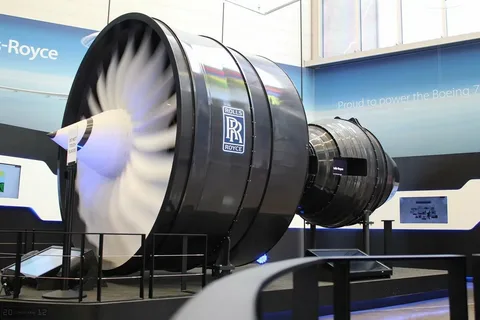
Real-World Flight, Lab-Level Engineering
Developing aero engine coatings is a balancing act between advanced material science and practical application. These coatings must not only be effective in theory but also reliably manufacturable, compatible with complex engine geometries, and resilient over thousands of flight hours.
Advanced deposition techniques like plasma spraying, electron beam physical vapor deposition, and chemical vapor deposition allow for precise control over coating thickness, porosity, and composition. Even microscopic inconsistencies can lead to catastrophic failure, making the development and application process as critical as the engine components themselves.
A New Frontier for Materials Innovation
As commercial and defense aviation push toward greater efficiency, reduced emissions, and higher thrust, coatings are at the center of materials innovation. Researchers are exploring next-generation ceramic matrix composites, nanostructured coatings, and smart self-healing layers that can repair minor damage autonomously.
Moreover, with engines now expected to support hybrid-electric propulsion systems or hydrogen-based combustion, coating requirements are evolving. They must accommodate new thermal dynamics, chemical exposures, and design challenges that were not part of legacy engine environments.
Exhaustive Market Report: A Complete Study
https://www.futuremarketinsights.com/reports/aero-engine-coatings-market
Tied to Safety, Sustainability, and Cost Efficiency
Every flight relies on the unseen performance of engine coatings. By enhancing wear resistance and enabling higher operating temperatures, they reduce fuel consumption and lower emissions—supporting both economic and environmental goals.
In the maintenance, repair, and overhaul (MRO) sector, coatings play a pivotal role in engine life-cycle management. Coated components experience less downtime and fewer replacements, contributing to lower total cost of ownership for airlines and operators.
Coatings also support aviation safety by helping prevent in-flight engine failures caused by thermal degradation, corrosion, or material fatigue. In extreme environments, a few microns of coating can mean the difference between routine flight and emergency landing.
The Silent Guardian of Jet Propulsion
Aero engine coatings will never be the focal point of an aircraft design, nor will they be seen by passengers or even most engineers. Yet their influence is profound. These thin layers ensure that aircraft engines perform under the most punishing conditions—day after day, mile after mile.
Ignore their role, and the efficiency and safety gains of modern aerospace engineering begin to unravel. Embrace them, and they become a quiet enabler of faster, cleaner, and more reliable flight.
As aviation continues its evolution into the realms of electrification, sustainability, and advanced propulsion, engine coatings remain a constant force—guarding performance, protecting investment, and powering progress with every takeoff.