Sea bream is booming. On the surface, it’s a success story—rising global demand, protein-rich diets, and an aquaculture industry finally hitting its stride. But look a little closer, and you’ll find an industry sprinting toward profit with barely a glance at the long-term costs.
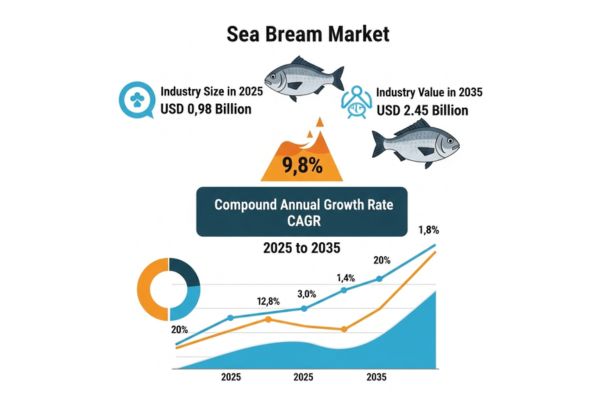
According to Future Market Insights, the global sea bream market is expected to soar from $980 million in 2025 to a staggering $2.45 billion by 2035. That’s a compound annual growth rate of 9.8%, driven by shifting food trends, international trade, and expanding commercial farming.
So why does it feel like no one is asking the obvious question: at what cost?
Gain Valuable Market Knowledge: Request a Sample Report: https://www.futuremarketinsights.com/reports/sample/rep-gb-6257
From Coastal Tradition to Global Commodity
Once the pride of small coastal fisheries in the Mediterranean, sea bream has become a global commodity. It’s served grilled in chic restaurants in Manhattan, flash-frozen in supermarkets from Berlin to Dubai, and increasingly raised on industrial farms.
What used to be a regional delicacy is now a product of scale. Precision farming, rapid harvesting, bulk distribution. Efficiency is king. And as demand balloons, so does the incentive to push harder, faster, and cheaper.
But food isn’t just a commodity. It’s cultural, environmental, human. And in the race to feed the world’s appetite for fish, we’re dangerously close to losing the plot.
Surge in Market Demand: Explore Comprehensive Trends and Analysis in Our Full Report: https://www.futuremarketinsights.com/reports/sea-bream-market
The Illusion of Clean Growth
Here’s what the market data won’t tell you: size doesn’t equal sustainability.
Yes, farming sea bream reduces the burden on wild stocks. But that’s only part of the story. Scaling up aquaculture means scaling up inputs—feed, energy, labor. And when fish are grown like factory chickens, the risks multiply: overcrowding, disease, waste discharge, questionable sourcing of feed materials.
The Future Market Insights report outlines impressive growth numbers. And make no mistake, the market is thriving. But the question remains: is the industry cleaning up its act as fast as it’s cashing in?
Because clean labels and crisp packaging don’t mean much if the supply chain behind them is murky.
The Silent Consumer
Let’s be honest—most U.S. consumers don’t know where their sea bream comes from. They assume it’s safe. That it’s farmed responsibly. That someone’s watching the system.
But in reality, most sea bream consumed in America is imported, often from regions with widely varying regulations and oversight. There’s no unified global standard. No enforced transparency. Labels can be vague. Origins can be opaque. And once it hits the plate, it’s too late to ask questions.
We tell ourselves that eating more fish is better for our health, for the planet. That’s only true if the industry behind it plays by rules grounded in ethics, not just economics.
A Crossroads, Not a Celebration
The sea bream market is at a turning point. Future Market Insights shows that demand is accelerating in regions like Europe, the Middle East, and Asia. That’s a sign of economic momentum—but it’s also a red flag.
Because if this growth continues without deeper scrutiny, we’re not building a food system. We’re building a bubble.
Markets like this one don’t collapse with noise. They collapse with silence. When no one demands accountability. When regulators look the other way. When consumers trust too blindly.
We can still shape this. We can demand sourcing disclosures. We can define what sustainable aquaculture really means. We can ask where the feed comes from, who farms the fish, and what happens to the communities and ecosystems tied to it all.
But first, we need to stop applauding growth for growth’s sake.
Bottom Line
Sea bream isn’t just a fish. It’s a symbol of what modern food has become: fast, global, and quietly unsustainable.
A $2.45 billion market may sound like a win. But if we ignore the hidden costs, the real price will be paid by the oceans, by workers, and by every one of us who thinks dinner should come without consequences.
It’s time to look past the market reports and into the water.
Company Profile
-
- HESY Aquaculture B.V.
- Corfu Sea Farm S.A.
- Avramar
- The Nissui Group
- Philosofish S.A.
- Pinar Balik
- Kemal Balikcilik
- Noordzee Su Ürünleri A.S.
- Cromaris
- Ozsu Fish
- Other Market Players
Key Segments
By Nature:
This segment is further categorized into Organic, Conventional.
By Product Type:
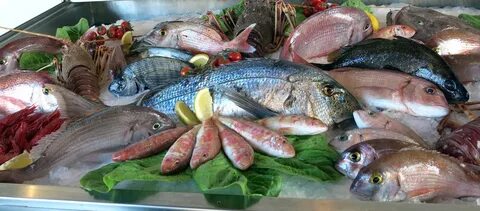
This segment is further categorized into Red Bream, Gilt-head Bream, Black Bream, Pandora Bream, White Bream.
By Size:
This segment is further categorized into Large, Medium, Small.
By Packaging Type:
This segment is further categorized into Fresh, Frozen, Canned, Others.
By Sales Channel:
This segment is further categorized into B2B / HoReCa, B2C (Hypermarkets/Supermarkets, Convenience Stores, Mom and Pop Stores, Discount Stores, Food & Drink Specialty Stores, Independent Small Groceries, Online Retail, Others Retail Formats).
By End Use:
This segment is further categorized into Food Industry, Retail Industry, Pet Food Industry, Others.
By Region:
Industry analysis has been carried out in key countries of North America, Latin America, Eastern Europe, Western Europe, East Asia, South Asia & Pacific, Central Asia, Balkan and Baltic Countries, Russia & Belarus and the Middle East & Africa.